Address
304 North Cardinal
St. Dorchester Center, MA 02124
Work Hours
Monday to Friday: 7AM - 7PM
Weekend: 10AM - 5PM
Address
304 North Cardinal
St. Dorchester Center, MA 02124
Work Hours
Monday to Friday: 7AM - 7PM
Weekend: 10AM - 5PM

The right curtains can change everything in a small bedroom. These small bedroom curtain ideas for 2026 show you exactly how to choose, hang, and style curtains that make your room feel bigger, brighter, and more pulled together.
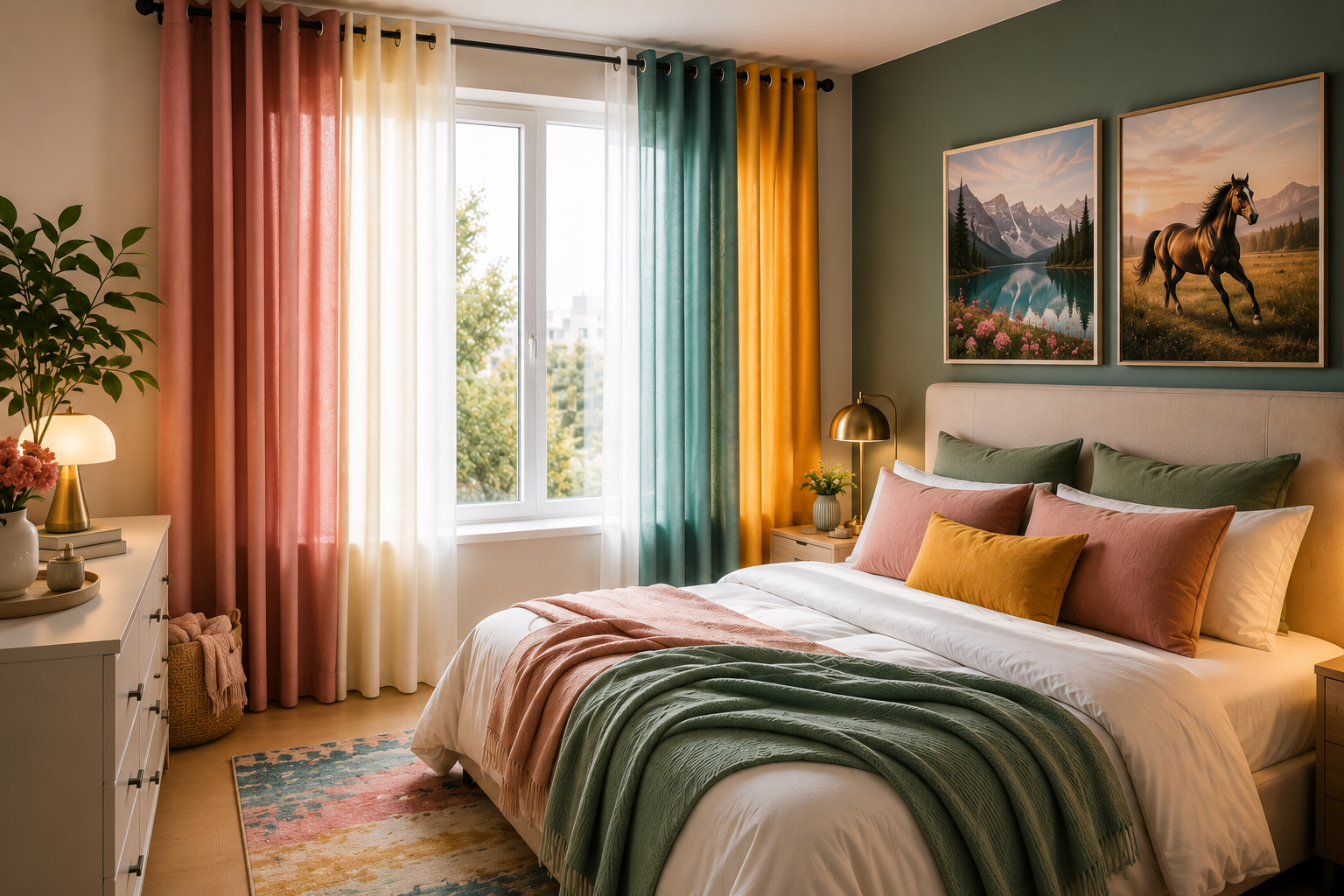
Most people decorating a small bedroom spend hours thinking about paint colors, furniture, and bedding. Curtains usually end up as an afterthought. You pick something that fits the window, hang it on the rod that came with the apartment, and move on.
But here is what interior designers have known for years: small bedroom curtain ideas can make or break how a room feels. The right curtains draw the eye upward, flood the room with natural light, and create the impression of height and space that no furniture can achieve on its own. The wrong ones do the opposite. They cut the wall short, block precious light, and make a small bedroom feel like a box.
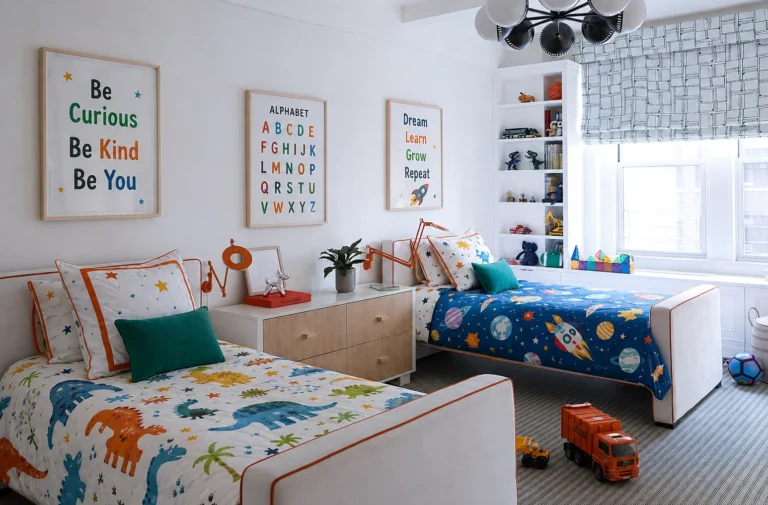
The same principle applies when decorating a child’s space. Thoughtful kids bedroom ideas can make a small room feel more spacious while keeping it functional, playful, and personal. Choosing the right curtains, furniture, colors, and storage can help create a room that feels comfortable without overwhelming the available space.
In 2026, curtains are being treated as a core design element, not an accessory. According to Homedit’s 2026 bedroom curtain guide, curtains now shape proportion, soften structure, and decide how calm or layered a space feels the moment you walk in. That is especially true in small bedrooms where every visual decision carries more weight.
This guide covers every angle: how to hang curtains for maximum impact, which fabrics and colors work best in small rooms, what is trending in 2026, and what to avoid if you want your bedroom to feel larger and brighter.
Everything in a small bedroom affects how the space reads visually. Curtains cover one of the largest surfaces in the room, which is the wall around and above the window. When they are hung well, they guide the eye upward and outward, making the room feel taller and wider. When they are hung badly, they do the opposite.
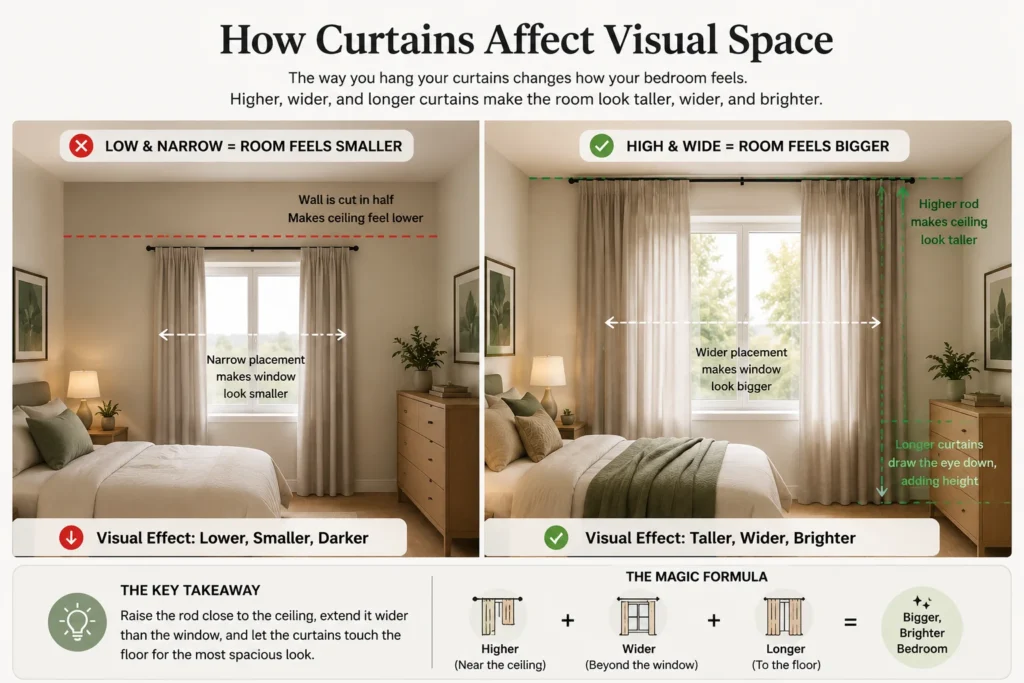
A curtain rod installed just above the window frame cuts the wall into two sections: a small decorative area above the window and a larger area below. This horizontal break makes a room feel lower and smaller. Raising the rod changes the proportion of the entire wall.
Light is the single most powerful tool for making a small bedroom feel bigger. Bright rooms feel more open. Dark rooms feel closed in, regardless of their actual dimensions.
The way curtains are hung and chosen directly controls how much light enters the room. Curtains that stack over the wall rather than over the glass let in maximum daylight even when open. Sheer fabrics filter light softly without blocking it. Heavy, dark fabrics absorb light and make a room dim even in the middle of a sunny afternoon.
Designers working on small bedrooms consistently treat small bedroom curtain ideas as structural decisions rather than finishing touches. Livingetc’s 2026 bedroom curtain trend report notes that designers now install ceiling-height curtain tracks to make the treatment architectural rather than purely decorative, blending the rod with the wall or ceiling color so the eye sees one continuous vertical line from floor to ceiling. That single change can make a bedroom with an eight-foot ceiling feel significantly taller.
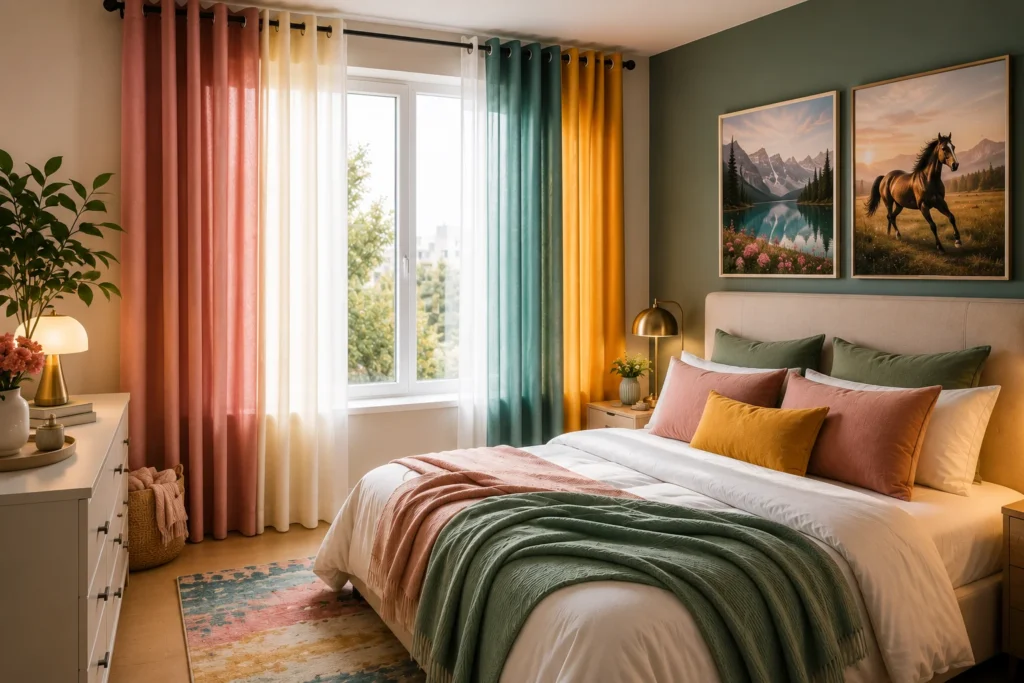
This is the most important rule in small bedroom curtain ideas and the one most people skip. Instead of mounting the rod right above the window, mount it four to six inches below the ceiling. Sometimes even closer to the ceiling if the ceiling height allows. The curtains then fall from near the ceiling all the way to the floor, and the eye reads the full wall height rather than just the window height.
The result is a room that feels noticeably taller without any structural change.
Floor-to-ceiling curtains work by stretching the visual height of the room in both directions. The rod near the ceiling gives height above. The panels falling to the floor give height below. Together they create a clean vertical line that makes the wall look like it belongs in a much larger space.
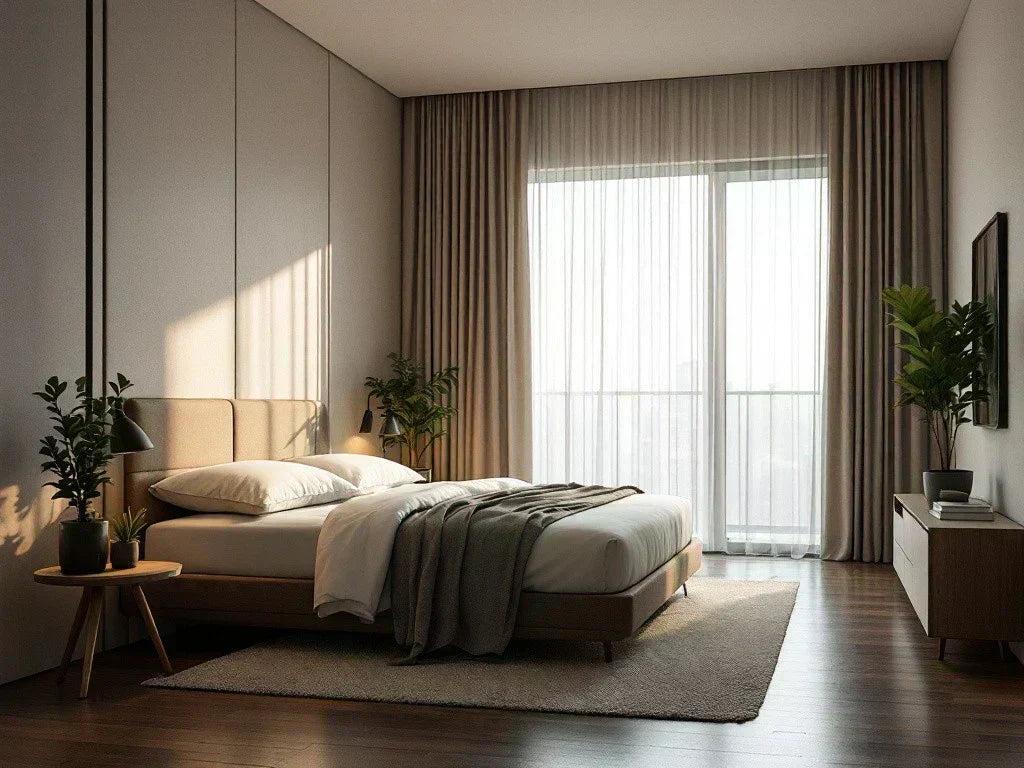
According to The Coolist’s 2026 bedroom curtain guide, full-length ivory curtains paired with warm textures and a tall mirror help stretch small rooms vertically and make everything feel more spacious.
For best results, curtains should touch or very slightly skim the floor. Panels that hang six inches or more above the floor look unfinished and cut the room short visually.
Extending the curtain rod eight to twelve inches on each side of the window frame allows the curtain panels to stack on the wall rather than over the glass when they are open. This keeps the window clear and lets in the maximum amount of natural light while still making the window look significantly wider than it is.
Homedit notes that this approach also changes how curtains function: instead of covering the window, they define it, keeping the view central while giving the wall a finished edge.
Heavy, thick fabrics like velvet, wool, or densely woven blackout panels absorb light and add visual weight to a room that cannot afford it. They can work in large bedrooms where the mass of the fabric feels proportionate, but in a small bedroom they tend to overwhelm the space and make it feel heavier and darker than it is.
Lightweight fabrics like linen, cotton voile, and sheer blends allow light to pass through and move softly in the room, which keeps the space feeling airy.
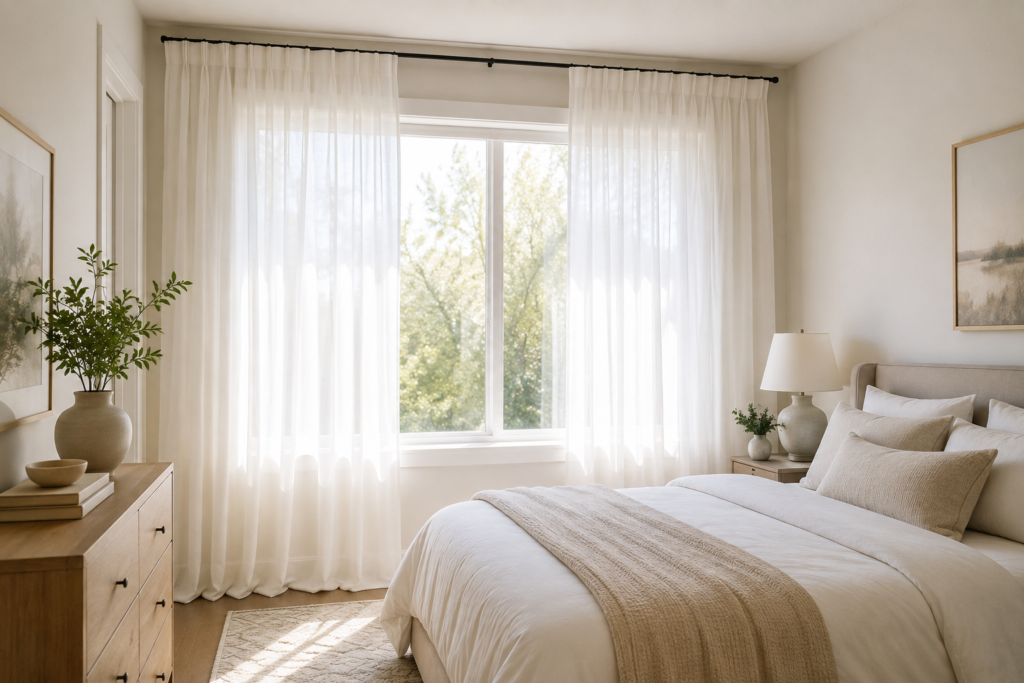
Sheer white curtains are one of the most consistently recommended small bedroom curtain ideas for a reason. They allow natural light to fill the room throughout the day while still providing a layer of softness and some privacy. The room stays bright and open without feeling exposed.
Livingetc’s 2026 bedroom trend guide describes how sheer fabrics diffuse light, soften the edges of a room, and create a cloud of color that makes even the window wall feel warm and intentional. A good pair of sheer white panels costs $30 to $80 and can be layered with blackout curtains behind them for evening privacy.
Linen is one of the strongest curtain trends of 2026. It is a natural fabric with a slight texture that looks relaxed and intentional at the same time, and it filters light beautifully without being fully sheer. In warm neutrals like natural, oat, or soft beige, linen curtains add warmth to a room while keeping it feeling light.
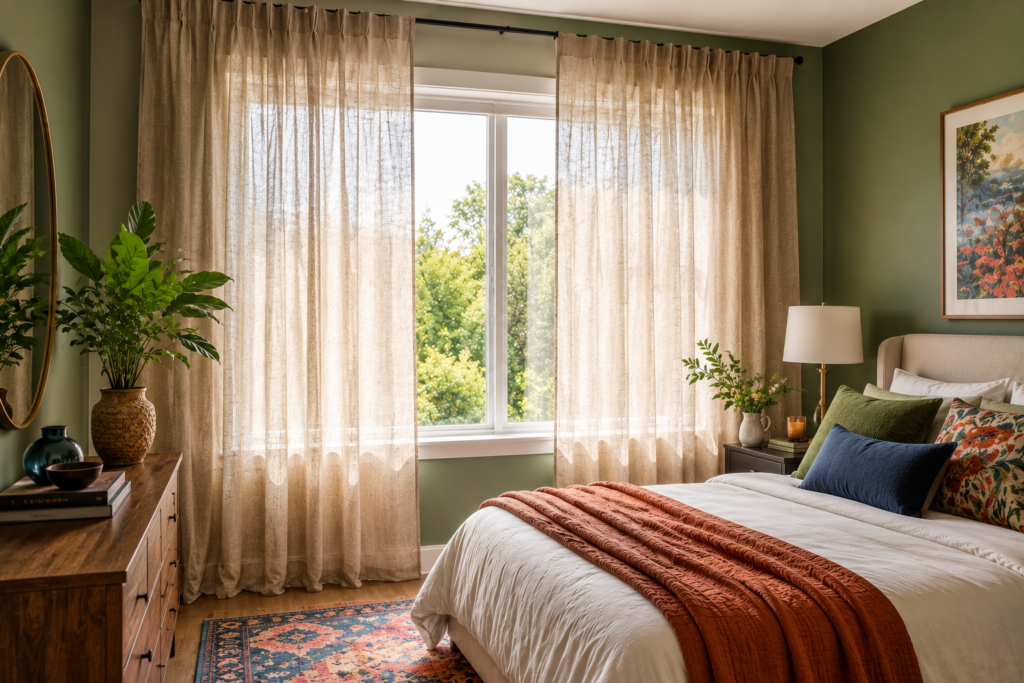
Homes and Gardens’ 2026 curtain trend report highlights drop cloth and linen blend curtains as an understated way to transform a window into a focal point while still allowing light to filter through. Linen curtain panels typically cost $40 to $120 per panel depending on length and quality.
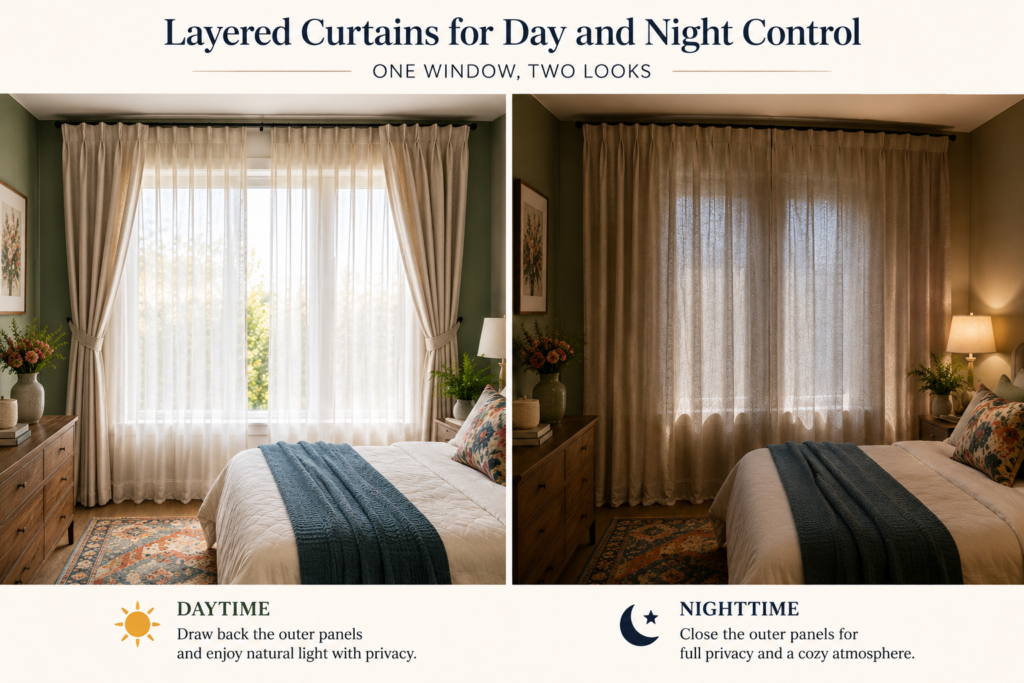
Layering a sheer panel behind a slightly heavier curtain in the same color family gives you a setup that works at every point of the day. During the day, draw back the outer panel and leave the sheer. The room stays light-filled and private. In the evening, close the outer panel for full privacy and warmth.
The Coolist’s 2026 bedroom curtain guide describes this layered look as a simple pairing where the texture and layering make the windows feel like an intentional design feature rather than an afterthought. The neutral tones keep the setup from looking heavy even with two layers.
Light-colored curtains in warm whites, pale ivories, and soft creams do not just let light in. They also reflect it back into the room, bouncing daylight off the fabric and spreading it further than a bare window would. This effect is subtle but noticeable over the course of a full day.
Pairing reflective light curtains with a large mirror on the opposite wall doubles the effect and makes the room feel genuinely bright from every angle.
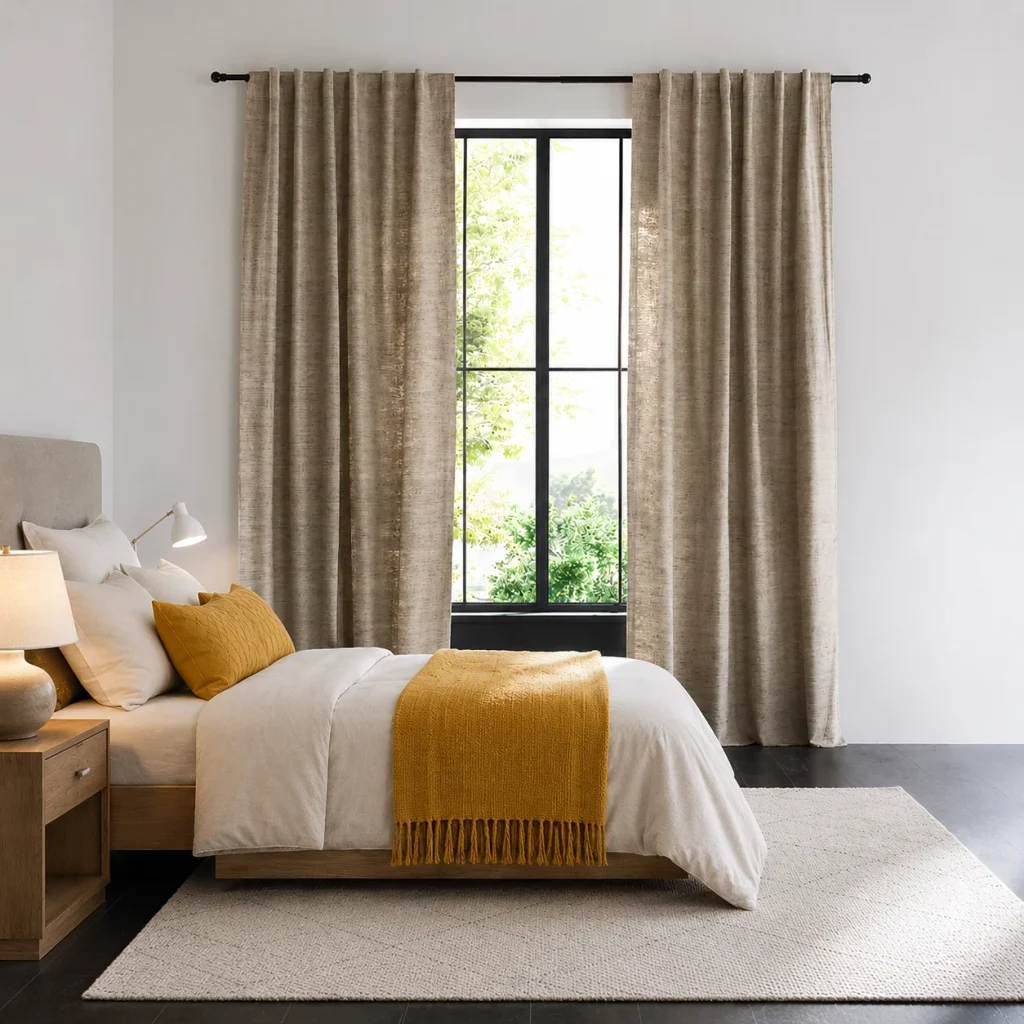
Warm neutrals are the dominant curtain color trend of 2026 across all bedroom sizes. Soft beige, warm ivory, oat, and taupe all work beautifully as small bedroom curtains because they add warmth without adding visual weight. When choosing curtains for small bedroom spaces, lightweight fabrics in these shades can help the room feel more open while keeping the window visually clean. They pair with nearly every wall color and furniture finish, making them a safe and versatile starting point. For a polished look, bedroom curtains for small rooms can be hung slightly above the window frame and extended beyond the sides to make the window appear larger.
Olive green, terracotta, dusty rose, and sandy brown are moving from living rooms into bedrooms in 2026. These earth tones bring a sense of calm and groundedness to a space and work particularly well when the rest of the bedroom palette is kept neutral. In a small bedroom, small bedroom window curtains in one of these earth tones can become the focal point without making the room feel smaller.
For curtain ideas for small bedrooms, one pair of earth-tone curtains is an easy way to add color while keeping the overall space balanced. The Hues’ 2026 bedroom curtain trends guide highlights earthy elegance, specifically olive green linen curtains with oak furniture and cream bedding, as one of the most popular design combinations of the year.
Texture is becoming as important as color in curtain choices for 2026. Plain, smooth fabrics are being replaced by woven linens, slub cotton blends, and other fabrics where the weave itself creates visual interest. For bedroom curtain ideas for small rooms, textured fabrics add depth without introducing bold patterns that can make a compact space feel busy. These textures also offer practical bedroom window treatment ideas, creating a layered look while keeping the room visually light. For those exploring modern bedroom curtain ideas, subtle woven textures are an easy way to add character without overwhelming the space.
Simple rod-pocket or grommet-top curtains in solid colors with no embellishment continue to be a strong choice for small bedrooms. Clean, uninterrupted fabric falling from ceiling to floor reads as architectural rather than decorative, which gives a small room a more composed and considered feel.
The hotel bedroom look, which features floor-to-ceiling panels in warm neutral fabrics with clean pleats and quality hardware, is one of the most requested small bedroom curtain styles of 2026. It works because hotel rooms are usually small and this style is specifically designed to make them feel generous and luxurious. Ripple-fold pleating, which Livingetc’s 2026 bedroom curtain trend report describes as looking much cleaner than traditional pinch pleats, is the pleat style designers are choosing for this effect.
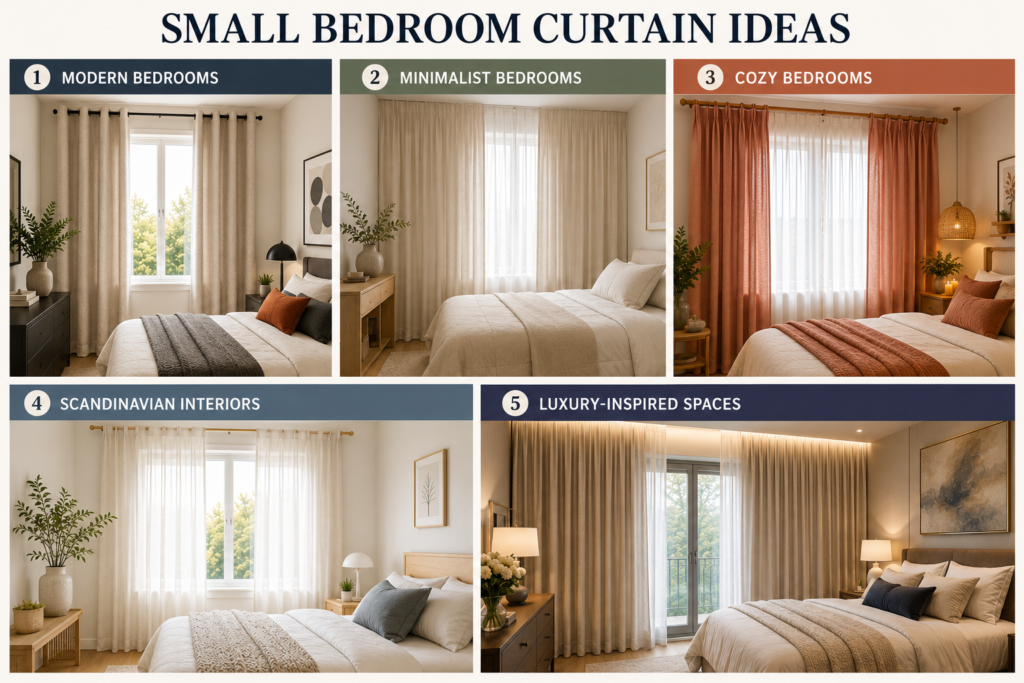
Modern small bedrooms call for clean lines and minimal hardware. A slim matte black or brushed brass rod with flat or grommet-top panels in a warm neutral keeps things contemporary. Avoid decorative finials or ornate rings in a modern, small bedroom because they add visual clutter that the room cannot absorb.
In a minimalist bedroom, the curtain should almost disappear into the wall. Choosing a curtain color that matches or closely echoes the wall color creates a seamless look where the fabric reads as a texture rather than a separate element. This approach stretches the wall visually and keeps the room feeling open and uncluttered.
For a cozy feel in a small bedroom, layer a sheer panel under a slightly heavier linen or cotton curtain in a warm color like soft terracotta, dusty blush, or warm oat. The layering creates depth and softness without making the room feel heavy. Adding a wooden or rattan curtain rod reinforces the warm, natural feeling of the space.
Scandinavian small bedrooms work best with simple linen curtains in natural or off-white tones. The fabric should be lightweight and loosely woven so light passes through it softly. Keep the hardware simple, a thin wooden or white metal rod, and avoid any pattern or ornamentation. The look should feel calm, clean, and slightly organic.
Floor-to-ceiling panels in a soft natural linen or fine cotton with ripple-fold pleating and ceiling-mounted tracks give a small bedroom a genuinely luxurious feel. According to Livingetc, installing the track as close to the ceiling as possible and choosing a color that blends with the ceiling or wall makes the treatment architectural and removes the decorative quality that can feel overdone in a small room.
In apartments and tiny homes, curtain solutions that do not require heavy hardware or drilling are particularly useful. Tension rods work for lightweight sheers in smaller windows. Command strip curtain clips hold lightweight panels without damaging walls. Both options cost under $20 and are renter-friendly.
Narrow windows are common in older apartments and small homes. Extending the rod well beyond the window frame on each side, sometimes by as much as twelve to sixteen inches on each side, makes a narrow window appear significantly wider. Choose a panel width generous enough to stack fully on the wall when open so the glass stays uncovered and the window looks as wide as the rod.

Apartment bedrooms often face streetlights, neighboring buildings, or early morning sun. Blackout curtains solve all of these problems without requiring any permanent installation. The best approach for small bedrooms is to use a thin blackout liner behind a sheer or linen outer panel so the room looks light and styled during the day while still blocking light effectively at night. Blackout liner panels cost $20 to $60 and can be added to almost any existing curtain rod.
In studio apartments or open-plan spaces, curtains can do more than dress a window. A ceiling-mounted curtain panel can divide sleeping and living areas, create a dressing corner, or hide storage. Using the same fabric as the window curtains for any dividing panels keeps the space feeling cohesive rather than makeshift.
Curtains that hang to the windowsill or just below it cut the wall in half and make the ceiling feel low. This is one of the fastest ways to make a small bedroom feel even smaller. Floor-length curtains are not optional in a small bedroom. They are the rule.
Dark curtains in a room that already gets limited natural light will make the bedroom feel dim and heavy for most of the day. Unless the room gets strong direct sunlight that needs filtering, keep curtain colors in the light to medium range.
Mounting the curtain rod right above the window frame instead of close to the ceiling is the single most common small bedroom curtain mistake. It caps the visual height of the room at the window frame rather than the ceiling. Raising the rod to within four to six inches of the ceiling costs nothing extra and makes an immediate, significant difference.
A small window draped in thick, heavily lined fabric looks buried rather than dressed. The window loses its presence, the room loses its light, and the fabric adds visual bulk that a small room cannot support. Lightweight fabrics that stack neatly and do not add mass to the wall are always the better choice for small bedroom windows.
Reflects maximum light, pairs with every palette, and creates a clean, open feel. Works in every bedroom style from modern to cozy.
Adds warmth without weight. One of the dominant curtain colors of 2026 and easy to combine with both warm and cool toned rooms.
A cooler neutral that works well in modern and Scandinavian styled bedrooms. Choose a warm gray rather than a cool blue-gray to keep the room from feeling cold.
A nature-inspired option that brings calm and softness to small bedrooms. Works especially well with natural materials like wood, rattan, and linen.
A soft, muted blue that adds color without overwhelming a small space. Pairs well with warm neutrals and white bedding.
| Color | Makes Room Feel Bigger | Natural Light Reflection | Trend Score 2026 |
|---|---|---|---|
| Warm White | Yes | High | Strong |
| Soft Beige | Yes | High | Very Strong |
| Light Gray | Moderate | Moderate | Moderate |
| Sage Green | Moderate | Moderate | Strong |
| Dusty Blue | Moderate | Low to Moderate | Moderate |
Polyester linen-look panels are the most budget-friendly option and have improved significantly in quality. A pair of floor-length linen-look panels can be found for $25 to $60 at most home stores. Cotton voile panels for sheer layering start at $15 per panel. Both look considerably more expensive than they cost when hung correctly.
Adding curtain weights to the hem of lightweight panels ($5 to $10 for a pack) makes them hang straight and clean, which gives a more polished look. Steaming or lightly ironing panels before hanging removes the fold lines from packaging and makes inexpensive curtains look tailored. Choosing a matte black or brushed brass rod ($15 to $35) instead of a basic chrome rod raises the visual quality of even budget panels immediately.
Save on the fabric panels themselves, especially if you are layering, because the inner blackout liner does not need to look beautiful. Spend on the rod and hardware because these are visible even when the curtains are open and cheap hardware looks cheap regardless of how nice the fabric is. Spend on panel length. Always buy or hem curtains to the correct floor-length rather than settling for short panels because they were cheaper.
The biggest takeaway from every small bedroom curtain idea in this guide is that placement matters more than price. A $40 pair of linen-look panels hung close to the ceiling and falling to the floor will always look better in a small bedroom than a $200 pair of curtains hung just above the window frame.
Prioritize height, light, and simplicity. Get those three things right and the fabric choice, color, and price point become much less important.
Small bedroom curtain ideas in 2026 are moving toward clean, architectural treatments that feel considered rather than decorative. Ceiling-high rods, lightweight fabrics in warm neutrals, and panels that stack on the wall rather than over the glass are the defining features of the look. They make small bedrooms feel designed from the floor up, and that is exactly the impression any bedroom should give.
For more ideas on creating a calm, organized, and beautifully styled bedroom, explore related guides on Hidden Bedroom Storage Ideas, Bedroom Lighting Ideas, and Small Bedroom Interior Design Ideas on The Decor Dash.
The most effective small bedroom curtain ideas for creating the illusion of more space are floor-to-ceiling panels hung close to the ceiling, rods extended well beyond the window frame on each side, and lightweight fabrics in light neutral colors. These three choices together guide the eye upward and outward, making the room feel taller and wider than it actually is. Sheer or semi-sheer fabrics that maximize natural light reinforce the effect further
Yes, always. Curtains that stop at the windowsill or hover above the floor cut the visual height of the room and make it feel lower and smaller. Floor-length curtains that just touch or slightly skim the floor create a clean, continuous vertical line that stretches the room upward. This is one of the most agreed-upon rules in small bedroom curtain ideas and one of the simplest to follow.
Warm white, soft beige, and light natural linen tones are the best curtain colors for small bedrooms because they reflect light and avoid adding visual weight to the room. In 2026, warm neutrals are the dominant trend in bedroom curtains across all room sizes. Sage green and dusty blue can also work in small bedrooms when they are kept muted and paired with lighter wall colors. Dark colors should generally be avoided in rooms that already have limited natural light
For more bedroom decor inspiration, visit The Decor Dash.