Address
304 North Cardinal
St. Dorchester Center, MA 02124
Work Hours
Monday to Friday: 7AM - 7PM
Weekend: 10AM - 5PM
Address
304 North Cardinal
St. Dorchester Center, MA 02124
Work Hours
Monday to Friday: 7AM - 7PM
Weekend: 10AM - 5PM

From tiny balconies to full backyard living rooms, here are twenty patio furniture ideas with real measurements to help you build a space you actually want to sit in.
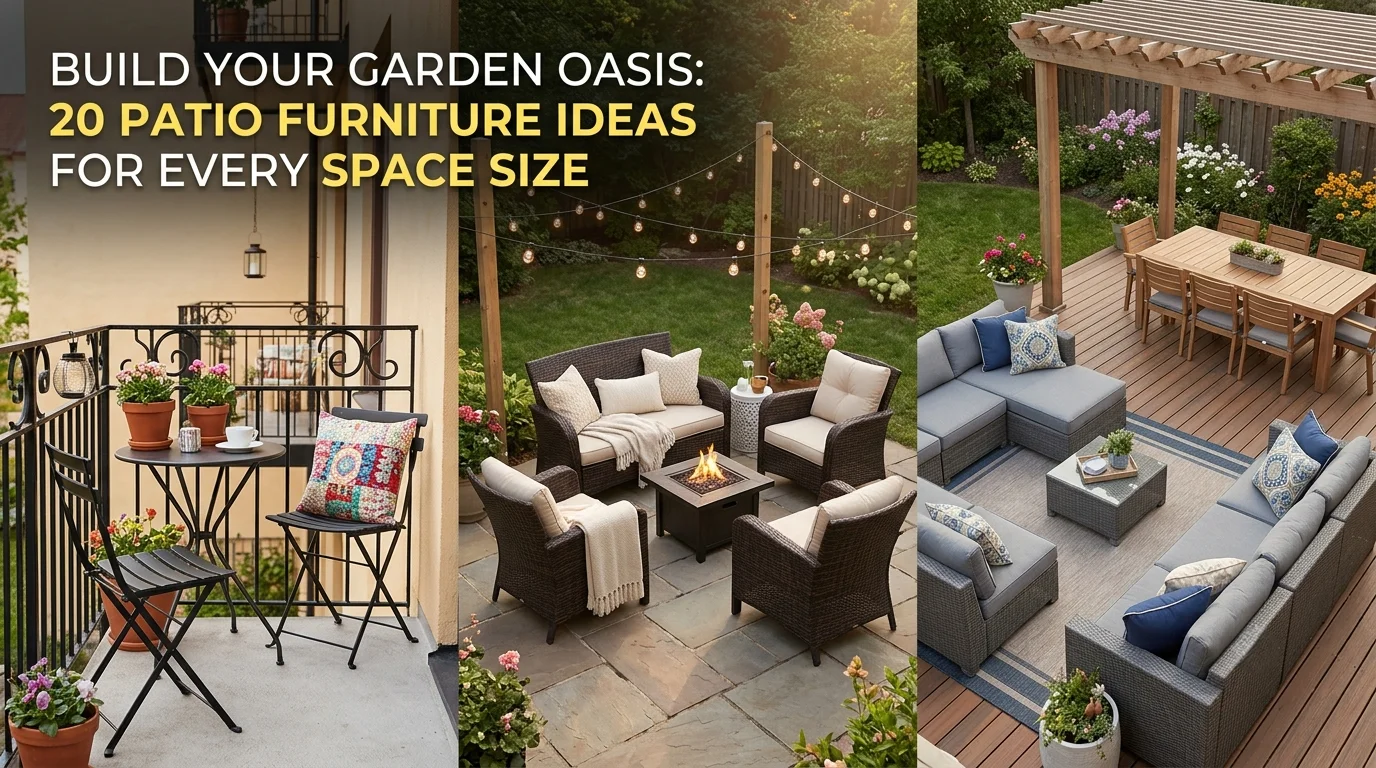
A few years back, I helped a friend turn her tiny apartment balcony into the one spot in her home she actually looked forward to sitting in every morning. It was barely six feet wide. No room for anything fancy. Just a small round table, two folding chairs, and a cushion she made herself from leftover fabric. That little corner taught me something I still believe fifteen years into this work. A great outdoor living space has nothing to do with square footage. It has everything to do with choosing furniture that actually fits the life you live in that space.
Whether you are working with a narrow balcony or dreaming up a full backyard retreat, this guide walks through twenty patio furniture ideas, organized by space size, with real measurements so you are not left guessing what will actually fit. Think of it as building your own garden oasis, one honest, practical choice at a time.
Small spaces, the kind you find on apartment balconies or narrow side yards, usually fall somewhere between six and ten feet long and eight to twelve feet wide. That is not a lot of room, but it is enough for a genuinely lovely little setup if you choose carefully.
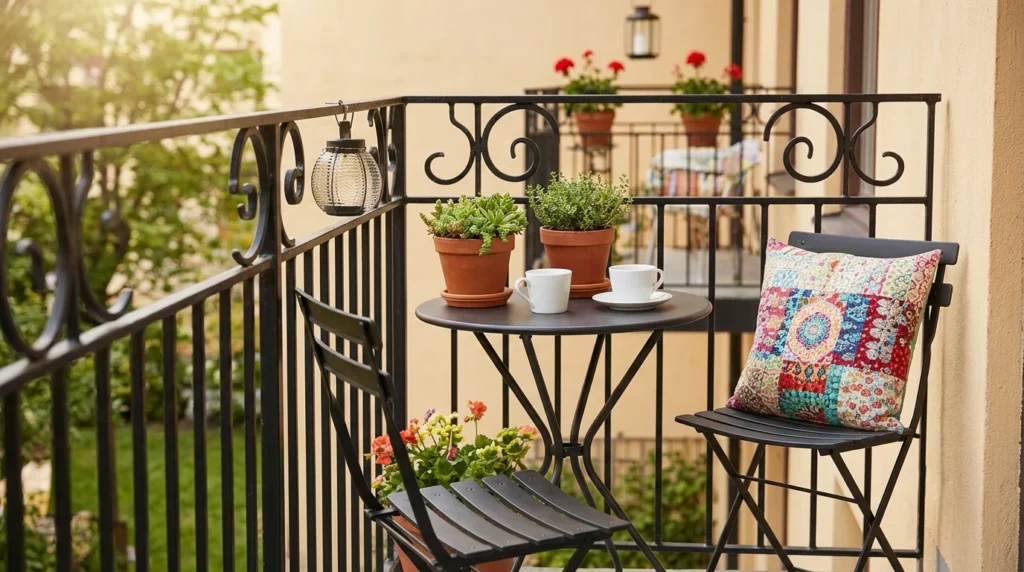
Start with a classic bistro set. A round bistro table between twenty four and thirty inches across, paired with two slim chairs, fits comfortably into a space as tight as sixty by seventy two inches once you account for chair clearance. This is the setup I recommend most often for morning coffee corners, since it gives you just enough surface for two mugs and a small plant without crowding the space.
If storage is tight, look for a folding bistro set instead. A folded steel set can pack down to roughly twenty four inches square, which means you can tuck it against a wall or into a closet when you want the floor open for something else, then pull it back out in five minutes when the weather is nice.
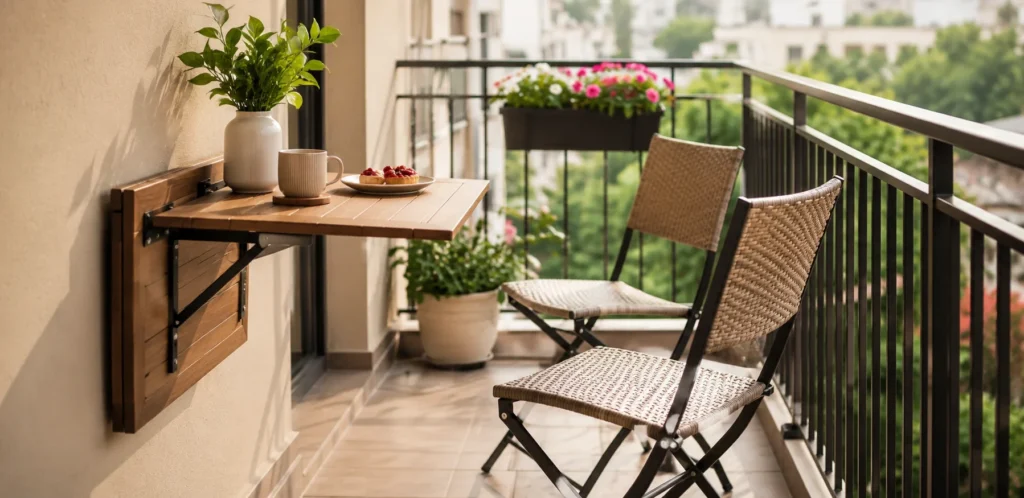
A wall mounted drop leaf table is another smart move for genuinely narrow balconies. It folds flat against the wall when not in use and drops down to a working surface around twenty inches deep when you need it, which frees up walking room the rest of the time.
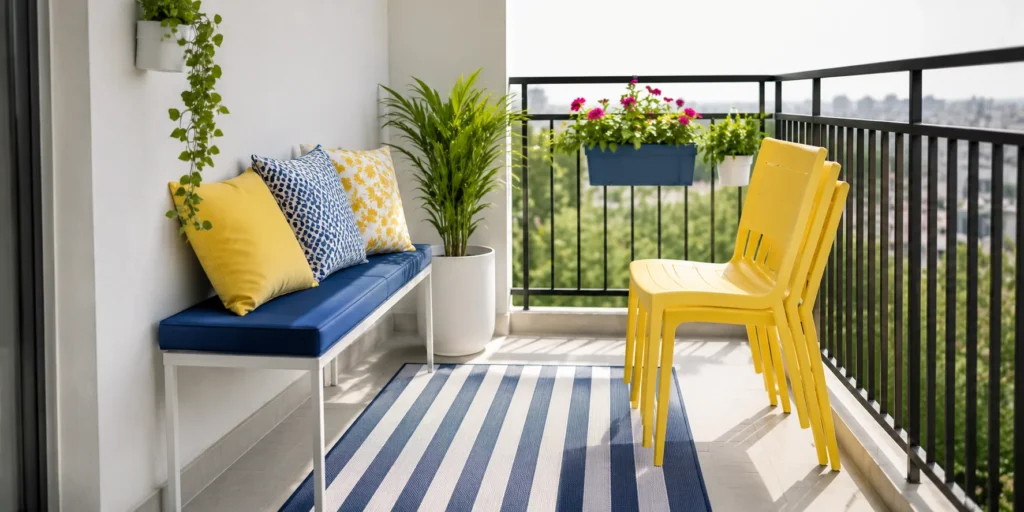
For seating alone, a slim bench pushed against a railing or wall gives you flexible seating without eating into your floor space the way a full chair set would. Pair it with a couple of stackable chairs you can pull out only when you have company, then tuck away again afterward.
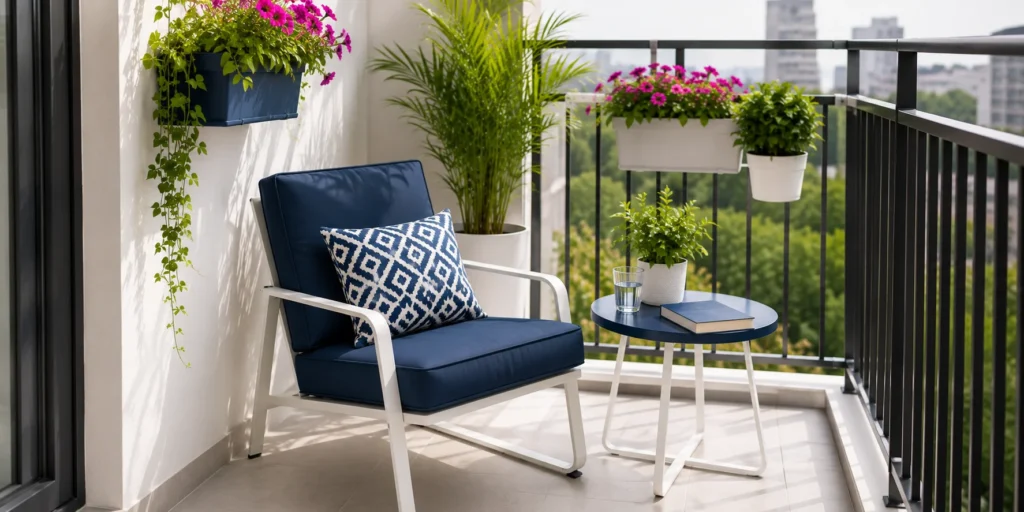
If you only have room for one seat, choose a single lounge chair with a small round side table beside it. This setup works beautifully for reading corners, and a side table around eighteen inches in diameter is plenty for a drink and a book without taking up more room than it earns.
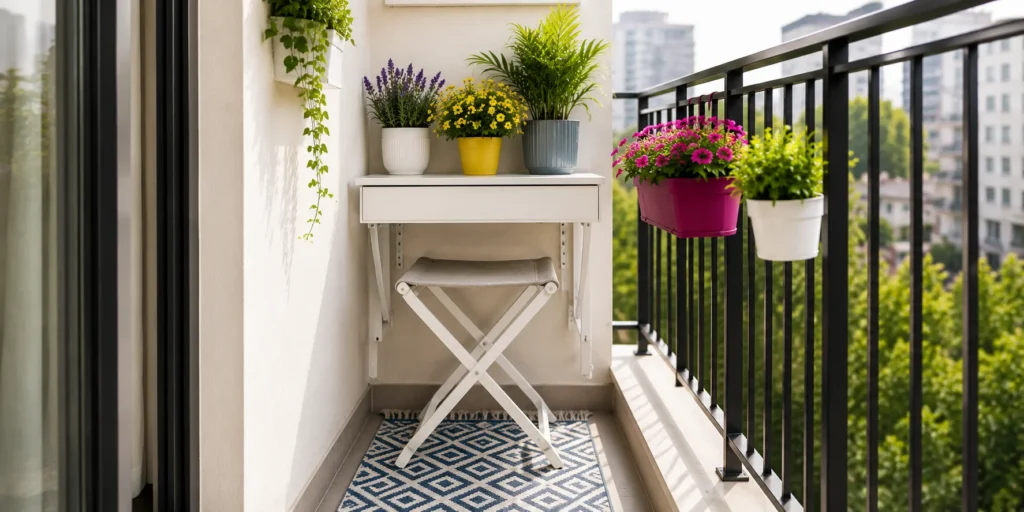
Finally, consider combining function and greenery. A narrow shelf unit that holds potted plants on top with a single folding stool tucked underneath turns even a two foot wide strip of balcony into something worth sitting in.
For more ideas built specifically around tight footprints, my balcony decor guide covers a lot of the same thinking in more depth.
Once you move into the twelve by fourteen foot range, roughly one hundred sixty eight square feet, you have real room to work with, enough for actual entertaining rather than just personal relaxing space.
An outdoor dining set built around a forty eight inch round table is my go to recommendation here. That size comfortably seats four to six people depending on chair style, and the round shape keeps conversation easy since nobody is stuck at a far corner. Leave about three feet of clearance around the table so chairs can slide in and out without anyone bumping the railing or a nearby wall.
A three piece conversation set, meaning a loveseat paired with two armchairs and a coffee table, works wonderfully for a medium patio focused more on lounging than dining. This setup naturally draws people into a circle, which tends to keep conversation flowing better than furniture lined up against a wall.
If you love the idea of evening gatherings, build your layout around a fire pit instead of a dining table. A ring of four chairs spaced comfortably around a fire pit, with about two and a half feet between each seat and the flame, creates a natural gathering spot that gets used far more often than most people expect once it is actually in place.
A hammock or a hanging swing chair is one of my favorite additions for a medium space, since it adds a completely different kind of seating experience without taking up much floor footprint at all, usually just the width of its stand, somewhere around three to four feet.
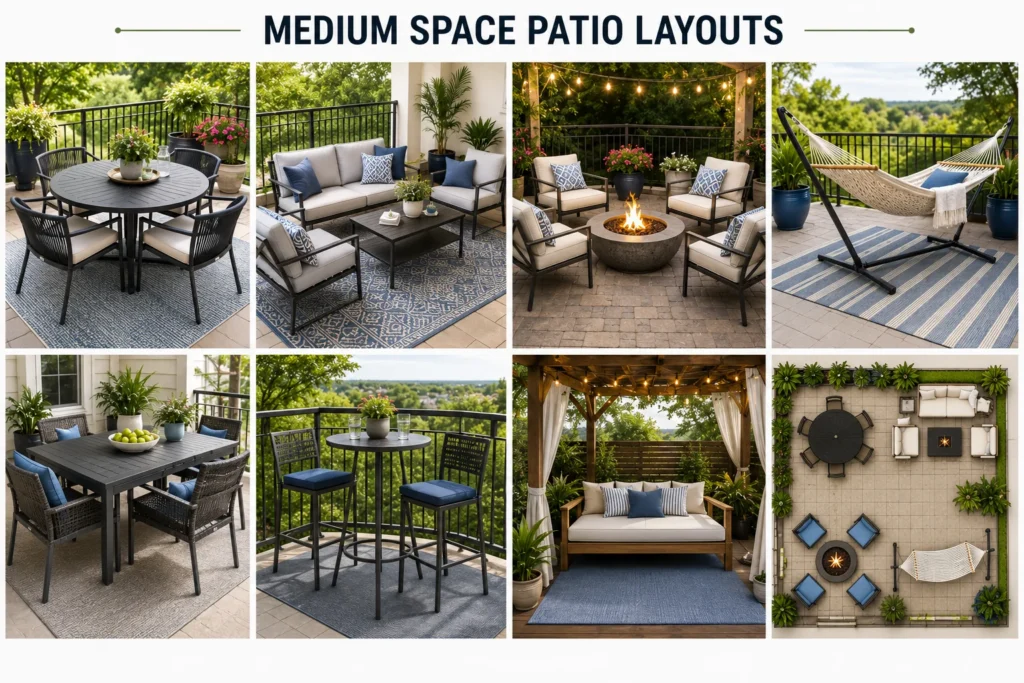
For flexible entertaining, an extendable outdoor dining table is worth the investment. Collapsed down, it can serve as a compact everyday table for two, then extend out to seat six when family visits, which solves the common problem of buying furniture sized for the wrong occasion.
Bar height seating brings a different energy entirely. A bar height bistro set, with a table around forty inches tall paired with matching stools, adds visual interest to a medium patio and works especially well if your space includes a railing, since the taller seating gives you a nice view over the edge.
If your medium space includes a shaded pergola or covered section, that is the perfect spot to anchor a small daybed, giving you a cozy nap friendly zone within the larger layout without needing a full separate lounge area.
Large patios, generally sixteen by eighteen feet or bigger, roughly two hundred eighty eight square feet and up, really do function best when you treat them like an actual outdoor living room, complete with distinct zones rather than one big cluster of furniture.
A six piece outdoor living room set, built from a sofa, two matching armchairs, a coffee table, and a pair of end tables, gives you a true living room feel outside. Leave generous walking space, at least three feet, around the whole patio furniture grouping so it never feels cramped despite the larger footprint.
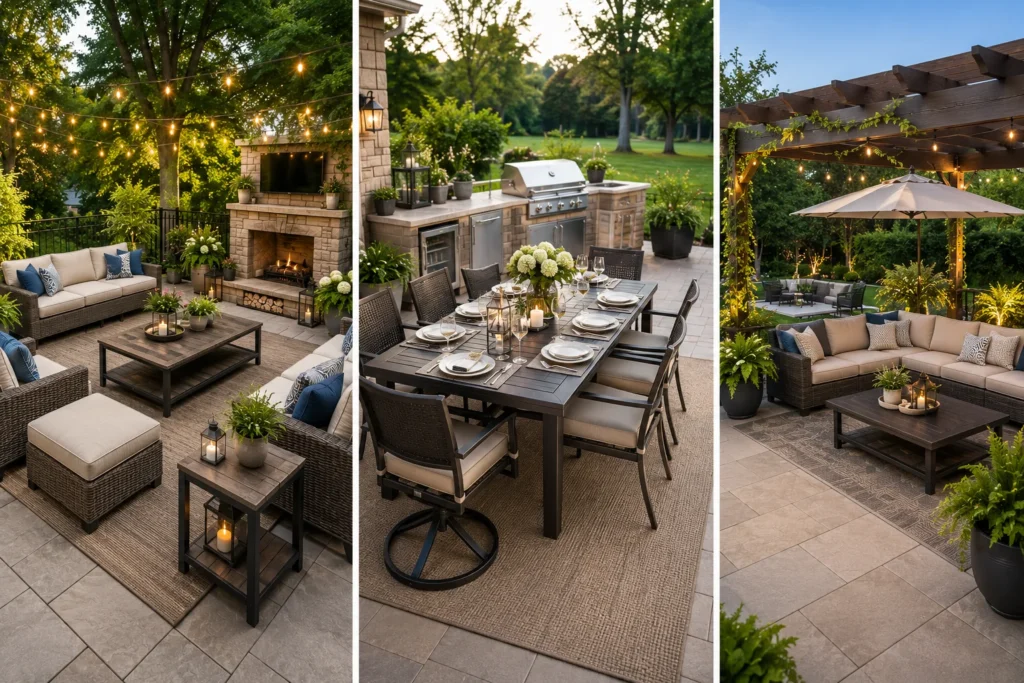
For dining, a rectangular table anywhere from sixty to ninety six inches long comfortably seats six to eight people, making it ideal for large family dinners or hosting groups. Rectangular shapes tend to make the most efficient use of a larger space compared to round tables at this scale.
A proper daybed or a chaise lounge earns its place in a large yard, especially somewhere partially shaded. A chaise typically runs seventy two to seventy eight inches long, giving you full body support for genuinely relaxing outside, not just perching on the edge of a chair.
Modular sectional sofas are one of the best investments for a large space, since you can rearrange the pieces depending on the occasion, one large L shape for everyday lounging, or split apart into smaller groupings when you are hosting a bigger crowd and want multiple conversation areas going at once.
Speaking of that, dividing a large patio furniture into distinct zones, a dining zone near the house and a separate lounge zone further out, genuinely transforms how the space gets used. It mimics how we naturally divide an indoor living room into separate functional areas, and it works just as well outside.
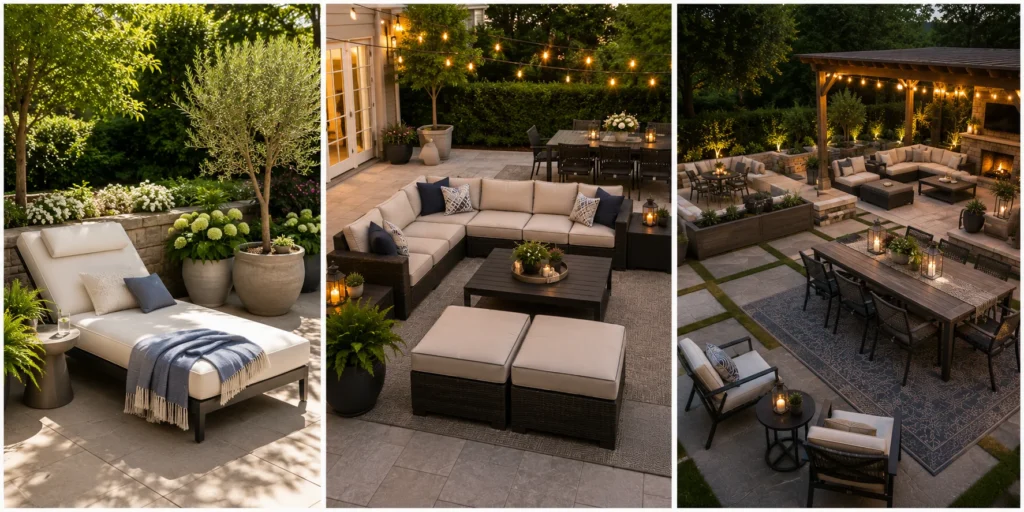
If your large space includes a pergola or covered structure, anchor your lounge furniture underneath it. A deep sectional sofa paired with a couple of ottomans, positioned under the shaded structure, creates a natural focal point that draws people toward it the moment they step outside.
Rounding out the large space list, do not overlook smaller supporting pieces. A cluster of side tables scattered near your seating groups, and a couple of accent chairs tucked into an otherwise unused corner, fill out a large layout without requiring another major furniture purchase.
Furniture pieces are only half the story. The materials you choose and the little finishing touches you layer in are what actually make a patio feel designed rather than just furnished.
If you love the way your yard already looks, lean into wood. Wooden garden furniture blends naturally into greenery and works beautifully next to potted plants or a stone path, giving the whole space a relaxed, rustic feel. If your taste runs more modern, aluminium and metal frames create a sleeker look instead, and patio furniture pair especially well with glass tabletops or a more contemporary house. Woven materials like rattan and rope sit somewhere in between, timeless, textured, and durable enough to handle real outdoor use season after season.
Lighting is where a patio furniture ideas goes from daytime functional to evening magical. String lights strung above a seating area create a soft, romantic glow once the sun goes down. Lanterns and candles add a flickering warmth that overhead lighting can’t quite match, and a couple of solar powered lamps tucked near a sofa or daybed give you light without needing an outlet anywhere nearby.
Don’t skip the patio furniture ideas of layering either. An outdoor rug under your furniture grouping instantly makes the space feel more finished, the same way a rug pulls a living room together indoors. Add cushions and throws in a durable, weatherproof fabric, and mix in a few decorative touches, a vase of fresh flowers, a couple of garden statues, even a wind chime, to make the space with the best patio furniture feel personal rather than showroom staged.
The best patio furniture is not the most expensive set or the most photographed one online. It is the furniture that actually matches how you live, how much space you genuinely have, and what you want that outdoor time to feel like. A tiny balcony with one good chair can feel more like a retreat than a sprawling patio filled with furniture nobody ever sits in.
Start with the measurements of your own space, be honest about how you will actually use it, and build outward from there. My own furniture guide has more general principles that apply just as well outdoors as they do inside, if you want to keep exploring once you have your patio sorted.
Whatever size you are working with, your own backyard sanctuary is genuinely within reach. Start with one good piece of patio furniture, and let the rest follow.
A round bistro table between twenty four and thirty inches across, paired with two slim chairs, is the most reliable choice for small patio furniture ideas on a balcony. Folding sets are especially useful if you need to reclaim floor space when the furniture is not in use.
Measure your space first, then leave at least two and a half to three feet of clearance around any table or seating group so people can move comfortably. Small spaces suit compact bistro sets, medium spaces handle a full dining set or conversation set, and large spaces can support a full outdoor living room layout.
A forty eight inch round table works well for medium spaces and seats four to six people. For larger gatherings, a rectangular table between sixty and ninety six inches comfortably seats six to eight.
Plan for roughly three feet of clearance around dining tables so chairs can slide in and out freely, and at least two and a half feet around lounge seating so walking paths stay open and comfortable.
Large spaces handle a full outdoor living room setup well, meaning a sofa, armchairs, a coffee table, and end tables, often combined with a separate dining area. Comfortable patio furniture like a modular sectional or a daybed also makes excellent use of the extra square footage