Address
304 North Cardinal
St. Dorchester Center, MA 02124
Work Hours
Monday to Friday: 7AM - 7PM
Weekend: 10AM - 5PM
Address
304 North Cardinal
St. Dorchester Center, MA 02124
Work Hours
Monday to Friday: 7AM - 7PM
Weekend: 10AM - 5PM

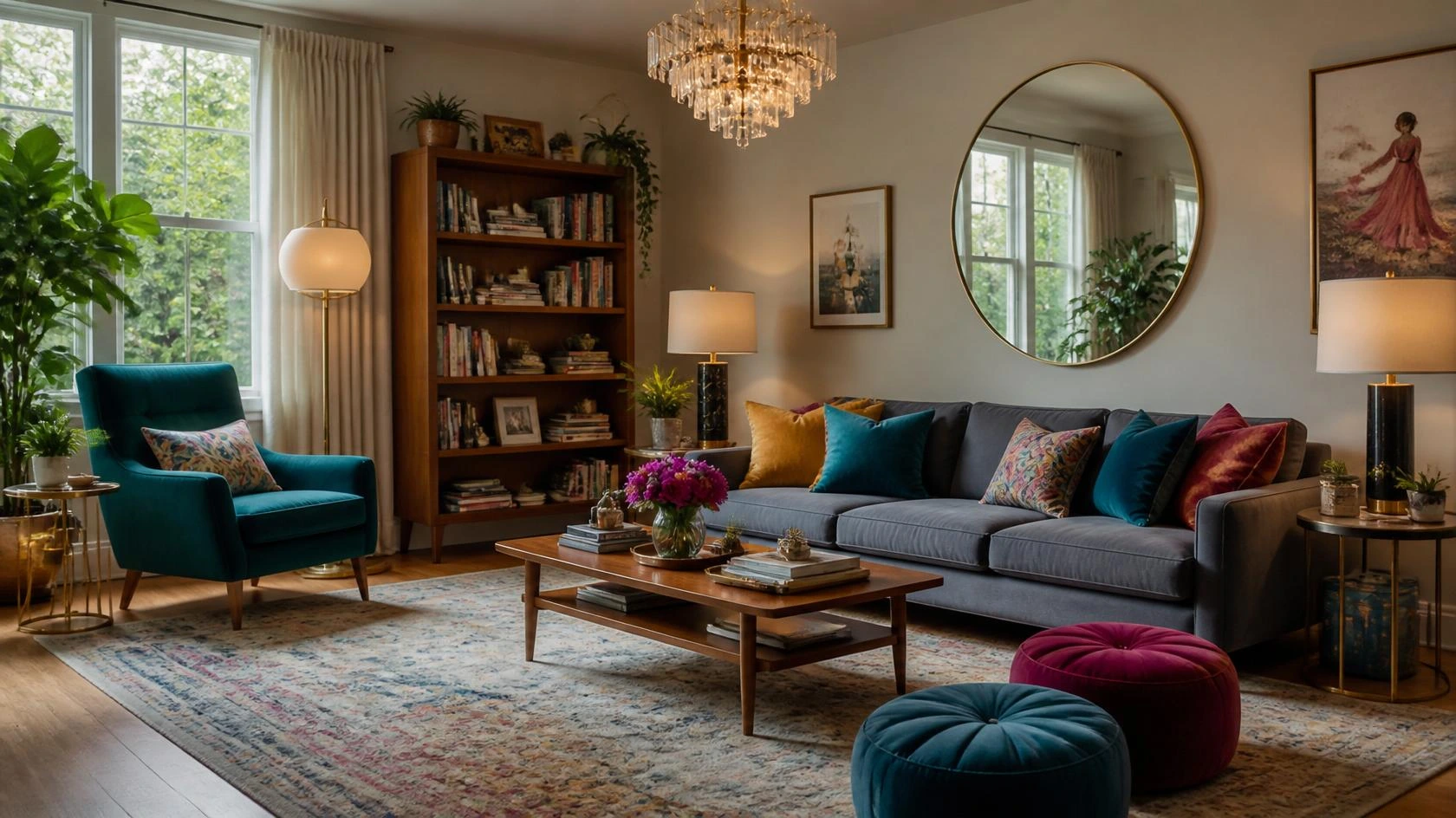
Every time I start a new room, I go back to the same question. What pieces will actually make this space feel finished instead of just filled? Furniture decor ideas are not really about buying more things. They are about choosing the right pieces that carry both function and personality at the same time, so the room feels complete without feeling cluttered.
Over the years, I have pulled together a list of the furniture categories that show up in almost every project I love, whether the style leans mid century, art deco, coastal, or something more minimal. Good furniture decor is less about following a single trend and more about understanding how each piece earns its place in a room. Here is how I think through each one, along with the small details that tend to make the biggest difference.
Rugs rarely get the credit they deserve, but they are one of the fastest ways to add warmth, texture, and boldness to a room. I choose rugs based on three things, the overall style of the space, the specific room it lives in, and honestly, sometimes my pets and their favorite napping spots.
In an entryway, a rug earns its place by protecting the floor from everyday dirt and dust, while still setting the tone the moment someone walks through the door. In a living room or dining room, a rug does something different, it softens hard flooring, defines a seating area, and makes the whole space feel more pulled together and inviting.
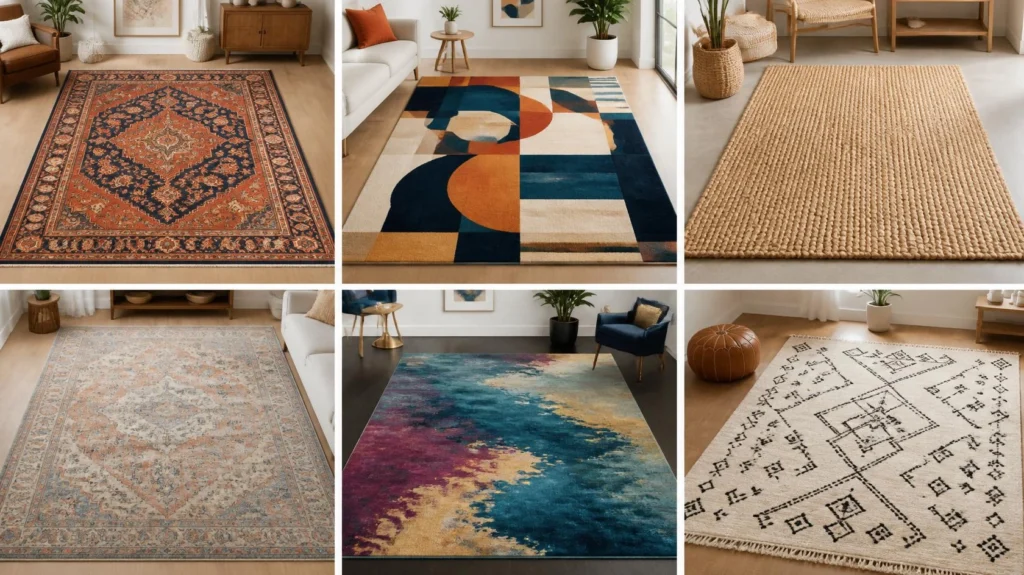
If you are unsure where to start, think about scale first. A rug that is too small under a sofa or dining table can make even well chosen furniture decor look disconnected, while a properly sized rug instantly anchors the whole layout.
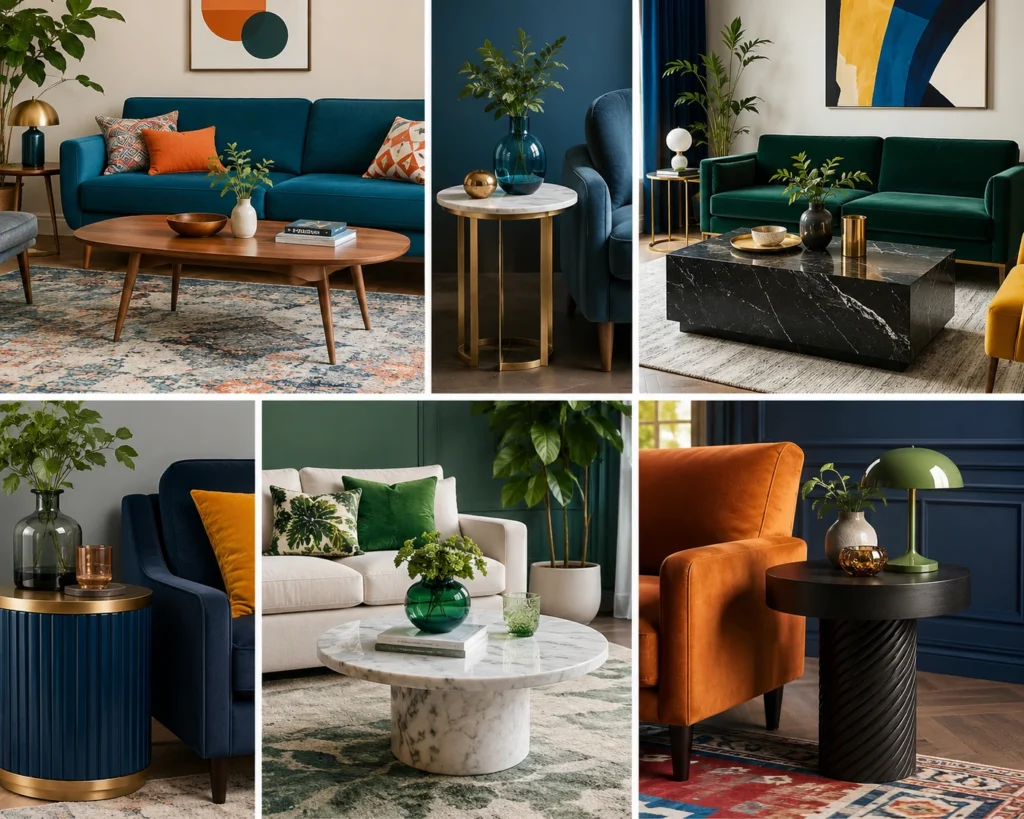
If there is one piece of furniture that quietly runs the whole living room, it is the center table. Side tables work right alongside it, and together they carry both the practical and decorative weight of the space. This pairing is one of the most important furniture decor ideas to get right early in a project, since almost everything else in the room gets arranged around it.
The trick is matching the table to your actual style rather than picking whatever looks nice in a single photo. A mid century living room usually calls for a warm wood coffee table with tapered legs. An art deco space looks better with a marquetry table or something with metallic detailing and clean geometric lines. If your room leans minimalist, a simple marble or travertine top keeps things clean without adding visual noise, letting other furniture decor pieces stand out instead.
One detail I always double check before finishing a project is table height. A coffee table should sit at roughly the same height as your sofa seat, or just slightly lower, so the whole seating arrangement feels balanced instead of awkward. Side tables should sit close enough to a chair or sofa arm that setting down a drink or a book feels natural, not like a reach.
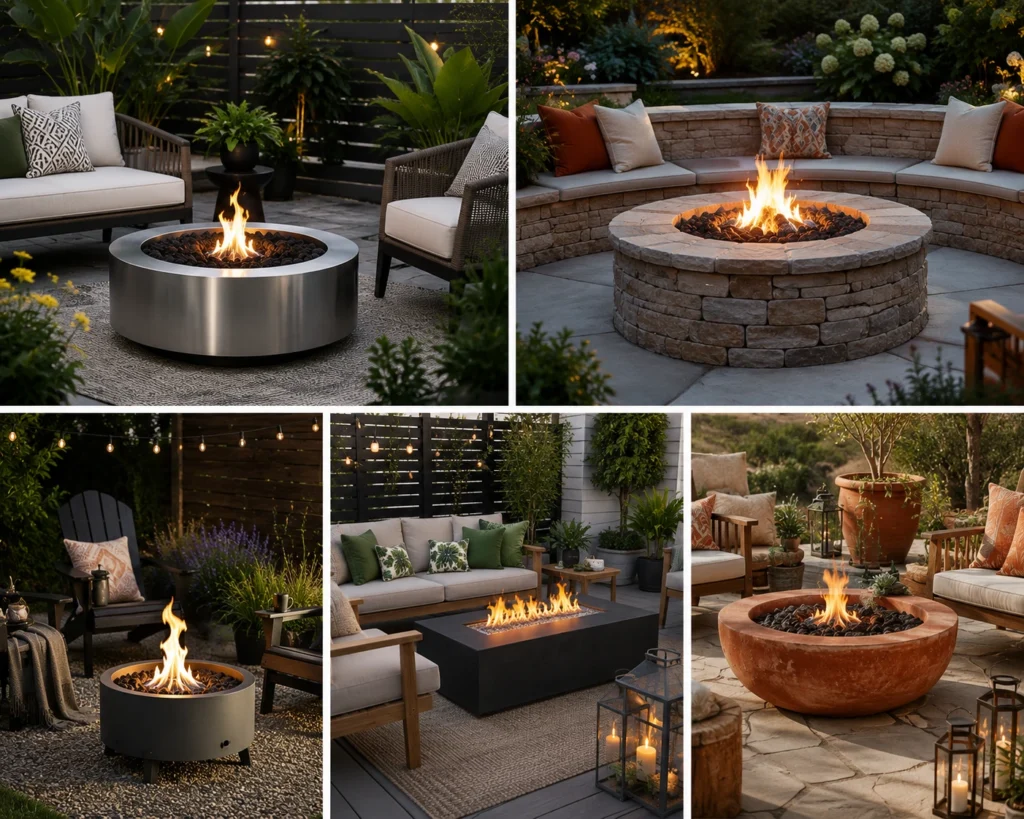
Fire pits have become one of my favorite additions to outdoor furniture decor ideas, and it makes sense why. They stretch outdoor living well past the warmer months and give any patio, deck, or backyard a natural gathering point that draws people together.
Before choosing one, think about whether you want it fixed in place or portable. A freestanding fire pit in textured stainless steel adds a modern edge and works especially well in contemporary outdoor layouts, while a more traditional stone or clay design fits better into a rustic or farmhouse style backyard. Either way, a fire pit works as both a functional heat source and a striking piece of outdoor furniture decor that draws the eye even when it is not lit.
A folding screen or room divider is one of those furniture decor ideas that solves a real problem instead of just adding decoration. If you are working with one larger room and want to carve out a cozier corner, whether that is a reading nook, a small office, or a private dressing area, a divider does that instantly, no construction required.
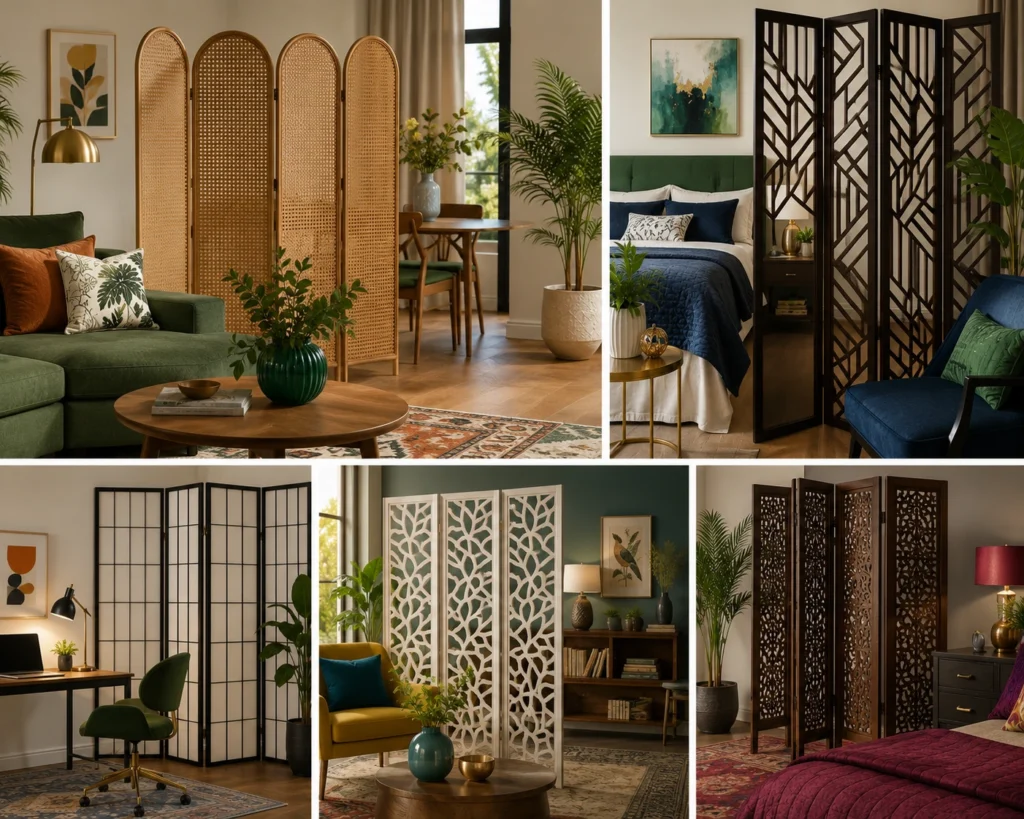
They also work across almost any design style. A sleek modern screen fits a minimalist apartment just as easily as a carved wooden divider fits an art deco or mid century space. In smaller homes especially, room dividers are one of the more underrated furniture decor ideas for making one space feel like two without sacrificing natural light or airflow.
Poufs solve a problem most living rooms eventually run into, needing extra seating without adding another bulky sofa or chair. They are easy to move around, simple to store, and double as a footrest or a makeshift side table when needed, which makes them one of the more flexible furniture decor ideas for smaller spaces.
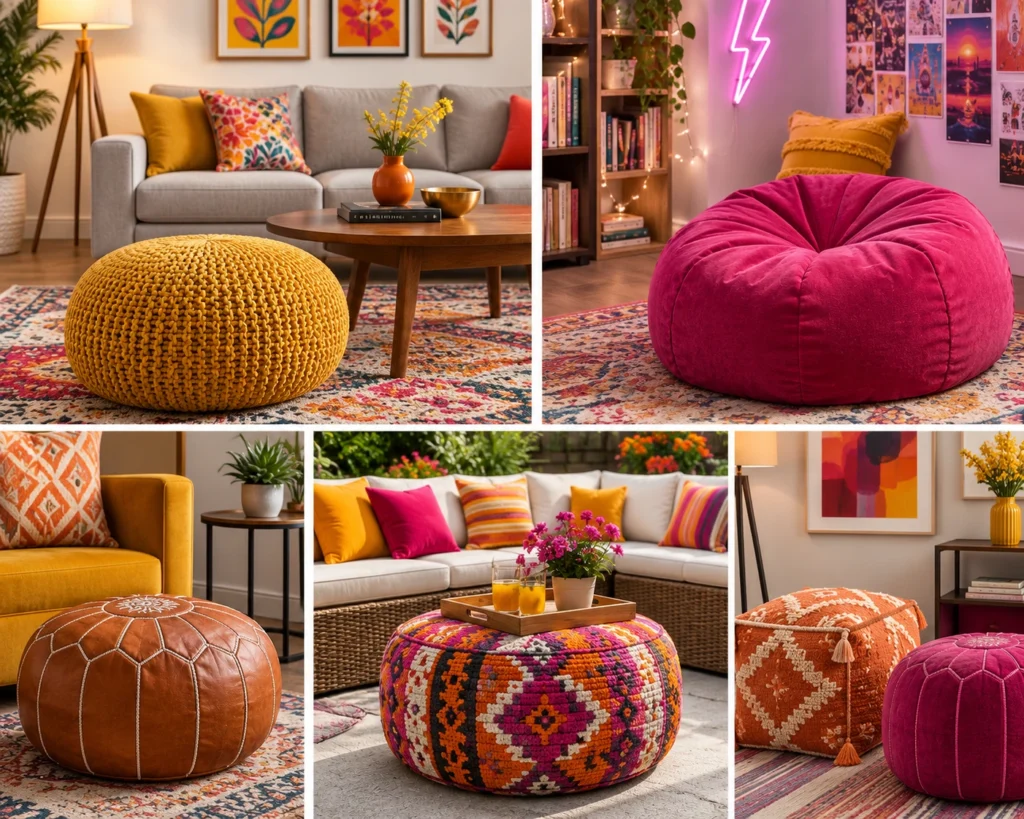
A round, pillow like pouf works beautifully in a teenager’s room or a casual media space. If you want something more decorative than functional, a pouf in a richer material, leather, wool, or a bold woven pattern, can elevate an outdoor lounge area just as easily as an indoor one. I like keeping a couple of extra poufs tucked in a corner for the nights when more guests show up than chairs available.
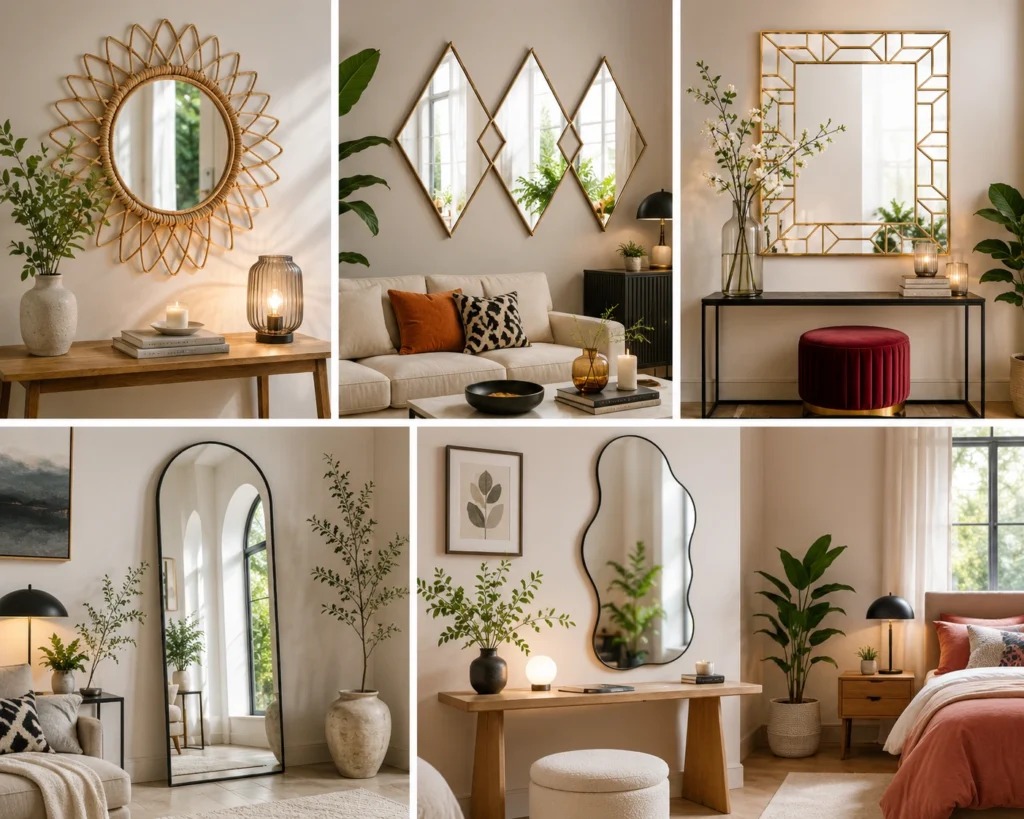
Mirrors are one of the simplest furniture decor ideas for making a room feel larger and brighter without moving a single wall. Depending on the space, I look at full length mirrors for a bedroom, a dressing mirror near a closet, or a sculptural wall mirror as more of an art piece than a functional object.
Choosing the right shape and finish here really is the finishing touch. A round mirror softens a room full of straight lines, while an arched or organically shaped mirror can add a bit of movement to an otherwise rigid layout. The right mirror can add a sense of glamour to a space that otherwise feels plain, and it is often the single least expensive way to visually expand a small room.
No furniture decor list is complete without talking about the sofa, since it is usually the piece everything else in the room ends up arranged around. I have learned the hard way that a sofa bought purely for looks rarely earns its keep. The ones that actually get used are the ones chosen with real life in mind, kids climbing on cushions, pets curling up in corners, or a Sunday afternoon spent doing absolutely nothing productive on it.
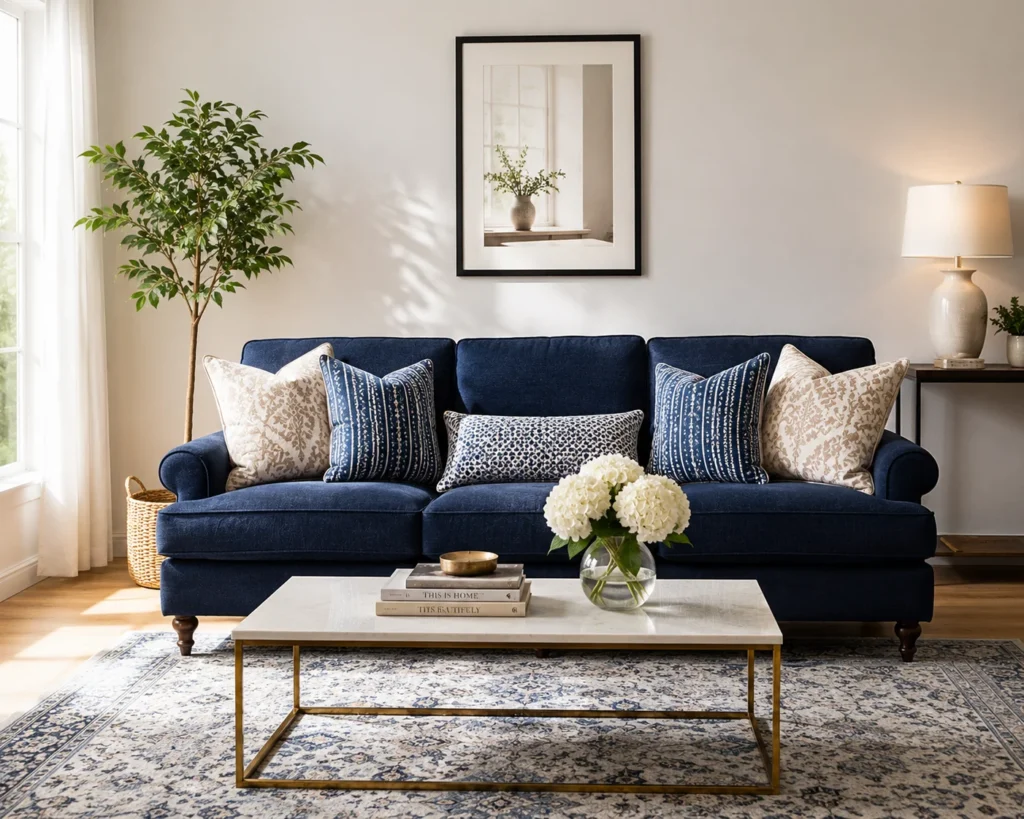
Fabric matters more than people expect. A performance fabric or a tightly woven weave holds up far better day to day than something delicate that shows every mark. Depth matters too. A deeper seat invites lounging, while a shallower one keeps posture upright, better suited to smaller rooms or more formal spaces.
Color is where I tell people to slow down the most. A neutral sofa in cream, gray, or a warm taupe gives you room to change your mind later, since pillows, throws, and accessories are far easier and cheaper to swap out than an entire couch. Save the bold color or pattern for something smaller. Once the sofa is right, the rest of the room genuinely does get easier to plan around it.
Curtains are one of those furniture decor ideas that quietly do more work than people give them credit for. Bare windows can make even a beautifully furnished room feel unfinished, while the right curtains soften hard lines, add color or texture, and help control both light and privacy throughout the day.
Height is the detail most people get wrong. Hanging curtain rods closer to the ceiling rather than right above the window frame makes ceilings feel taller and windows feel larger, an easy trick that costs nothing extra. Length matters just as much. Curtains that just barely reach the floor, or puddle slightly, tend to look far more intentional than ones that stop short.
Fabric weight should match the room’s purpose. Lighter linen or cotton lets soft light filter through living spaces during the day, while heavier blackout fabric works better in bedrooms where a darker, quieter feel matters more. Layering a sheer panel underneath a heavier curtain gives you the flexibility to adjust light and privacy without needing to replace anything.
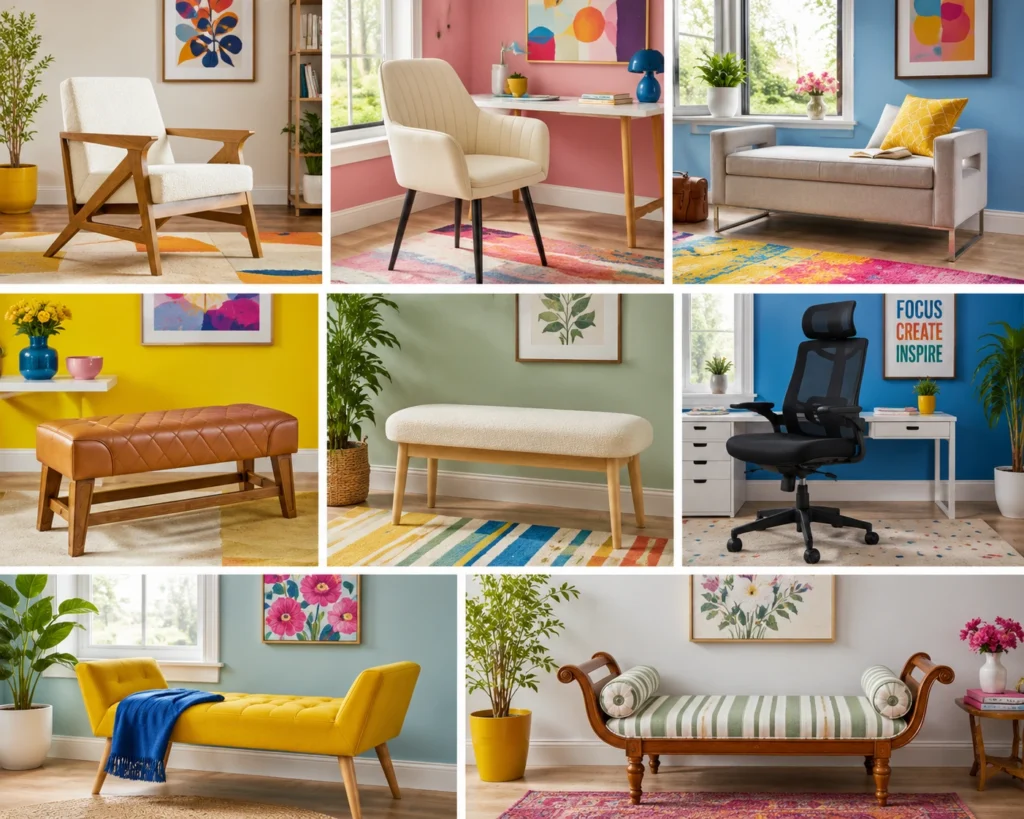
Benches and armchairs might be the most flexible furniture decor ideas on this entire list. A bench that sits in your entryway today can move into a bedroom tomorrow without missing a beat. An art deco style bench tucked under a dining table frees up visual space while still being genuinely useful for extra seating during gatherings.
Armchairs work the same way. A mid century armchair instantly elevates a bedroom, living room, or home office, while a more sculptural, statement armchair can define a whole corner of a room on its own. When I am stuck on how to finish an awkward empty corner, a well chosen armchair is almost always the answer, since it adds both seating and visual weight without requiring a full furniture rearrangement.
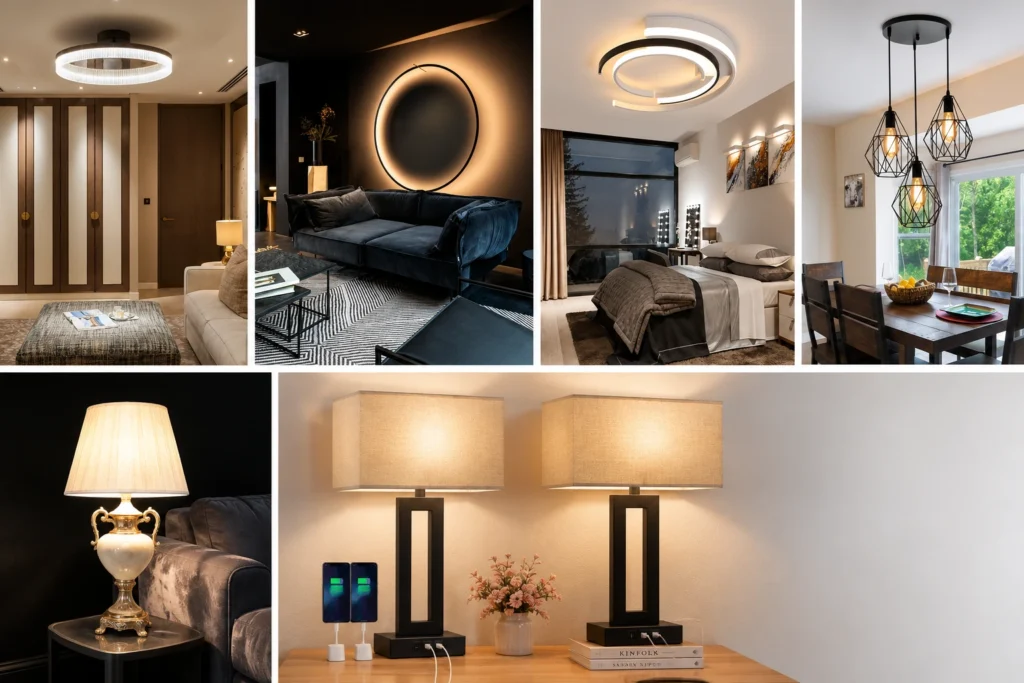
Lighting might be the single most transformative item on this list of furniture decor ideas. A suspension lamp, chandelier, sconce, or floor lamp does more than illuminate a space, it changes the entire mood and style of the room, sometimes more dramatically than any other single purchase.
I tend to reach for pieces with a bit of art deco influence when I want a space to feel elevated, since that jewel like, sculptural quality instantly reads as high end without needing an entire room redesign. Layering lighting also matters here, combining an overhead fixture with a floor lamp or table lamp creates depth and warmth that a single ceiling light simply cannot achieve on its own.
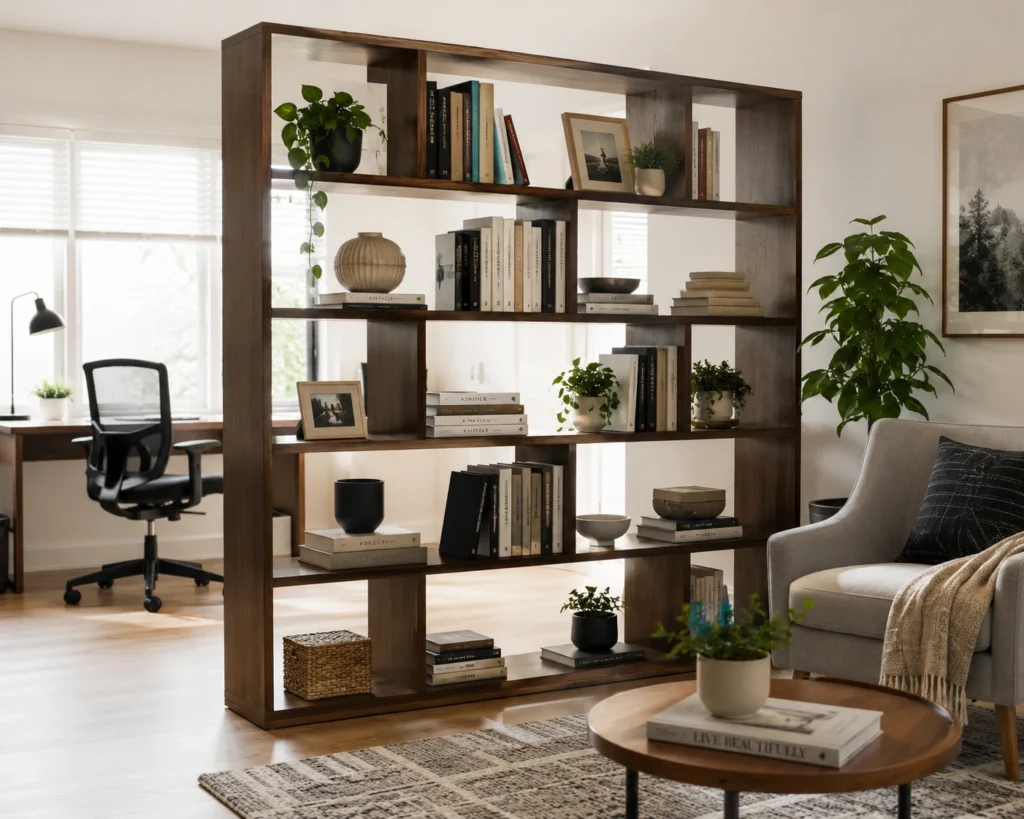
Bookcases are one of those furniture decor ideas people forget about until they need more storage. Beyond holding books, they are a great way to display collected memories, travel finds, or art pieces you want on view rather than tucked away in a drawer.
A double sided bookcase is especially useful if you need to define two separate areas within one room, like a home office and a reading nook, without adding a solid wall between them. Even a smaller bookcase, styled with a mix of books, small plants, and a few personal objects, brings a sense of warmth that an empty wall never will.
Once the bigger furniture pieces are in place, accessories are what make a room feel personal rather than staged. Pillows, candles, framed art, and a diffuser or two are small additions, but they are often what people notice and remember most about a space. This final layer is where all your other furniture decor ideas come together into something that actually feels lived in.
This is really the step where your own taste gets to shine. Let your instincts guide you here more than any trend, and do not be afraid to mix in pieces that have real sentimental value alongside newer finds.
None of these furniture decor ideas need to be used all at once. Most rooms come together piece by piece, over time, as you find items that actually fit your life and your style. Start with the pieces that solve a real need in your space, a rug that defines the room, a table that anchors the seating, lighting that sets the mood, then layer in the smaller furniture decor ideas, poufs, mirrors, bookcases, and accessories, that simply make you happy every time you walk into the room.
Begin with the largest, most functional piece first, usually a rug or a center table, since everything else in the room tends to get arranged around it. Once that anchor piece is in place, layering in lighting, seating, and accessories becomes much easier.
Look at the lines and materials already present in your space. Warm wood and tapered legs point toward mid century style, while marble, travertine, and clean geometry suit a more minimalist or contemporary look. Matching new furniture decor to what you already own keeps a room feeling intentional rather than mismatched.
They work well as flexible, secondary seating rather than a full replacement. Poufs and benches are ideal for accommodating extra guests or adding a casual seating option without committing to a large, permanent piece of furniture.
Mirrors are one of the most effective options, since they reflect light and visually double the depth of a room. Choosing lighter colored center tables and side tables, along with a properly sized rug, also helps a small space feel open rather than cramped.
There is no strict number, but a good rule of thumb is to choose pieces with real purpose or meaning rather than filling every surface. A few well chosen candles, framed art, or pillows will always look more finished than a large collection of items with no clear connection to each other.