Address
304 North Cardinal
St. Dorchester Center, MA 02124
Work Hours
Monday to Friday: 7AM - 7PM
Weekend: 10AM - 5PM
Address
304 North Cardinal
St. Dorchester Center, MA 02124
Work Hours
Monday to Friday: 7AM - 7PM
Weekend: 10AM - 5PM

The best reading lamps are not one-size-fits-all. A bedside lamp has a different job than a living room reading lamp. Here's how to choose the right one for wherever you actually read.
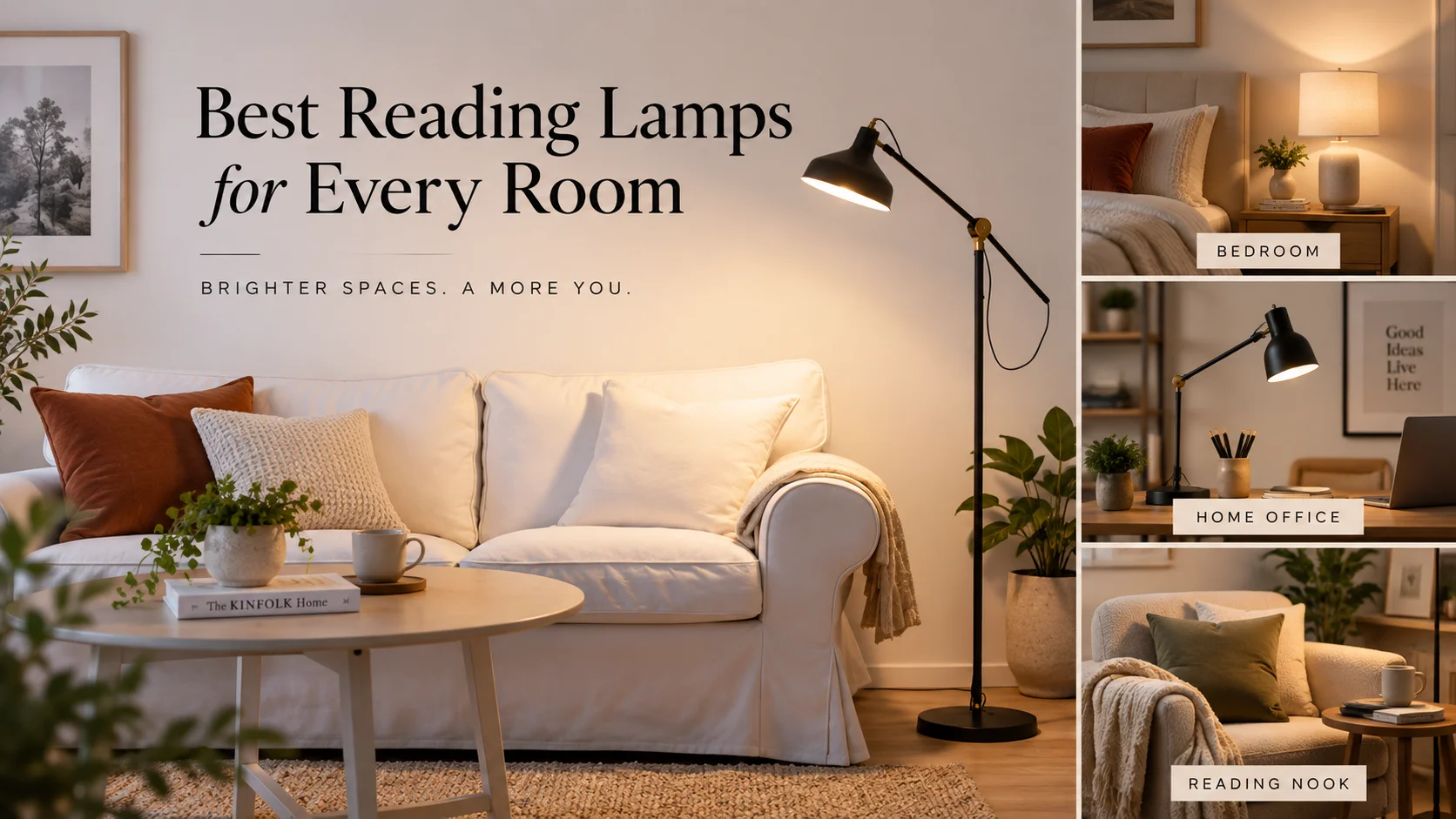
Finding the best reading lamps for your home is less about picking whichever one looks nicest online and more about matching the lamp to where you actually read. A lamp that works beautifully on a nightstand can be completely wrong for a reading chair across the room, and a desk lamp built for typing rarely does a great job lighting a book held at a different angle entirely. Once you separate the decision by room, choosing among the best reading lamps gets a lot simpler, since each space is really solving a different lighting problem.
A bedside lamp has to do three things at once. It needs to light the page well enough to actually read comfortably, it needs to avoid throwing glare directly into your eyes when you sit up against the headboard, and it needs to be calm enough that the room can wind down once the book closes. Among the best reading lamps for this specific spot, height matters more than most people expect, since your eyes sit much closer to a bedside lamp than they would to a lamp anywhere else in the room.
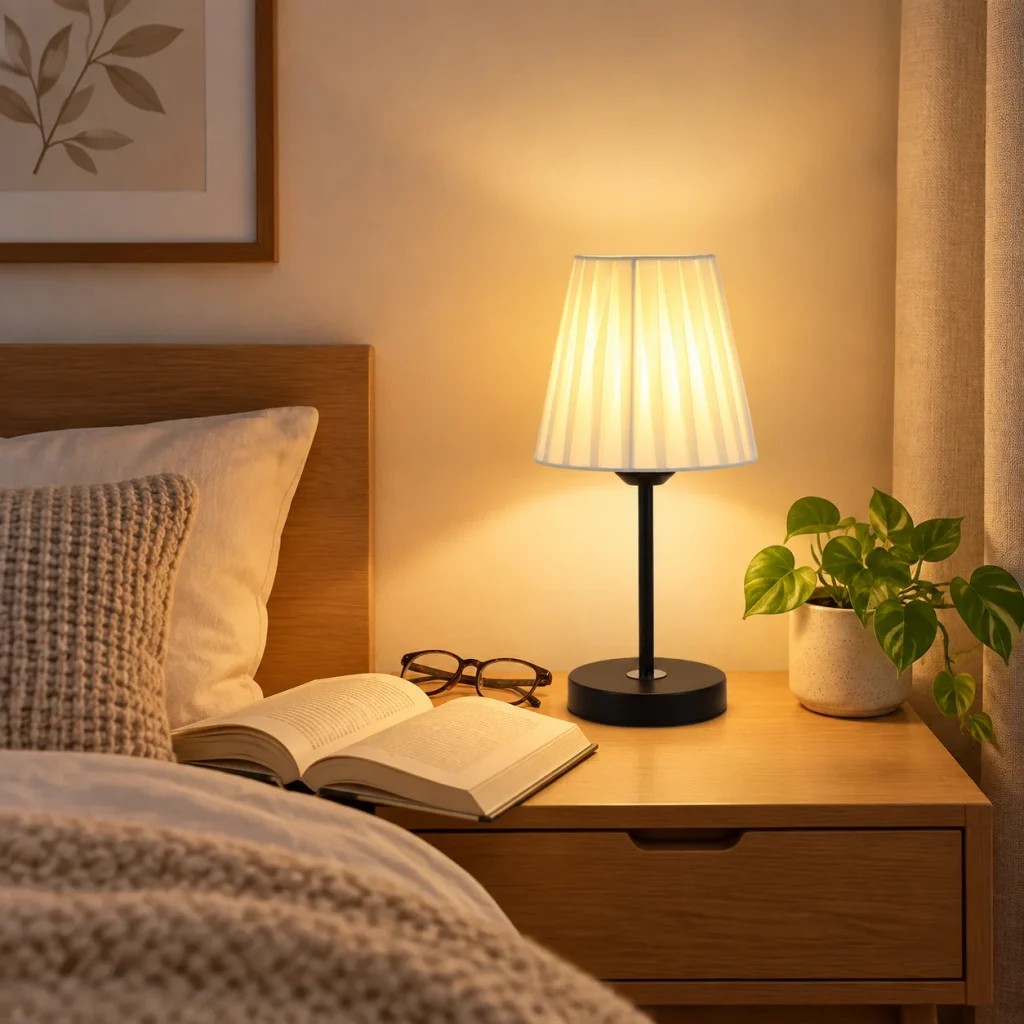
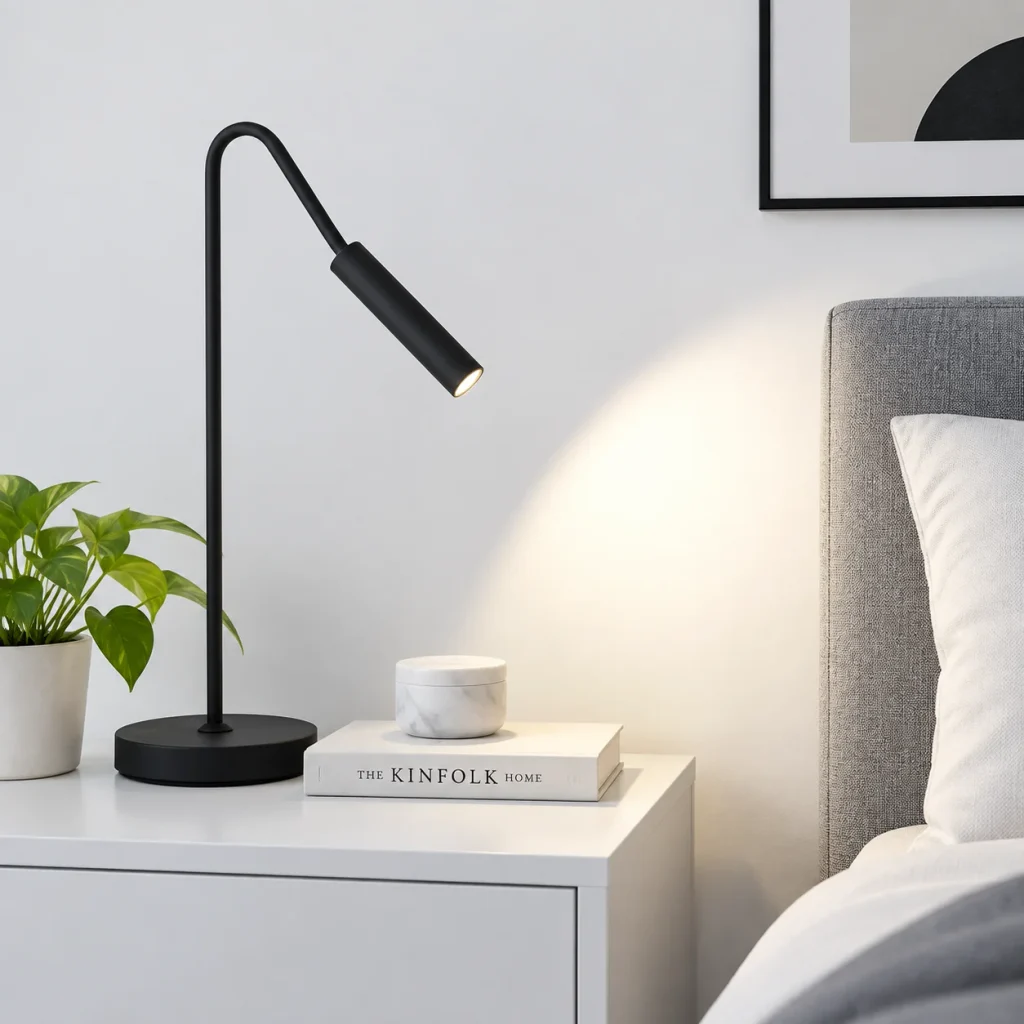
A lamp that sits too tall for your nightstand throws light straight at your face rather than down onto the page. One that sits too short leaves the shade practically level with your eyes, which causes exactly the kind of glare a good bedside lamp is supposed to avoid.
The best reading lamps for a nightstand generally sit at a height where the bottom of the shade lines up roughly with your shoulder when you’re sitting up in bed, close enough to read by, low enough not to blind you.
If you share a bed, dimming becomes one of the more useful features you can look for. A reading lamp that can also drop down to a soft, low glow means you can keep reading a few minutes after your partner has turned in, without needing a completely separate night light setup.
A reading chair or corner in the living room needs an entirely different approach than a bedside table does. Since you’re usually sitting further from the light source, and often for longer stretches, this is where floor lamps and swing arm wall sconces genuinely outperform a table lamp.
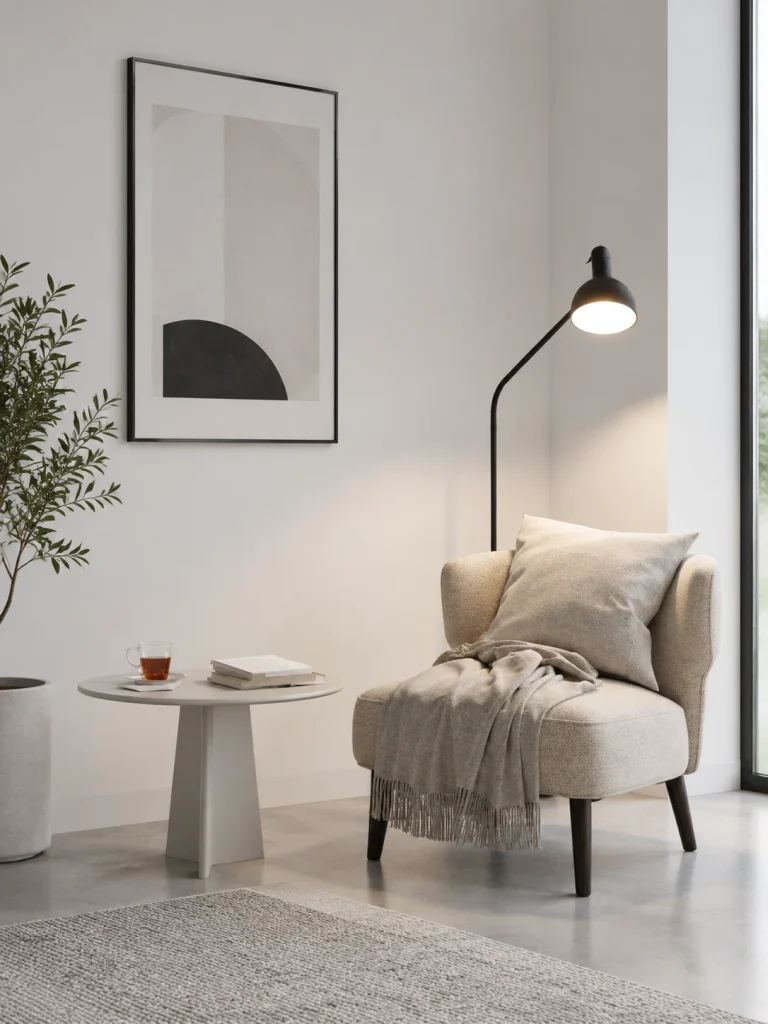
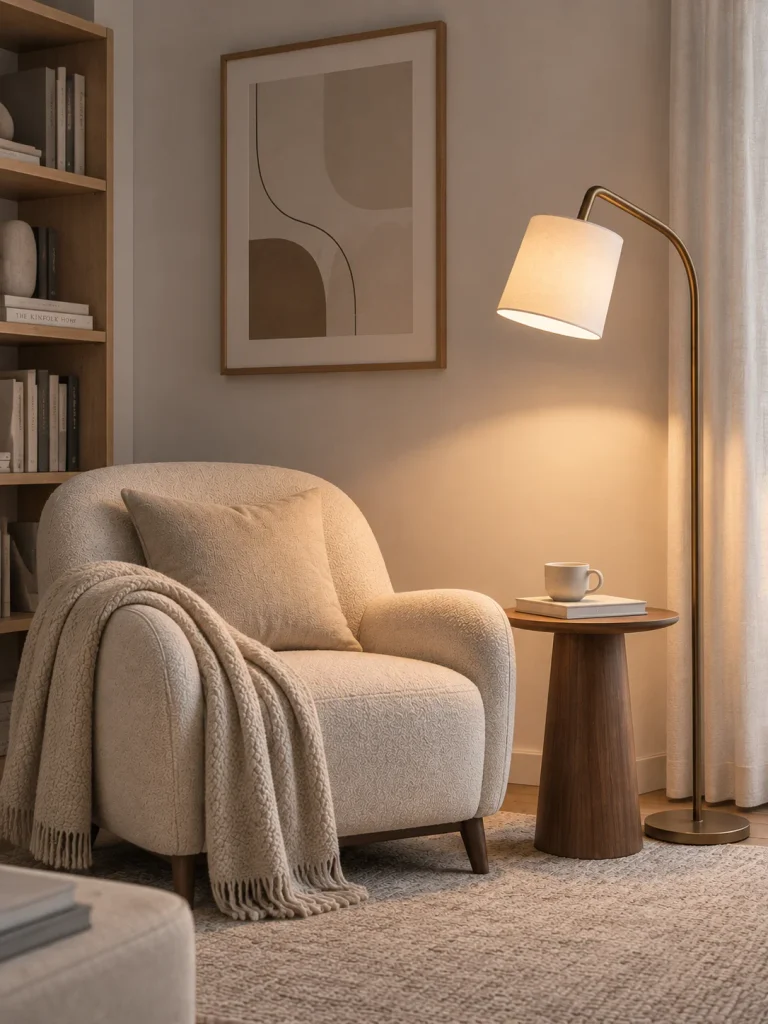
Among the best reading lamps for this kind of setup, an adjustable arm or swiveling shade lets you angle the light exactly onto the page rather than lighting the whole corner evenly, which actually matters less for comfort than people assume.
A tall, arched floor lamp positioned just behind and slightly to the side of a reading chair tends to work better than one placed directly in front, since directly overhead lighting can cast a shadow from your own head or the book itself. If floor space near your chair is limited, a wall mounted swing arm sconce solves the same problem without taking up any actual footprint, which matters a lot in a smaller reading corner.
Not every home has room for a full sized lamp next to the bed or beside a reading chair, and this is where the best reading lamps for small spaces genuinely differ from the standard picks.
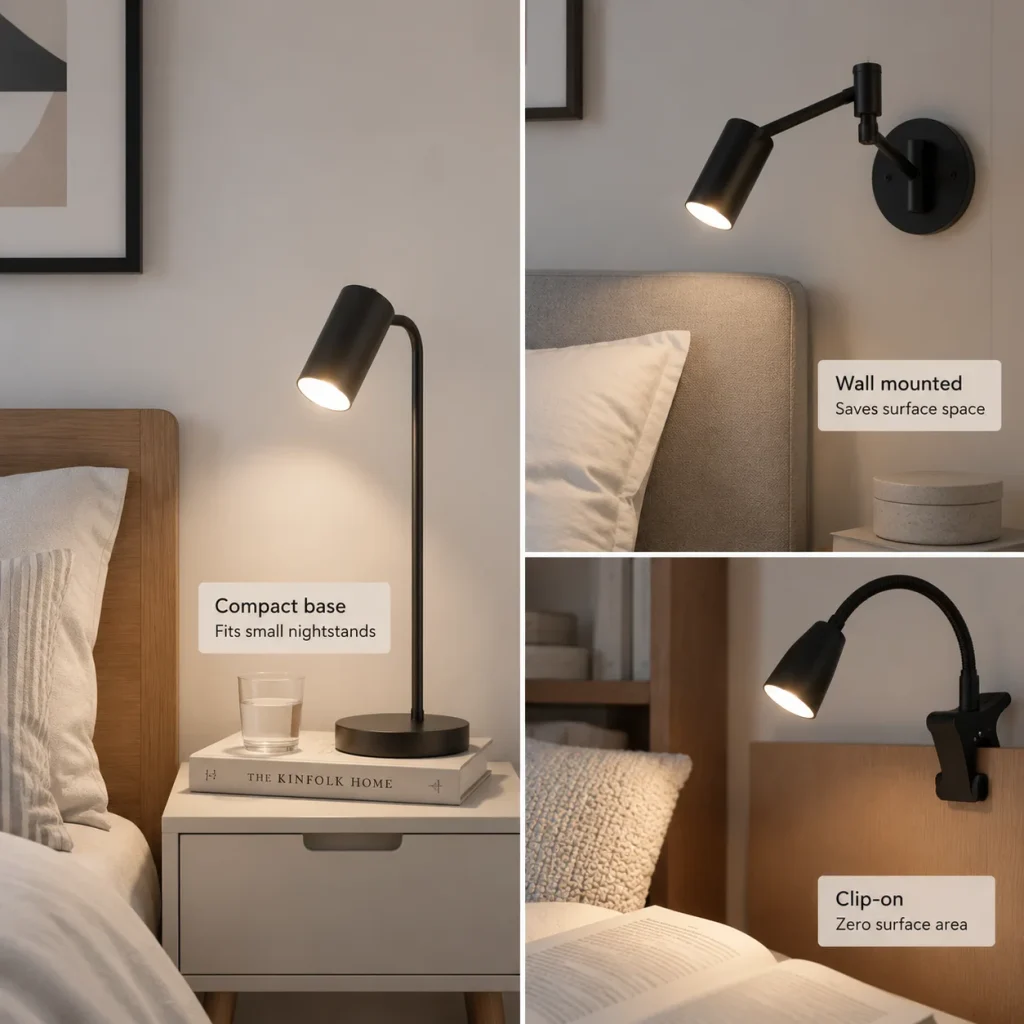
A compact base with a narrower footprint keeps a tight nightstand from feeling crowded, while a swing arm or wall mounted option removes the base entirely, which is often the better choice once a nightstand gets small enough that any base at all starts eating into usable surface space.
Clip-on reading lamps are worth mentioning here too, since they solve the small space problem more directly than almost anything else. Clipped onto a headboard, a shelf, or the arm of a chair, they take up essentially zero surface area while still delivering focused, adjustable light exactly where it’s needed.
Plenty of lamps look the part without actually functioning well for reading, and knowing what separates the best reading lamps from a lamp that merely looks like one comes down to a handful of specific features rather than style alone.
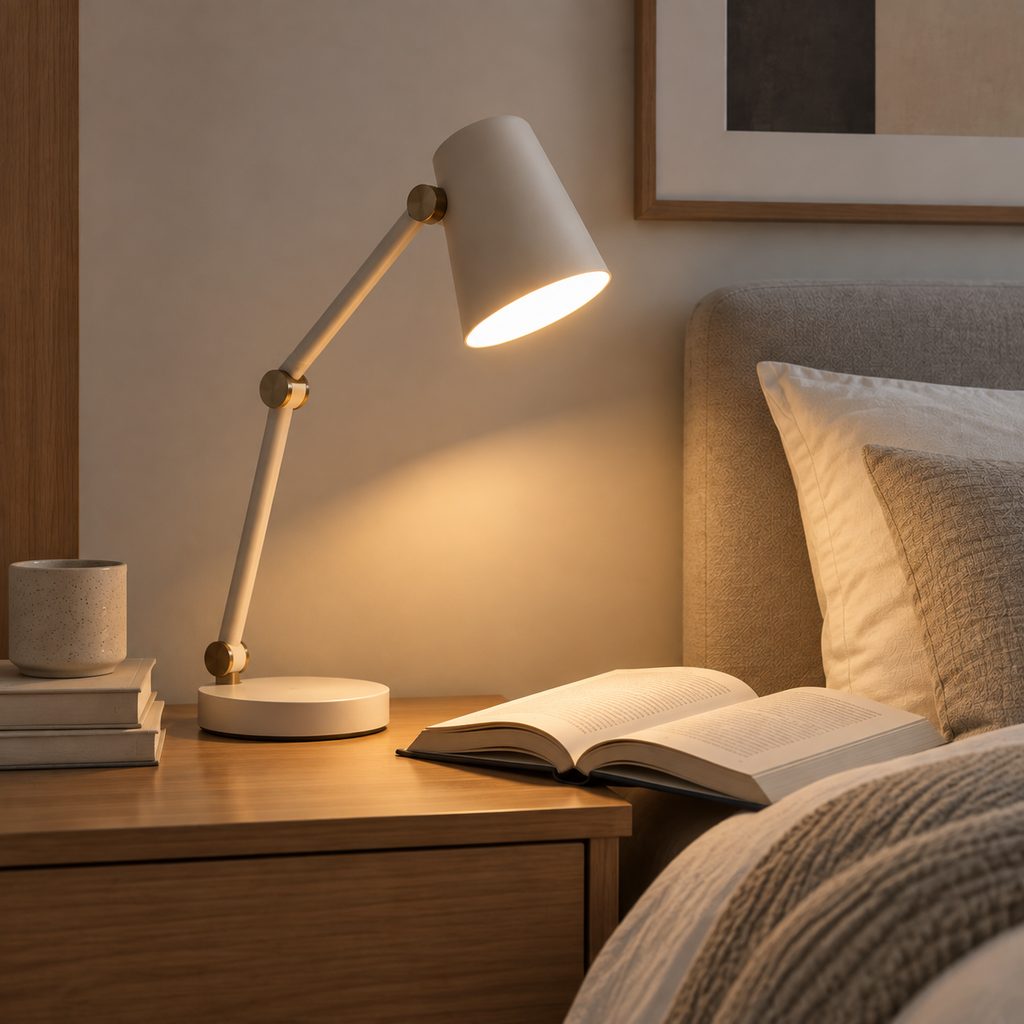
Dimming control tops the list, since a reading lamp that can adjust between a bright, focused setting and a much softer glow does double duty as both a reading light and an evening ambient light, without needing two separate lamps. Glare control matters just as much, and it usually comes down to shade design rather than bulb strength, a shade that directs light downward onto the page, rather than outward at eye level, avoids the harsh, squinting kind of brightness that makes reading tiring rather than relaxing.
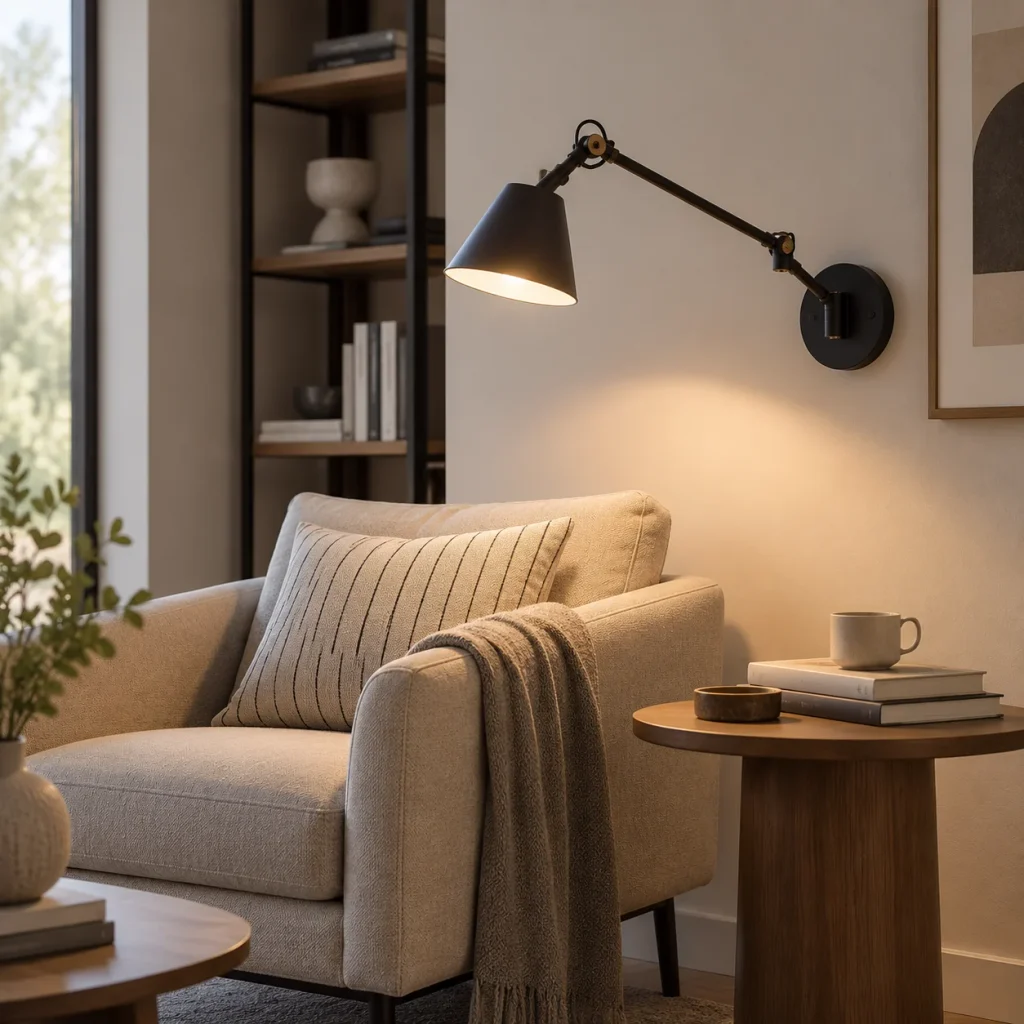
Adjustability, whether that’s a hinged neck, a swing arm, or a swiveling shade head, lets you fine tune exactly where the light lands, which matters more than raw brightness in almost every case.
This is one of the more genuinely useful things to understand before buying any of the best reading lamps, since it affects comfort more than most people realize. Warmer light, generally in the 2700K to 3000K range, tends to feel calmer and less likely to interfere with winding down before sleep, which makes it the better choice for a bedside lamp specifically.
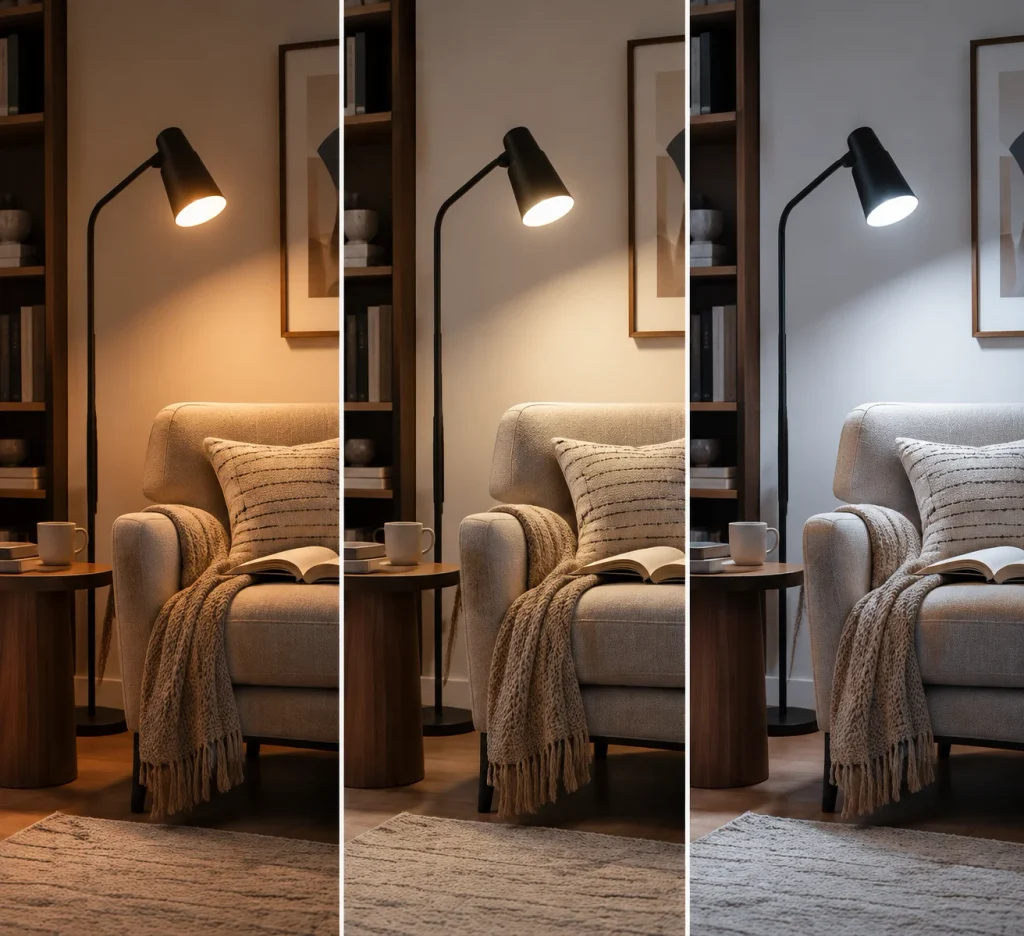
Cooler light, closer to 4000K and above, reads as brighter and crisper, which can genuinely help with long reading sessions during the day, but tends to feel harsh and overstimulating right before bed.
If you only own one reading lamp and use it in more than one context, look for one with adjustable color temperature rather than committing to a single fixed tone, since that flexibility covers both an afternoon reading session and a late night chapter without needing two different lamps for two different moods.
It’s worth addressing directly why a dedicated reading lamp matters at all when most rooms already have some kind of overhead or ambient lighting. Overhead lights are built to fill an entire room evenly, which is exactly the opposite of what reading actually needs.
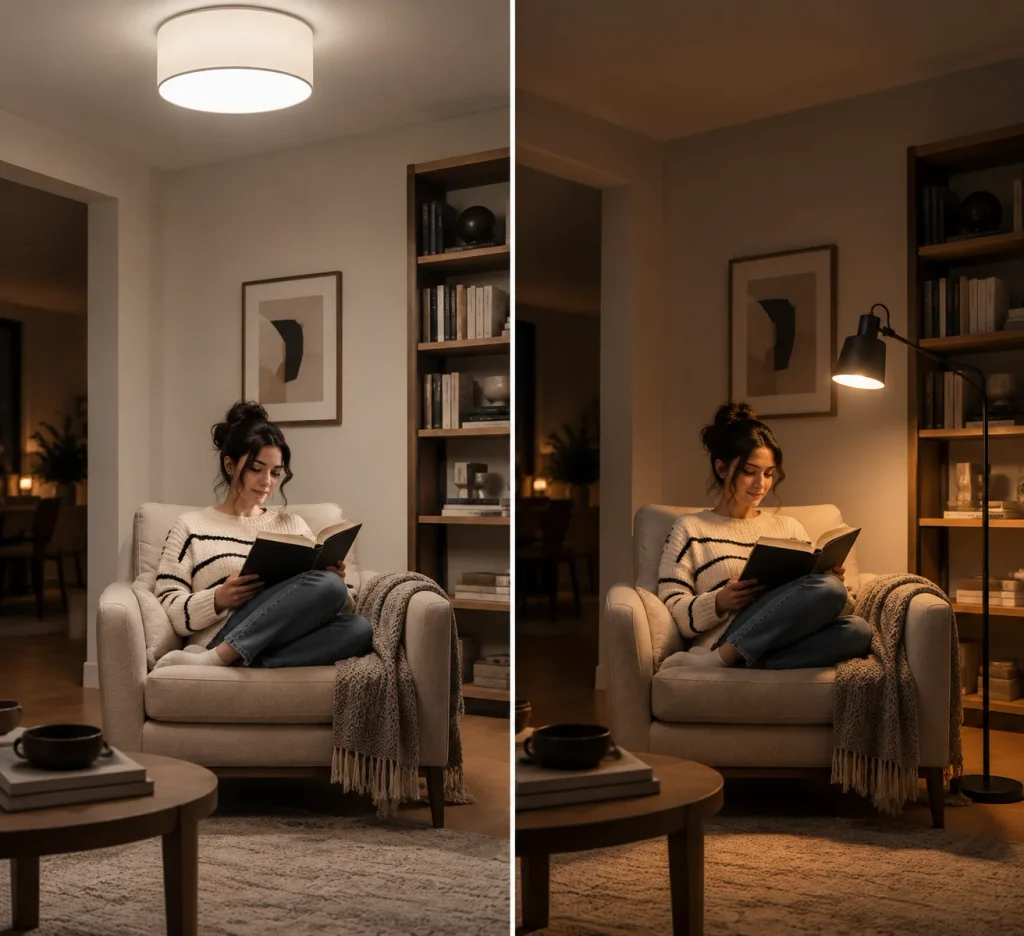
A book held twelve to eighteen inches from your face needs concentrated, direct light on that specific small area, not a room that’s uniformly lit from above. Relying on overhead lighting alone for reading tends to leave the page dimmer than the rest of the room looks, which forces your eyes to work harder without you necessarily noticing why.
This is really the whole argument for the best reading lamps existing as their own category separate from general room lighting. A single well placed reading lamp, positioned correctly and at the right brightness, will almost always beat a bright overhead fixture for actual reading comfort, even if the overhead light technically puts out more total lumens across the room.
Even one of the best reading lamps on the market will underperform if it’s placed in the wrong spot. As a general rule, the lamp should sit slightly behind your shoulder rather than directly beside your head, so the light falls forward onto the page instead of shining sideways past it. The bottom edge of the shade should sit roughly level with your eyes when you’re in your normal reading position, low enough to focus light downward, high enough that the bulb itself isn’t visible and causing glare.
Distance matters too, and it’s easy to get wrong in either direction. A lamp placed too far away spreads its light too thin to make much difference over an overhead fixture. One placed too close can create a harsh, overly bright hot spot on the page that’s almost as tiring as too little light.
Somewhere between twelve and twenty inches from the page, depending on the lamp’s brightness, tends to be the sweet spot most people land on through simple trial and error.
Good reading lamps exist at almost every price point, and spending more doesn’t automatically mean better performance for actual reading. At the lower end, a simple LED lamp with an adjustable neck and at least two brightness settings covers the basics well, focused light, some control over intensity, and a low enough price that it’s an easy first upgrade.
In the middle range, dimmable lamps with multiple color temperature settings start showing up, which is where most of the genuinely useful features from the section above become available without needing a premium price tag. At the higher end, the difference tends to show up in build quality and design rather than actual lighting performance, brass finishes, more considered proportions, smart features like app control or voice activation, nice to have, but not what separates a lamp that helps you read from one that doesn’t.
A few habits quietly undercut what would otherwise be one of the best reading lamps for a given space. Placing a lamp too far behind your shoulder forces the light to fall unevenly across the page rather than lighting it head on.
Choosing a shade that’s fully open at the bottom often sends as much light sideways into the room as it does down onto the book, which wastes brightness and adds glare at the same time. And sticking with a single fixed brightness setting, when dimmable options are so widely available now, means missing out on a genuinely useful upgrade for very little extra cost.
If you’re specifically shopping for a desk setup rather than a bedside or reading nook lamp, our best desk lamps for eye strain guide covers that use case in more depth, focused work lighting rather than the softer, more flexible needs of casual reading.
Not every trending look is worth the upkeep. Here are the high-maintenance home decor trends that photograph beautifully but demand…

Lanterns get most of the attention when people talk about Mid-Autumn Festival, but the actual center of the holiday has…
Best small, budget-friendly Mid-Autumn Festival balcony decor ideas for moon viewing night, including the furniture, lighting, rugs, and paint colors…
The best reading lamps are not one-size-fits-all. A bedside lamp has a different job than a living room reading lamp….
Some fall decor ideas earn their spot every year. Others just fill a landfill by November. Here are the fall…
Mid-Autumn Festival home decor ideas do not need to be complicated or expensive. From lanterns to a proper mooncake centerpiece,…
A warm toned, dimmable lamp positioned close to the page, generally in the 2700K to 3000K range, is the best light for reading at night, since it’s gentle enough not to interfere with winding down afterward.
Warm light works best for evening and bedside reading, while cooler light can help with focus during longer daytime reading sessions. If you only have one lamp, adjustable color temperature covers both.
Brightness matters less than direction and glare control. A lamp with a shade that focuses light downward onto the page, with at least a couple of brightness settings to adjust as needed, works better than a single very bright bulb.
A dimmable lamp that can be lowered to a soft, low glow lets you keep reading after your partner has gone to sleep, without needing a separate night light.
Yes, LED lamps with adjustable brightness and warm color temperature options tend to reduce eye strain compared to a single, fixed harsh bulb, since you can match the light to how long or late you’re reading.
A tall floor lamp positioned slightly behind and to the side of the chair, or a wall mounted swing arm sconce if floor space is limited, both work well for a reading nook, since they light the page without casting a shadow from your own head.