Address
304 North Cardinal
St. Dorchester Center, MA 02124
Work Hours
Monday to Friday: 7AM - 7PM
Weekend: 10AM - 5PM
Address
304 North Cardinal
St. Dorchester Center, MA 02124
Work Hours
Monday to Friday: 7AM - 7PM
Weekend: 10AM - 5PM

These are the home decor mistakes I see most often, and every single one is an easy fix. A few small changes can turn any room from slightly off to genuinely timeless.
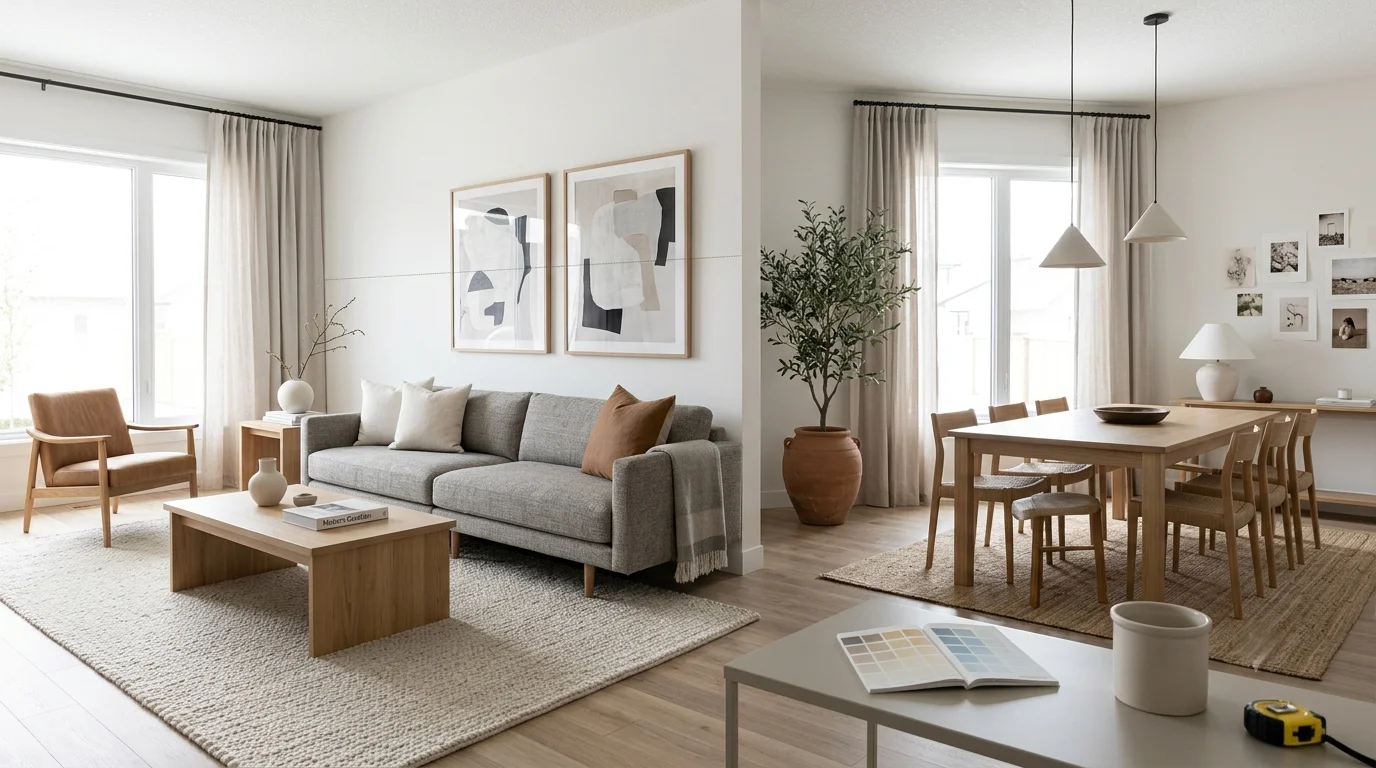
Every home has that one corner, or sometimes an entire room, that just feels a little off. You cannot always explain why, but something about the space does not sit right. More often than not, it comes down to one of the same handful of home decor mistakes I see over and over again while working on different homes.
The good part is that none of these mistakes are hard to fix. You do not need a full renovation or a big budget to correct any of them. A little awareness about how you decor your home goes a long way, and once you know what to look for, you will start noticing these same patterns everywhere, in your own home and everyone else’s.
Here are the ten decorating mistakes to avoid most often, along with the simple fixes that make the biggest difference.
This is probably the most common home decor mistake. A good general rule is to hang art so the center of the piece lands about 60 inches from the floor. That is roughly eye level for most adults standing in the room.
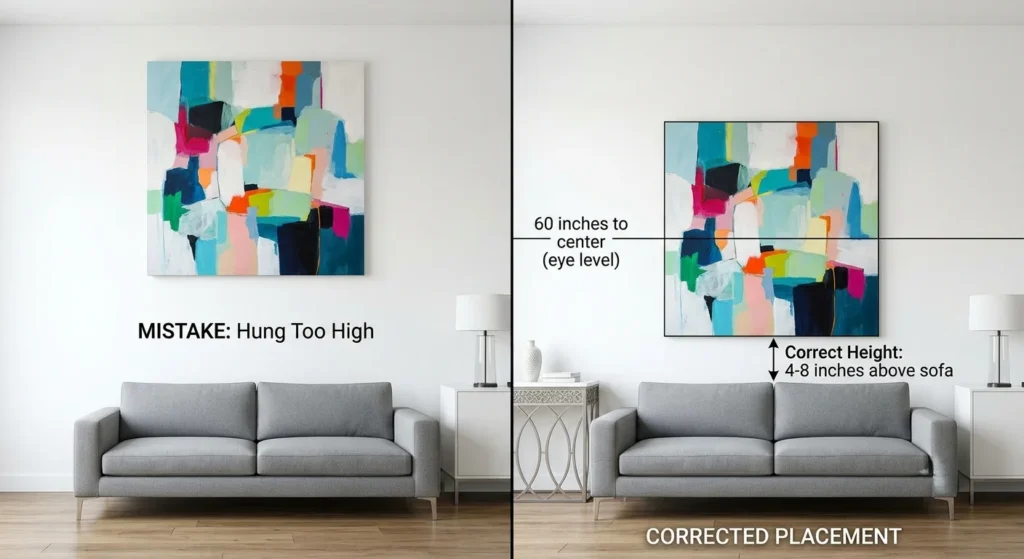
If you are hanging something above a sofa, bed, or console table, aim for the bottom of the frame sitting about 4 to 8 inches above the furniture. You do not need to measure this down to the millimeter, anything within that range will look intentional. The most common version of this mistake happens when a tall family member hangs art based on their own eye level, leaving the piece floating awkwardly close to the ceiling instead of relating to the furniture below it.
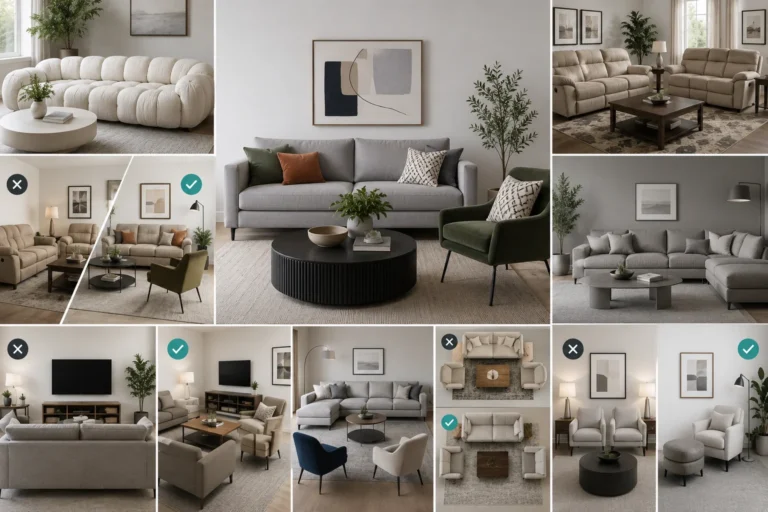
A living room where the sofa, loveseat, chairs, and ottoman are all the exact same fabric almost never feels warm or collected. It tends to read more like a furniture showroom than an actual home. This is one of the most common home decor mistakes because it removes the personality and visual interest that make a space feel inviting.
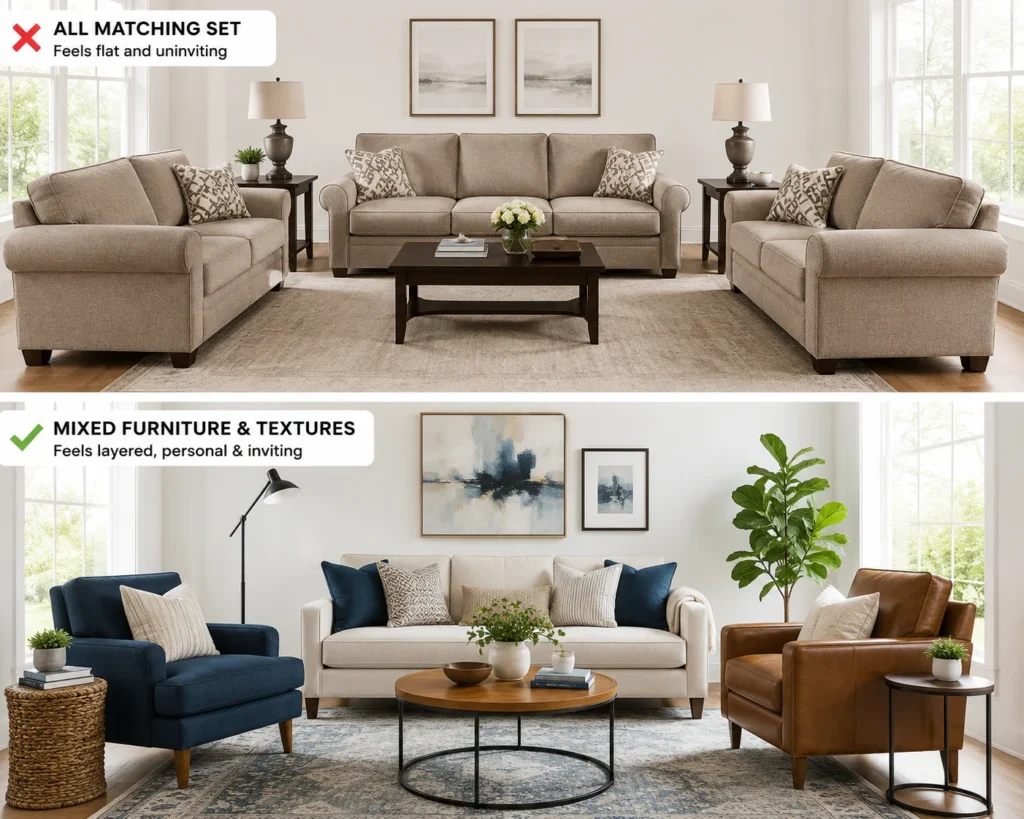
A matching sofa and loveseat is completely fine, think of it as one long sectional split into two pieces. The problem starts when every other seat in the room matches too. Mixing fabrics, textures, and even furniture eras is what gives a home design that feels lived in rather than purchased in a single afternoon. This is one of the easiest home decor ideas to apply even if you already own matching pieces. Simply swap in one accent chair in a completely different fabric or finish to avoid one of the biggest home decor mistakes and create a more balanced, timeless look.
Wall paint should almost always be the very last decision you make, not the first. It feels natural to fall in love with a wall color and build everything else around it, but in practice, this is one of the most common home decor mistakes that makes decorating your home significantly harder.
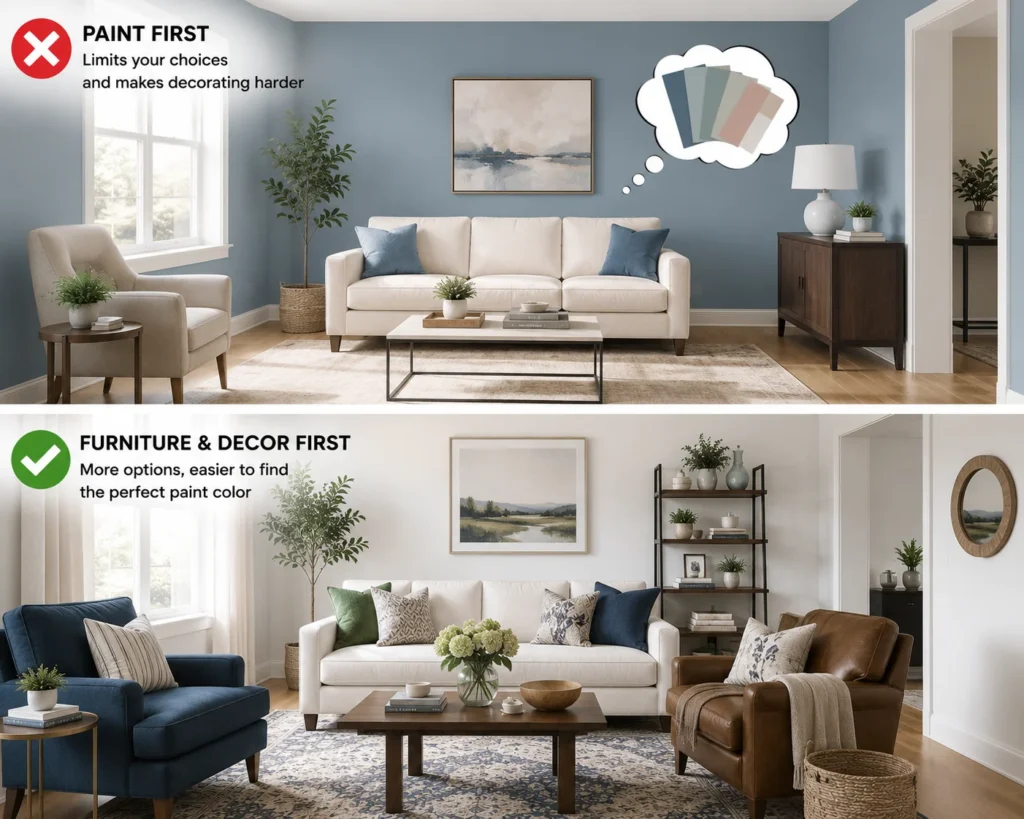
Choosing furniture, rugs, and fabrics first gives you thousands of paint options that will already work with your palette. Doing it backward means hunting for the one specific shade that happens to match a color you already committed to on every wall in the house. If you take away only one tip from this list, let it be this one, since it saves so much stress later in the process. Avoiding home decor mistakes like choosing paint too early will make it much easier to create a cohesive and timeless space.
Side tables are one of those details that quietly make or break a room, and this is one of the most overlooked decor mistakes in home decor. Ideally, a side table should sit within about 2 inches of the height of your sofa or chair arms, not dramatically taller or shorter.
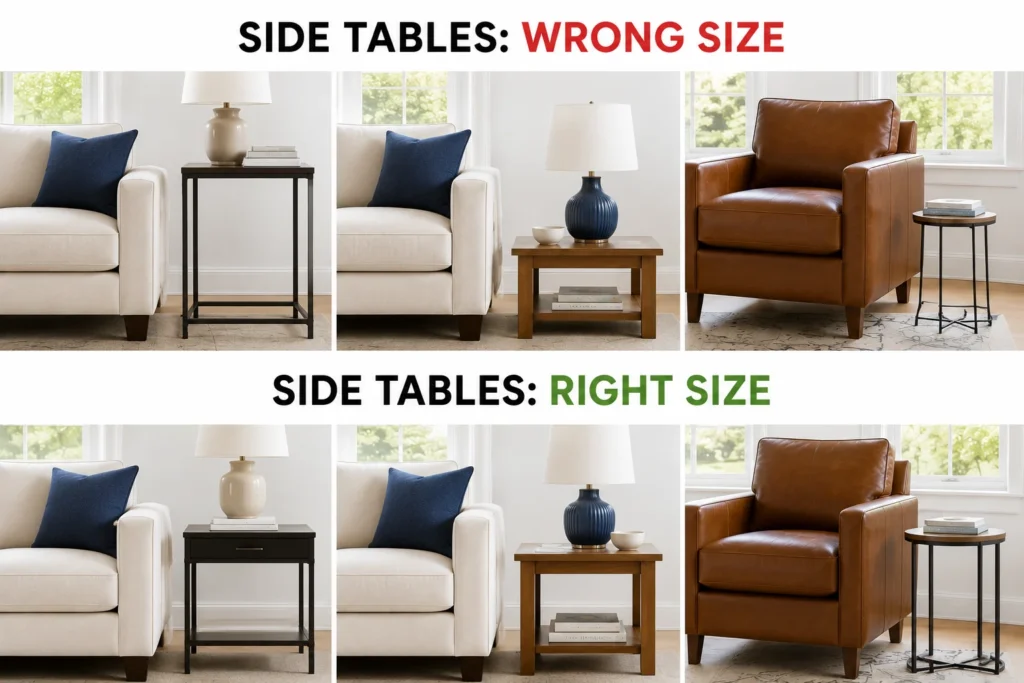
Scale matters too, not just height. A side table next to a heavier, solid piece of furniture, like a leather chair, can be equally substantial, maybe a thicker wood top with a solid base. A side table next to a lighter, more delicate chair should feel airier too, with thinner legs and more visible negative space underneath. Matching this visual weight is a simple home decor principle that creates a balanced and polished look. Among the easiest decor ideas to apply, choosing side tables with the right height and proportion helps you avoid common decor mistakes and makes your living space feel thoughtfully designed.
A crisp white trim looks clean in photos, but it does not always play nicely with warmer wall colors like taupe, greige, or soft tan. The contrast can feel cold and slightly clinical rather than cohesive. Choosing the wrong trim color is one of those subtle decor mistakes that can affect the overall look of your home decor.
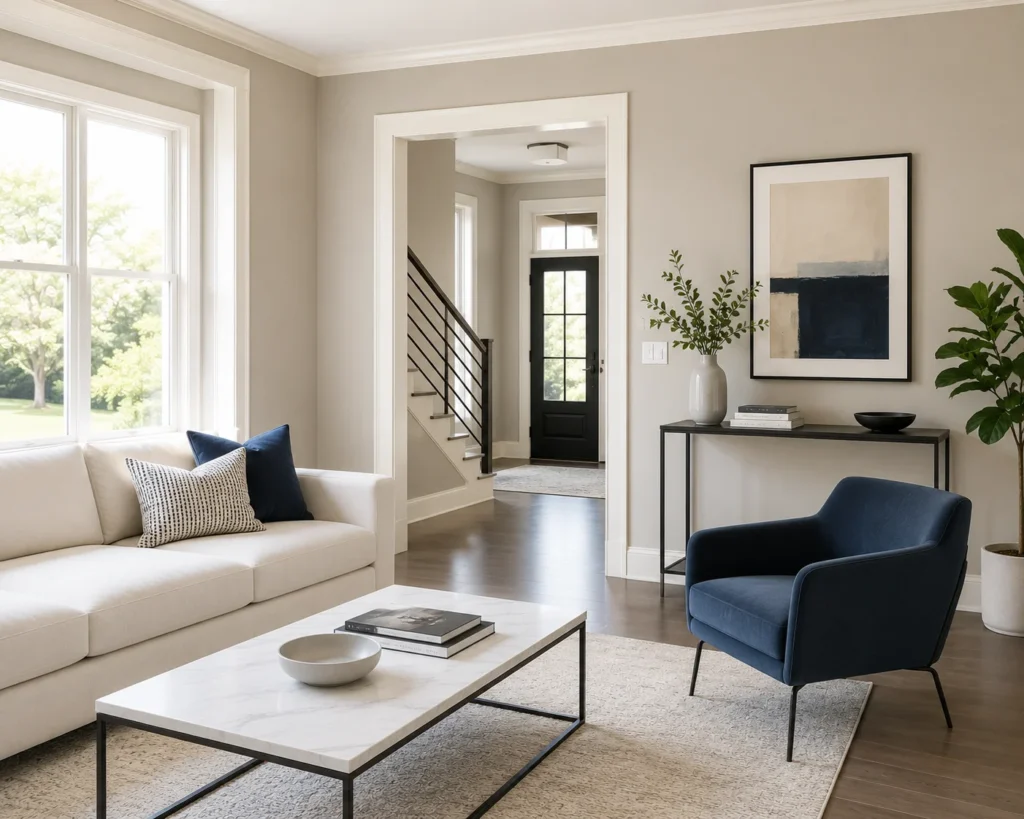
If your walls lean warm, look for a warmer, softer off-white for your trim instead of the brightest white on the shelf. Popular warm-leaning whites include shades like Alabaster or White Dove, both of which tend to blend more naturally with warmer wall tones than a stark, cool-toned white would. Among the easiest decor ideas to improve your home decor, selecting a trim color that complements your wall paint creates a softer, more timeless finish while helping you avoid common decor mistakes.
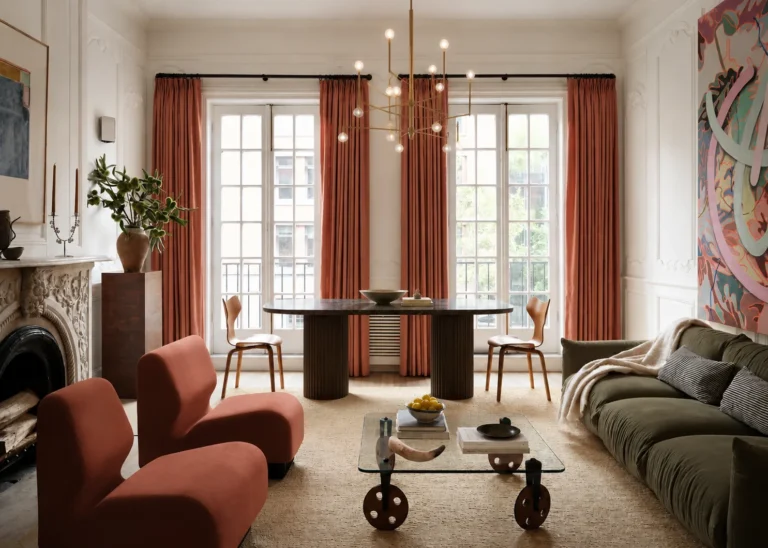
This mistake instantly makes ceilings feel shorter and windows feel smaller, the exact opposite of what most people actually want. Standard 84-inch curtain panels on an 8-foot ceiling often land the rod right at the top of the window frame, which cuts the room off visually. Hanging curtains too low is one of the most common decor mistakes that can make a space feel cramped.
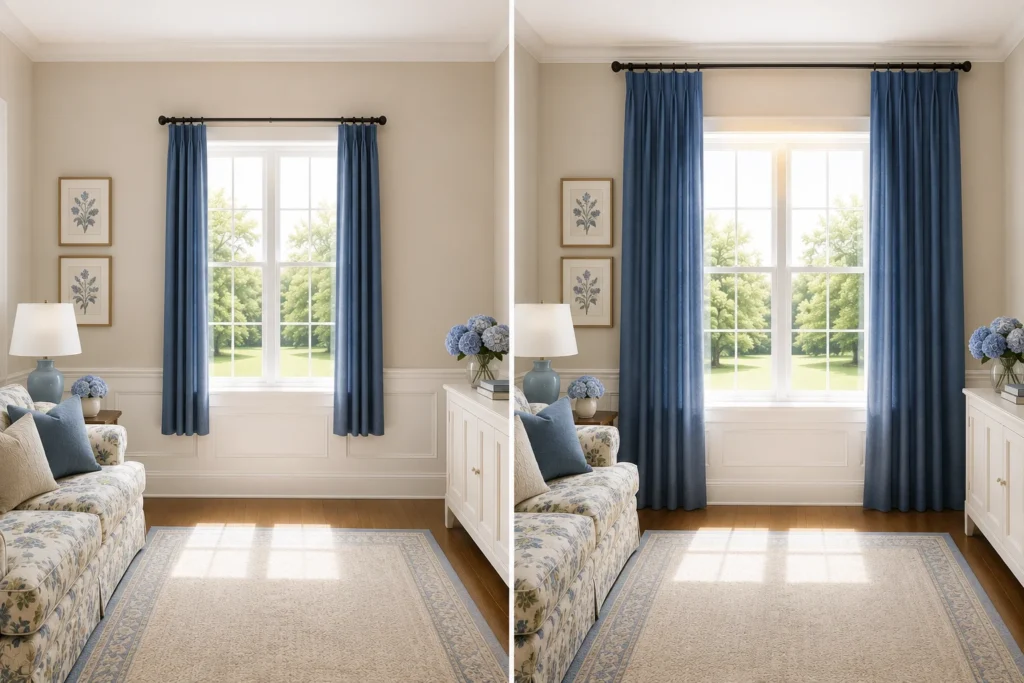
Instead, mount your curtain rod above the window frame, ideally somewhere between the top of the window and the ceiling, and extend it wider than the window itself on both sides. When the curtains are open, they should clear the glass completely rather than blocking any natural light. For a more traditional home, splitting the difference between the window and ceiling molding tends to look best. For a more modern space, mounting the rod almost at the ceiling creates a taller, more dramatic look. These living room curtains tips are simple home decor ideas that can make decorating home feel more polished and visually spacious.
A rug that floats in the middle of the room with no furniture touching it visually chops the space into awkward sections. As a general guide, the front legs of your main furniture pieces should rest on the rug, not hover just off the edge. Choosing the wrong living room rug is one of the most common decor mistakes people make when decorating home spaces.
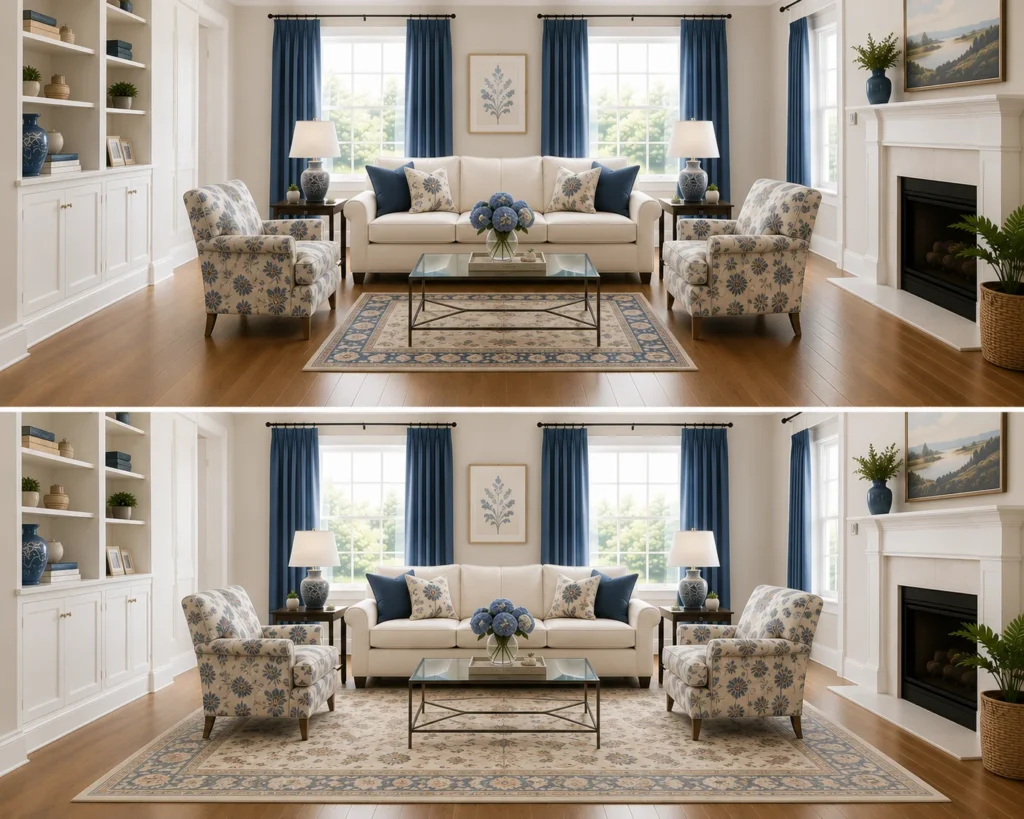
For an average-sized living room, aim for at least an 8-by-10-foot rug. Larger rooms often need a 9-by-12 or even a 10-by-14 rug to properly anchor the seating area. In especially large rooms, two rugs or one custom-sized piece may be the better choice. Whether you are renovating home interiors or planning a full home renovation, selecting the right rug size is a simple way to create a balanced, cohesive living room.
More is not always better when it comes to home decor. Covering every shelf and surface with small trinkets tends to create visual clutter rather than personality. A handful of larger, more meaningful pieces almost always reads as more intentional than a dozen tiny ones.
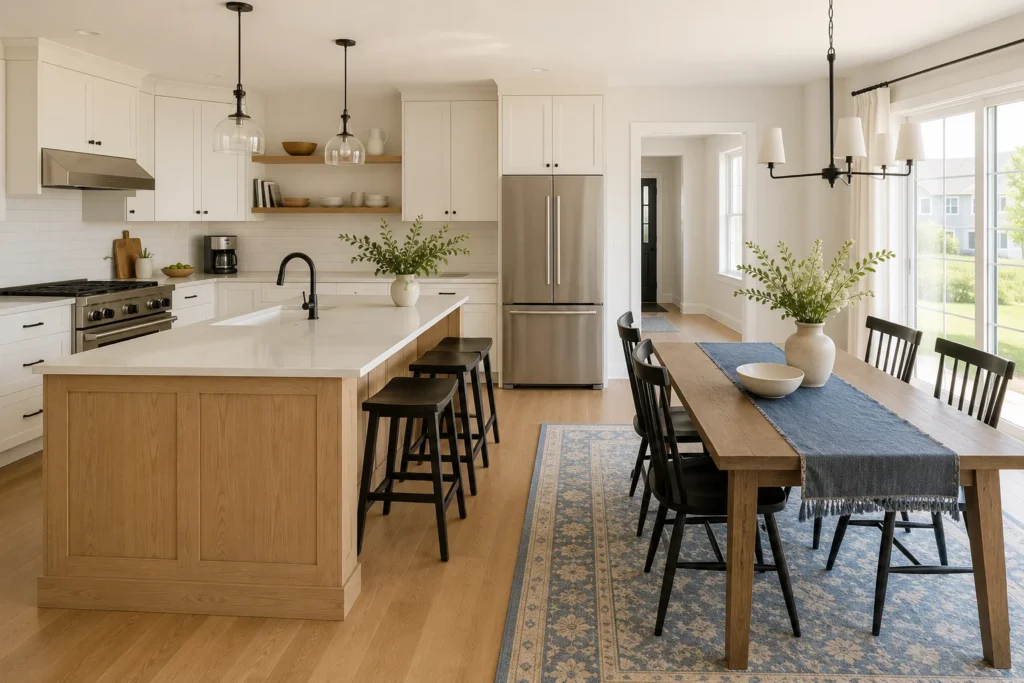
This applies especially to bookshelves. Let your books and objects breathe with some open space between groupings rather than packing every inch. A shelf with room to rest your eyes looks far more curated than one crammed edge to edge.
There is a common instinct to line every piece of furniture flat against the walls, leaving the center of the room empty. While it feels like it maximizes space, it usually creates a stiff, disconnected seating area instead of one that invites conversation.
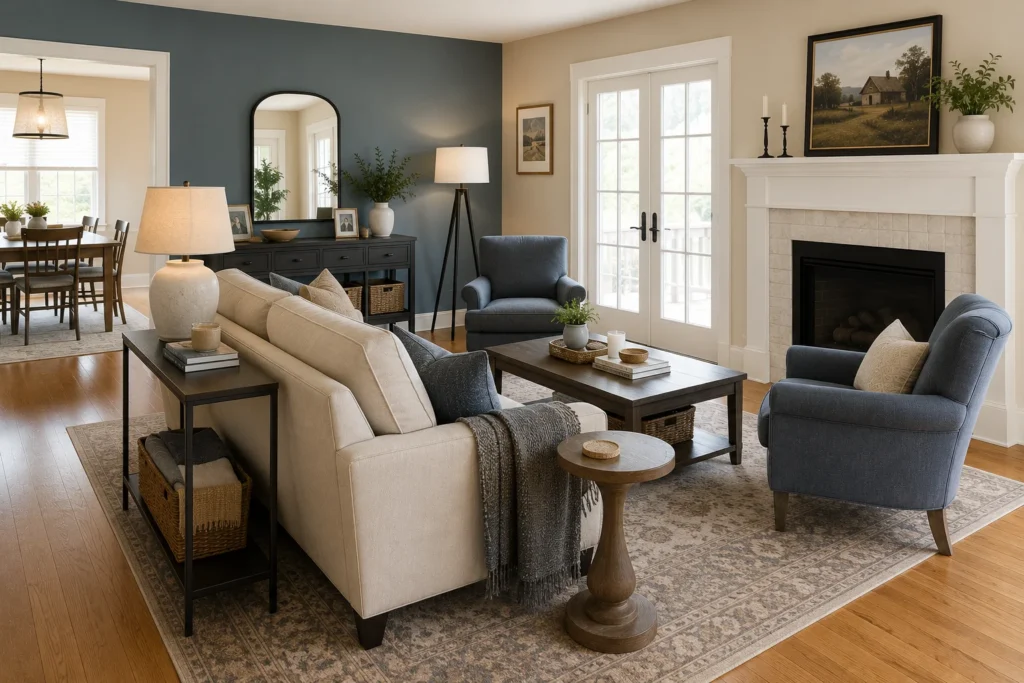
Try floating your sofa or chairs slightly away from the wall, even just a foot or two, to create a more natural gathering area in the middle of the room. This one change often makes a room feel more thoughtfully designed without adding a single new piece of furniture.
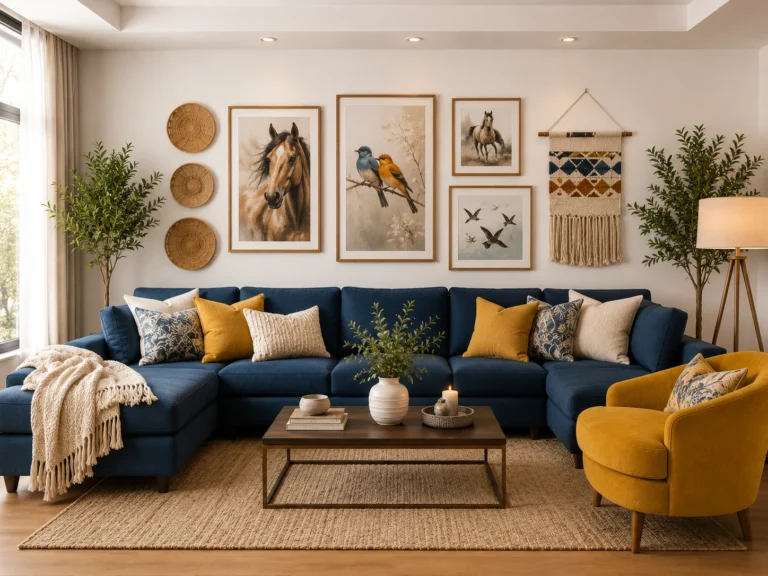
If you tend to play it safe with an all neutral palette, you are not alone, but a little color goes a long way in making a home feel personal rather than generic. You do not need to repaint an entire room to start.
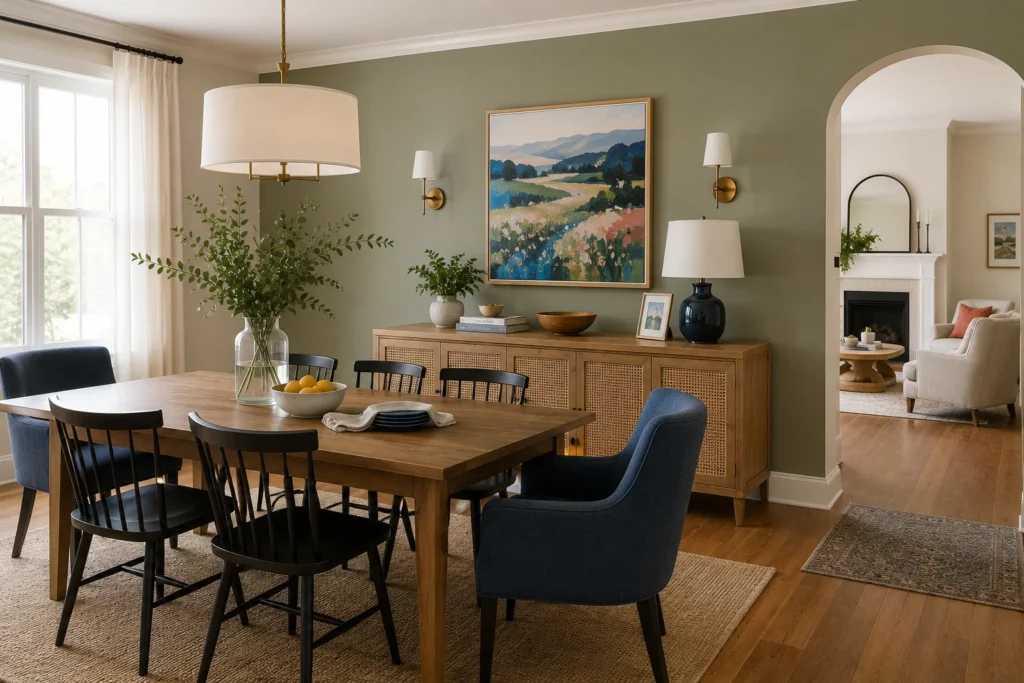
Begin small, a few colorful pillows, one bold piece of art, a patterned throw. Once you get comfortable, you can work your way up to a colorful rug, patterned curtains, or even a painted accent wall. Confidence with color usually builds gradually, and even small pops go a long way toward making a space feel more like you.
None of these home decor mistakes require a big budget or a total redesign to fix. Most of them come down to small adjustments, a few inches here, a slightly different fabric there, that add up to a home that feels considered rather than accidental. Pick one or two from this list that sound familiar, start there, and build from that small win.
Hanging artwork too high is one of the most frequent decorating mistakes. Keeping the center of a piece around 60 inches from the floor, or 4 to 8 inches above nearby furniture, usually solves this instantly.
Furniture, rugs, and fabrics should generally come first. Choosing paint last gives you far more flexibility, since there are countless paint colors that will match an existing palette, while finding fabrics to match one specific paint color already on your walls is much harder.
A good starting point is an 8 by 10 foot rug for an average sized living room, with larger rooms needing a 9 by 12 or 10 by 14. The front legs of your main furniture pieces should sit on the rug rather than floating just off its edge.
Yes, a matching sofa and loveseat is completely fine and reads similarly to one large sectional. The mistake happens when every other seat in the room, chairs, ottomans, and accents, also matches exactly, which tends to feel less collected and more like a single furniture store purchase.
Start small with low commitment items like throw pillows, a piece of artwork, or a patterned throw blanket. Once you feel more comfortable, you can gradually add color through rugs, curtains, or an accent wall.