Address
304 North Cardinal
St. Dorchester Center, MA 02124
Work Hours
Monday to Friday: 7AM - 7PM
Weekend: 10AM - 5PM
Address
304 North Cardinal
St. Dorchester Center, MA 02124
Work Hours
Monday to Friday: 7AM - 7PM
Weekend: 10AM - 5PM

Home office design cost in 2026 can range from a few hundred dollars to tens of thousands. This complete guide breaks down every number so you can plan your workspace budget with confidence.
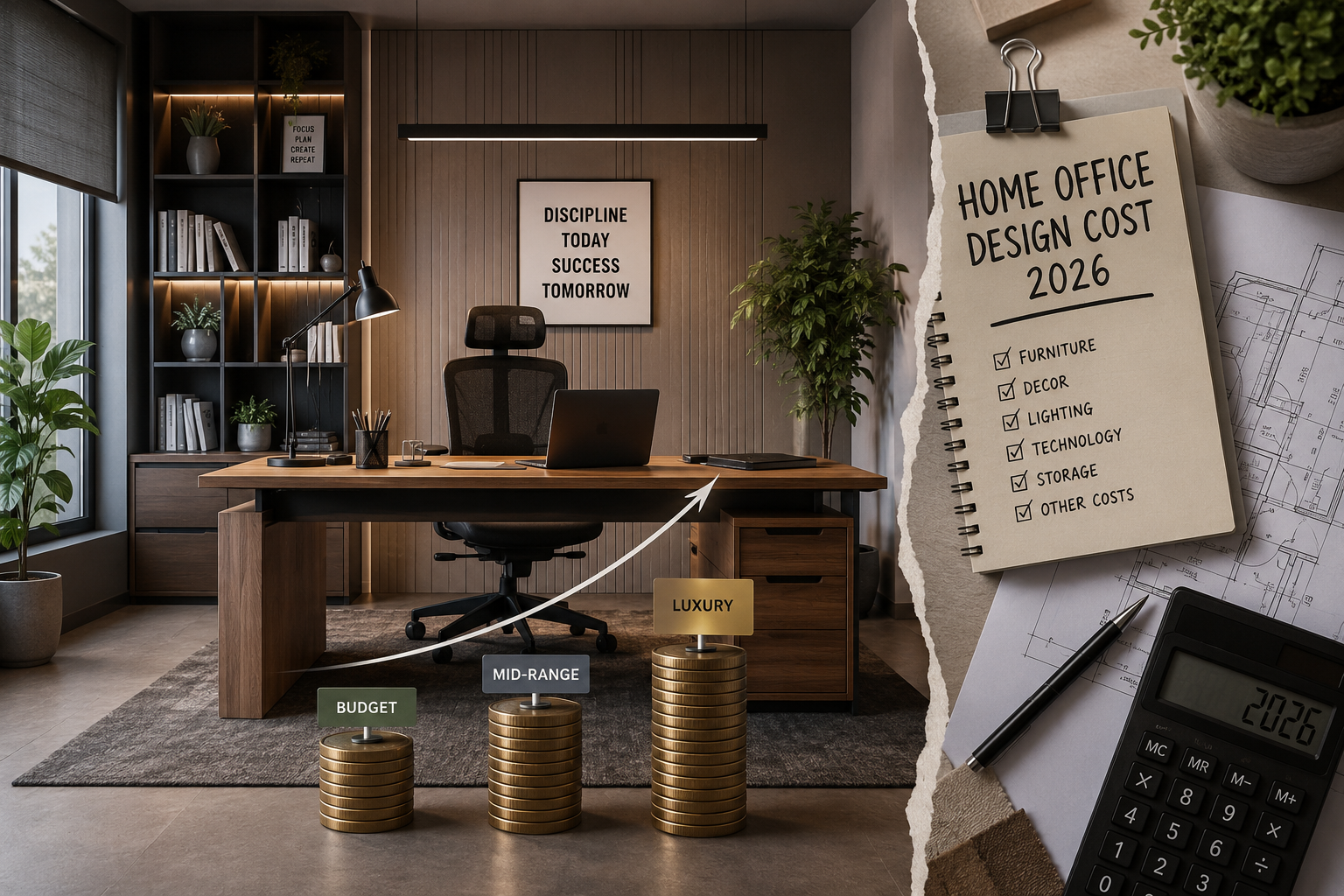
A few years ago, most people set up a laptop on the dining table and called it a home office. That worked for a while. But remote work has stopped being a temporary situation and become a permanent part of life for millions of people. And once you accept that your workspace is here to stay, spending eight hours a day in a dim corner with a sore back starts to feel like something worth fixing.
The problem is that home office design cost can feel vague and overwhelming. You open a furniture website, see prices ranging from $80 to $3,000 for chairs alone, and have no idea where to start. That is exactly why this guide exists.
Whether you are a student setting up a basic desk, a remote professional ready to invest in something solid, or someone who wants a full luxury executive setup, this breakdown will show you what things actually cost, which expenses catch people off guard, and how to make smart choices at every budget level.
The honest answer is that workspace cost varies enormously because the range of what counts as a home office is enormous too. A floating shelf desk and a budget chair is a home office. So is a fully soundproofed room with custom built-ins and premium lighting. Here is how the three main tiers break down.
Estimated Home Office Design cost: $185 to $600
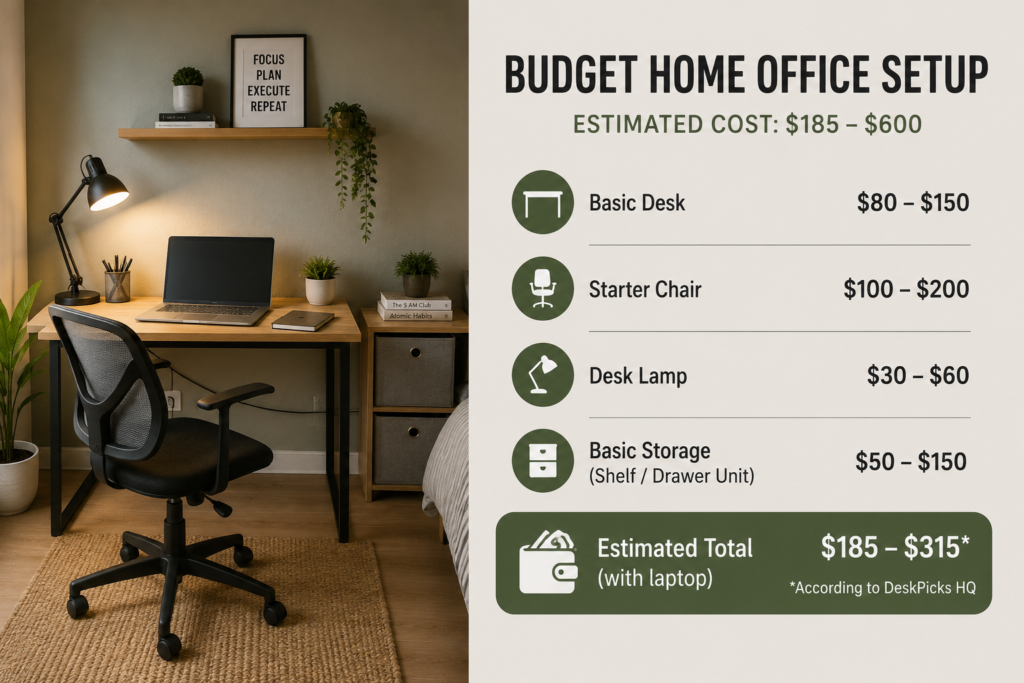
This tier suits students, new freelancers, or anyone working from a shared space like a bedroom or corner of the living room. The goal is function over style, though you can still make things look decent with a few smart choices.
At this level you are covering a basic desk ($80 to $150), a decent starter chair ($100 to $200), a simple desk lamp ($30 to $60), and some basic storage like a small shelf or drawer unit ($50 to $150). According to DeskPicks HQ, a realistic total for a budget setup from scratch comes in around $185 to $315 if you already own a laptop.
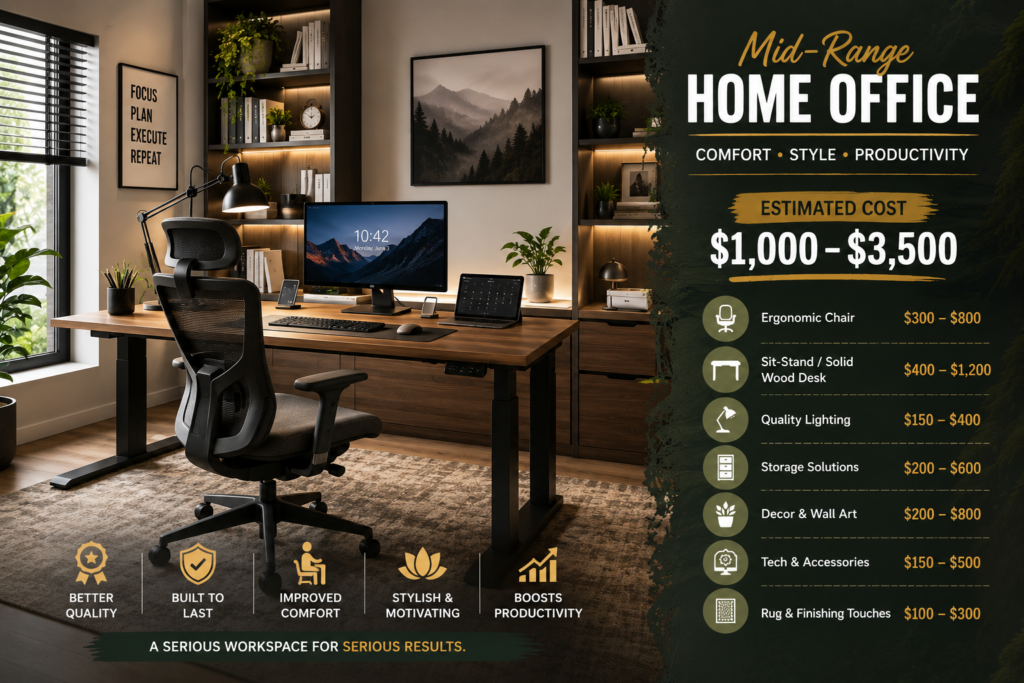
This is where the biggest quality jump happens. You are moving from furniture that just works to furniture that is comfortable, looks good, and will last several years. An ergonomic chair, a proper sit-stand or solid wood desk, better lighting, and some decorative touches all live at this price point.
Most people building a serious work-from-home setup land somewhere in this range. You get real comfort and a space that actually looks like a workspace rather than a spare corner.
Estimated Home Office Design cost: $5,000 to $25,000 and above
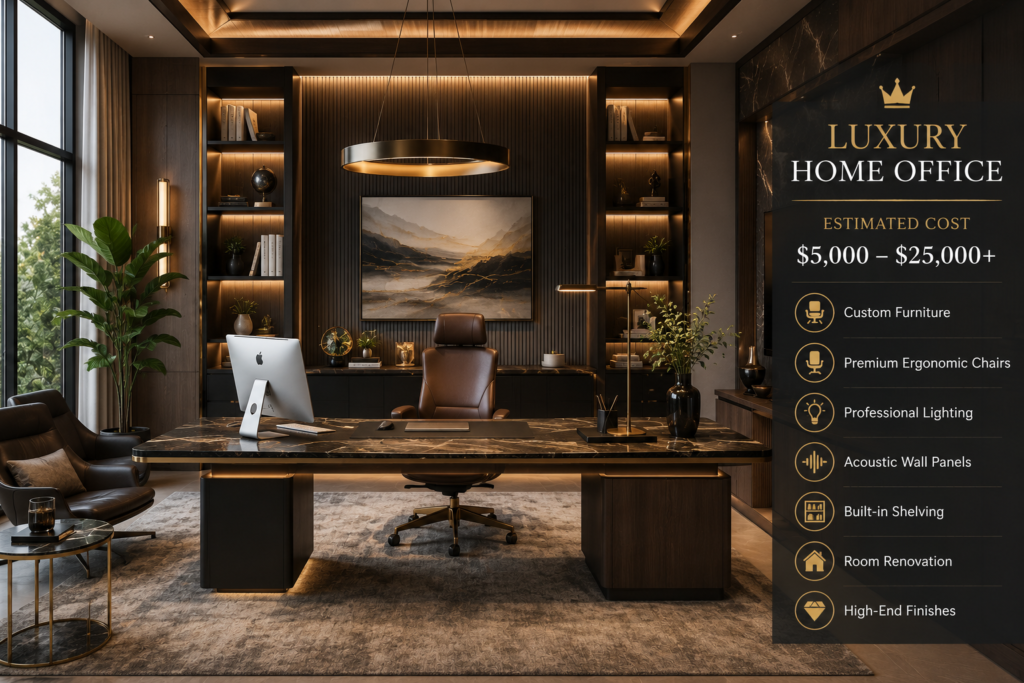
Custom furniture, premium ergonomic chairs, professional lighting setups, acoustic panels, built-in shelving, and a dedicated renovated room all start to appear here. According to a 2026 renovation cost guide from AskDoss, a cosmetic refresh with paint, upgraded lighting, and a proper desk runs $5,000 to $8,000 when hired out, while a mid-range conversion with built-in shelving and electrical upgrades lands between $10,000 and $16,000.
The size of your workspace is one of the biggest cost drivers. A small corner office in a bedroom needs far less furniture, fewer lights, and less decor than a dedicated full room. A large executive workspace with a seating area, multiple monitors, and floor-to-ceiling shelving is a completely different project. As a general rule, more square footage means more of everything.
Furniture is usually the biggest chunk of your home office design cost. The gap between basic and premium is wide. A basic desk can cost $80. A solid executive desk in real wood can cost $800 or more. Chairs follow the same pattern, which is covered in detail in the breakdown below.
Good lighting is one of the most underestimated expenses in a home office. A simple desk lamp might cost $30. A layered lighting setup with a ceiling fixture, task light, and accent lighting can run $200 to $800 depending on the quality of fixtures you choose.
Paint, artwork, floating shelves, and wallpaper all add to your workspace cost but also do the most to make a room feel intentional and personal. These costs can be as low as $50 or as high as $2,000 depending on how far you want to go.
A monitor, keyboard, mouse, docking station, and cable management tray are things people often forget to include in their initial home office budget. A docking station alone can cost $150. A good monitor arm runs around $65. These add up faster than most people expect.
| Desk Type | Estimated Cost |
|---|---|
| Basic desk | $80 to $150 |
| Standing desk converter | $150 to $250 |
| Sit-stand desk (motorized) | $300 to $600 |
| Solid wood or executive desk | $600 to $1,500 |
| Custom built-in desk | $1,000 to $4,000 |
According to Daily Remote’s 2026 home office setup guide, sit-stand desks from brands like Flexispot and Uplift are strong options under $500.
| Chair Type | Estimated Cost |
|---|---|
| Basic task chair | $80 to $150 |
| Mid-range ergonomic chair | $200 to $400 |
| Premium ergonomic chair | $400 to $700 |
| High-end chairs (Herman Miller, Steelcase) | $700 to $1,500 |
As BTOD’s 2026 office chair cost guide points out, the $200 to $400 range is where real value starts to appear. You get proper adjustable lumbar support, better build quality, and chairs that can outlast cheaper options by years.
| Storage Type | Estimated Cost |
|---|---|
| Floating shelves (set) | $30 to $150 |
| Bookcase | $80 to $400 |
| Filing cabinet | $60 to $300 |
| Built-in storage and shelving | $1,000 to $4,000 |
Decor is where your workspace goes from functional to genuinely enjoyable to be in. The good news is that this part of your home office design cost is the most flexible.
Framed prints and canvas art for a home office start around $15 for a small print and can go well above $200 for larger statement pieces. Budget for $50 to $200 to give your walls some personality without overspending.
A mid-size area rug for a home office typically costs $50 to $300. Beyond the visual warmth it adds, a rug also absorbs ambient noise, which helps with focus and video call quality.
Basic curtains start around $30 per panel. Heavier blackout or linen curtains that also help with sound absorption run $60 to $150 per panel.
A small plant costs $10 to $30. A larger statement plant like a fiddle leaf fig or monstera runs $40 to $100. Research consistently shows that natural elements in a workspace improve wellbeing and productivity, so this is money well spent.
Desk organizers, candles, ceramic trays, and bookends can range from $10 to $100 depending on quality. Setting a cap of $100 to $150 for accessories keeps things intentional without going overboard.
| Decor Item | Estimated Cost |
|---|---|
| Wall art | $50 to $200 |
| Area rug | $50 to $300 |
| Curtains | $60 to $300 |
| Indoor plants | $20 to $100 |
| Desk accessories | $50 to $150 |
| Total decor budget | $230 to $1,050 |
A small desk setup in a bedroom, covering a floating desk, a decent chair, a lamp, and a few organizational pieces, typically runs $300 to $800. The key to making a bedroom workspace feel separate from your living space is using a distinct rug and a focused lamp to define the work zone visually.
Fitting a workspace into a living room without it looking out of place costs a bit more because you need pieces that blend with existing furniture. A console or slim desk, an attractive chair, and some cable management bring costs to around $400 to $1,200.
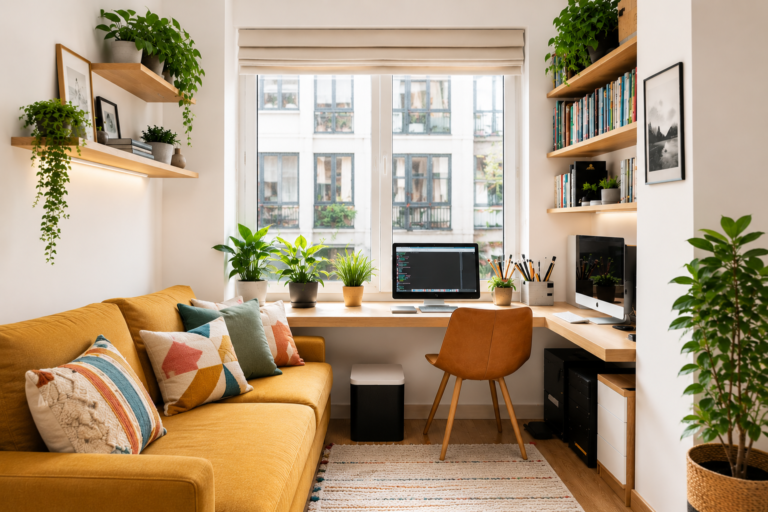
In a studio or small apartment, a compact sit-stand desk and a space-saving ergonomic chair are the most practical investment. According to Povison’s 2026 home office trends guide, a rug, a focused lamp, and consistent styling can mark even a tiny corner as a dedicated work zone. Budget $500 to $1,500 for a complete apartment workspace.
Modern style favors clean lines, matte finishes, and minimal clutter. A modern setup typically includes a handle-free desk in white or dark wood, a mesh ergonomic chair, and simple framed artwork. Budget around $1,200 to $3,500 for furniture and decor combined.
Minimalist offices share a lot of DNA with modern ones but go even further with restraint. You are looking at one desk, one chair, one light, and almost nothing on the walls. The savings come from buying fewer things, though the things you do buy tend to be higher quality. Budget $800 to $2,500.
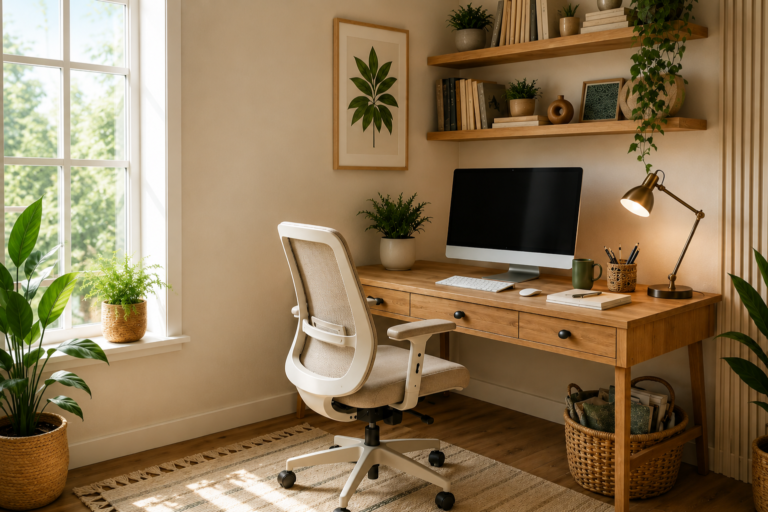
Warm wood, white walls, a few plants, linen textiles, and simple shapes define the Scandinavian look. It is one of the warmest and most achievable styles at a mid-range budget. Expect to spend $1,000 to $3,000 for the full effect.
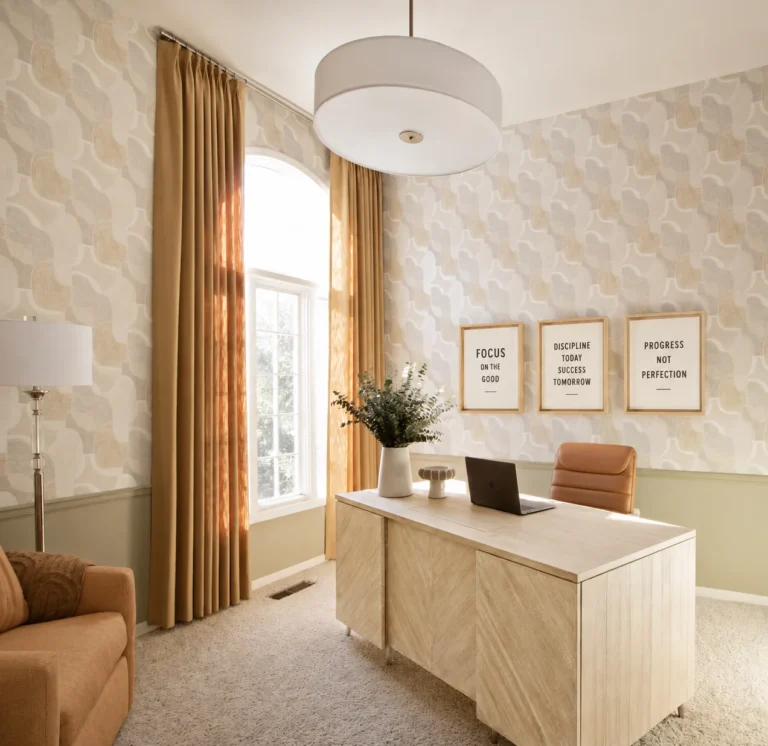
Custom furniture, premium leather or boucle seating, designer lighting, built-in shelving, and a carefully considered color palette. This is the style where workspace cost climbs quickly. Budget $5,000 to $20,000 or more depending on whether you are also renovating the room itself.
If you plan to run multiple monitors, a standing desk motor, a printer, and other equipment, your existing electrical setup may not be enough. Adding two to four dedicated outlets runs $150 to $300 each. A dedicated 20-amp circuit for office equipment costs $200 to $400. Hammerio’s 2026 home office build cost guide puts total electrical upgrades at $500 to $2,500.
A fast, reliable connection is not optional when your income depends on video calls and file transfers. Upgrading your internet plan or adding a mesh Wi-Fi system costs an additional $10 to $100 per month, plus the upfront cost of hardware ($150 to $400 for a good mesh system). According to Angi’s 2026 home office cost guide, ongoing internet and electricity costs add $10 to $500 per month.
Nobody budgets for this, but a desk full of tangled cables makes even an expensive setup look like a mess. An under-desk cable management tray costs around $45. A full cable management system with trays, clips, and a cable box runs $50 to $150.
If you are converting a room that previously had a built-in closet, you may find yourself suddenly short on storage. Freestanding solutions cost $60 to $400. Built-in storage adds $1,000 to $4,000 according to HonestCasa’s 2026 renovation breakdown.
Paint fades, chair mechanisms wear out, and technology needs replacing. Setting aside $200 to $500 per year for maintenance and small upgrades is a sensible approach that most people skip until something breaks.
A solid dining table can serve as an excellent desk. A sturdy bookcase from another room can anchor an office wall. Before you buy anything new, walk through your home and see what is already there.
Floating shelves cost a fraction of what built-in shelving costs and can transform a blank wall into organized, attractive storage. A set of three shelves runs $30 to $80.
Wall art from independent artists on print-on-demand platforms starts at $15. A single healthy plant from a local market costs $10 to $20. Small items with character go further than expensive statement pieces.
A desk with built-in drawers eliminates the need for a separate filing cabinet. A storage ottoman at the side of your desk gives you seating and storage in one. Every piece that does two jobs is money saved.
Printing a large black-and-white photograph at a local print shop and framing it costs $20 to $40. Creating a simple pegboard display for tools and accessories is both functional and visually interesting for under $50.
| Item | Estimated Cost |
|---|---|
| Basic desk | $120 |
| Task chair | $150 |
| Desk lamp | $40 |
| Small shelf unit | $70 |
| Desk accessories | $40 |
| Total | $420 |
This setup gives you everything you need to work comfortably without any extras. It can be upgraded over time as your budget allows.
| Item | Estimated Cost |
|---|---|
| Sit-stand desk | $450 |
| Ergonomic chair | $350 |
| Monitor and arm | $350 |
| Layered lighting | $200 |
| Area rug | $120 |
| Wall art and plants | $100 |
| Cable management | $60 |
| Total | $1,630 |
This is the sweet spot for most remote professionals. Everything here prioritizes daily comfort and a workspace that looks genuinely put-together.
| Item | Estimated Cost |
|---|---|
| Executive desk (solid wood) | $1,200 |
| Premium ergonomic chair | $800 |
| Custom shelving | $2,500 |
| Designer lighting | $600 |
| Acoustic panels | $400 |
| Premium decor and art | $500 |
| Room paint and refresh | $500 |
| Total | $6,500 |
At this level every element is chosen for quality and longevity. This is a workspace designed to last a decade.
The short answer is yes, with some context.
Research cited by Mood for Decor shows that ergonomic chairs and adjustable desks can reduce back pain by up to 60% and improve concentration by 40%. That is not just a comfort argument. It is a productivity argument. If your workspace helps you focus better and feel better physically, the return on that investment shows up in your work every single day.
There is also a resale angle. According to HonestCasa’s 2026 renovation data, home office renovations return 50 to 75% of the investment at resale. A dedicated, well-designed home office has become a genuine selling point for buyers.
And there is the professional appearance factor. A clean, styled background on a video call signals that you take your work seriously. That matters more than most people admit.
The key is matching your investment to your actual needs. A freelancer who works three hours a day does not need a $6,000 setup. A full-time remote professional who spends eight hours at their desk every day absolutely benefits from ergonomic furniture and proper lighting.
Home office design cost in 2026 is not one number. It is a range that stretches from a few hundred dollars to tens of thousands, and where you land on that range depends entirely on what your daily work life actually demands.
A student or part-time freelancer can build a perfectly functional and decent-looking workspace for $400 to $600. A full-time remote professional ready to invest in their daily comfort can build something genuinely great for $1,500 to $3,500. And someone who wants a dedicated, beautifully designed room with premium everything has a realistic target of $6,000 to $20,000.
The most important thing is to start with what affects your body first. Chair, desk height, lighting. Then layer in decor, storage, and style over time. A beautiful workspace does not have to arrive all at once, and it does not have to cost a fortune to be worth sitting in every day.
Home office design cost in 2026 ranges from around $185 for a very basic setup to $25,000 or more for a full luxury renovation. Most remote professionals building a solid, comfortable workspace spend between $1,000 and $3,500. The biggest cost drivers are furniture quality, whether you are renovating a dedicated room, and how much technology and decor you include.
Converting a small existing room into a dedicated home office typically costs $5,000 to $8,000 for a cosmetic refresh including paint, lighting, a desk, and a chair. If you add built-in shelving and electrical upgrades, the workspace cost climbs to $10,000 to $16,000.
Absolutely. A setup covering a basic desk, a decent chair, a lamp, and a small shelf can come together for $400 to $600. Add a $50 rug, a couple of plants, and some inexpensive wall art and the space looks genuinely intentional. Prioritizing a comfortable chair over aesthetics first is always the smartest call.
For most people it is either the chair or the desk. Premium ergonomic chairs run $700 to $1,500. Solid wood or custom-built desks start at $600 and go well above $3,000. If you are renovating a room, built-in shelving and electrical work quickly become the biggest line items.
Spending at least $200 to $400 gets you into the range where chairs have proper adjustable lumbar support and will last several years. The $400 to $700 range includes premium options from brands like Humanscale and Steelcase that carry long warranties and significantly outlast cheaper models. A $150 chair that causes back pain ends up costing more in the long run.
Yes, significantly. A small corner setup in a shared room costs far less than furnishing and decorating a full dedicated room. More space requires more furniture, more lighting, more decor, and often electrical upgrades to handle the additional load.
Lighting is the single cheapest high-impact upgrade. Swapping a single overhead bulb for a warm-toned desk lamp costs $30 to $50 and immediately changes how the space feels. After that, adding one plant and clearing visible cable clutter make a workspace look dramatically better for under $100 combined.
Looking for more workspace inspiration? Browse related posts on The Decor Dash.