Address
304 North Cardinal
St. Dorchester Center, MA 02124
Work Hours
Monday to Friday: 7AM - 7PM
Weekend: 10AM - 5PM
Address
304 North Cardinal
St. Dorchester Center, MA 02124
Work Hours
Monday to Friday: 7AM - 7PM
Weekend: 10AM - 5PM

Looking for kitchen floor ideas that actually last? From warm wide-plank wood to bold checkerboard tile, here's everything shaping kitchen floors in 2026 — plus what to avoid.
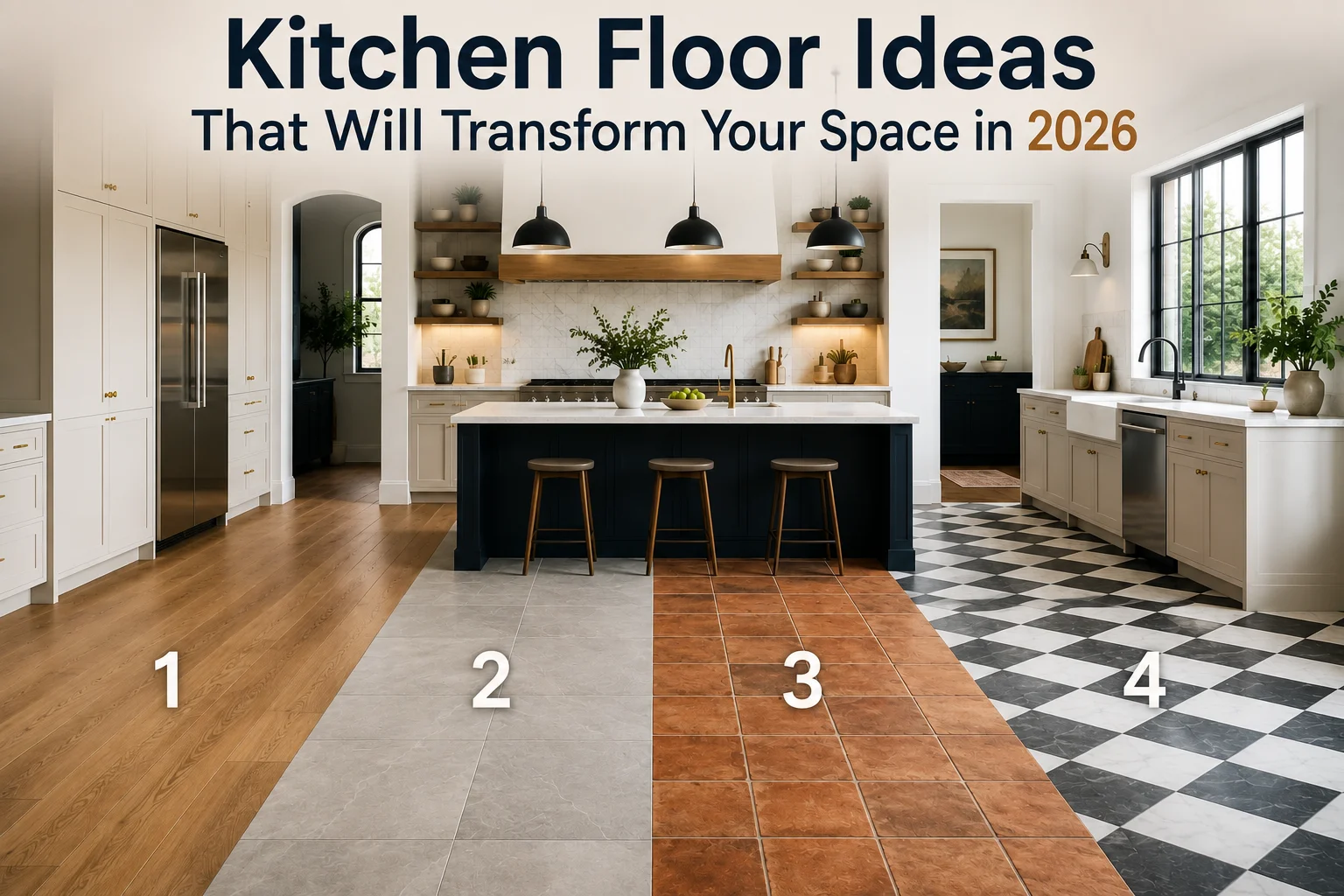
Walk into any kitchen, and your eyes usually go straight to the cabinets, the island, and maybe the backsplash. The floor? It quietly does all the heavy lifting, literally, while getting almost none of the credit. That’s a shame, because the right kitchen floor ideas can completely change how a room feels, tying together your cabinetry, countertops, and lighting into something that actually looks finished.
The good news is that 2026’s kitchen flooring trends have brought a genuinely exciting shift in how designers think about kitchen floors. Gone is the era of cold, sterile, all-white kitchens with icy gray tile underfoot. In their place: warmth, texture, and floors with real personality. Whether you’re planning a full renovation or just want to understand your options before you commit, this guide walks through the best kitchen floor ideas for every style, budget, and room size.
Kitchens take more daily abuse than almost any other room in the house, spills, dropped pans, foot traffic, the occasional dishwasher leak. A good kitchen floor needs to survive all of that while still looking intentional. That’s exactly why kitchen floor ideas worth pursuing balance three things at once: durability, ease of cleaning, and visual warmth. The best floors don’t just survive daily life in the kitchen — they get better with a bit of wear.
If there’s one word that sums up this year’s direction, it’s warmth. Design experts across the industry are moving away from the flat grays and stark whites that dominated the last decade, replacing them with tones that feel lived-in rather than sanitized.
Earthy, Warm Tones Are Taking Over
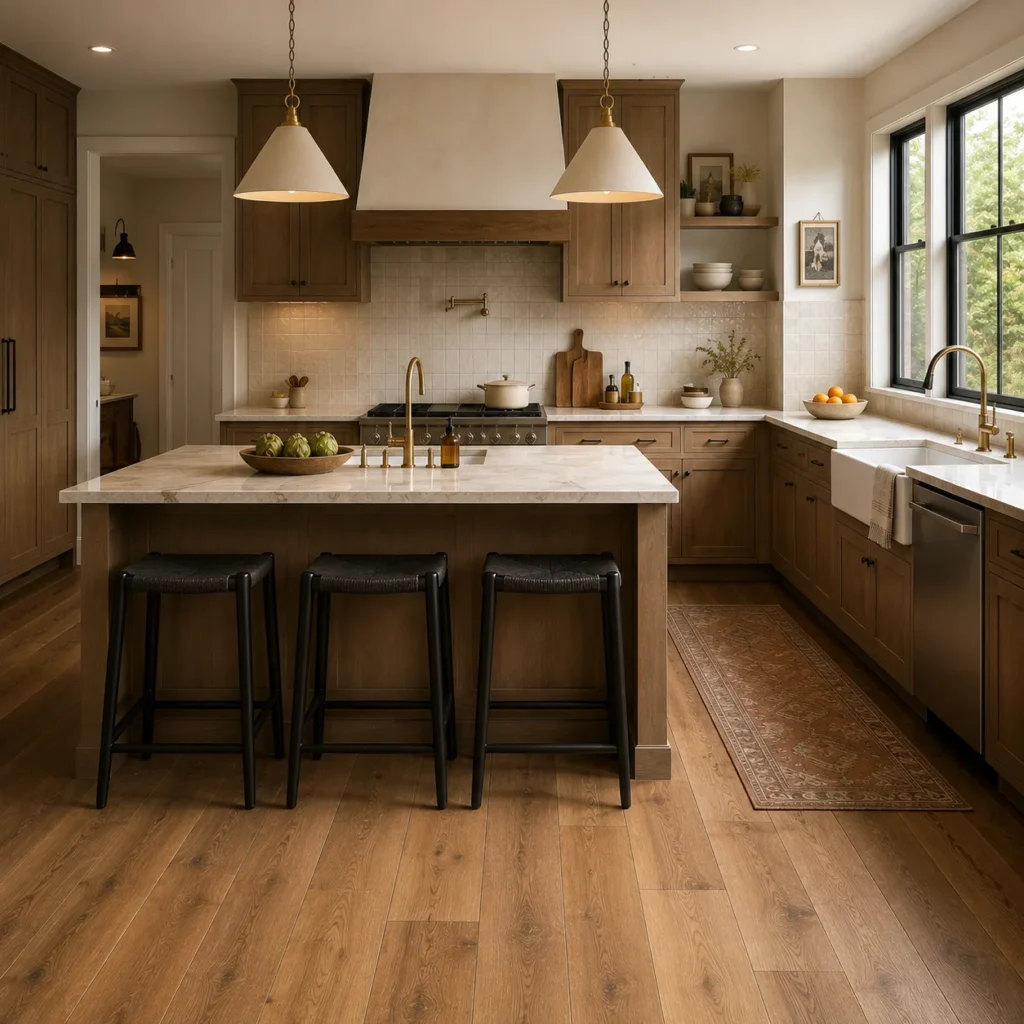
Sand, taupe, honey oak, terracotta, and soft walnut are replacing cool grays as the go-to palette. These warmer tones make a kitchen feel welcoming rather than clinical, and they’re remarkably forgiving of everyday wear, a huge win for busy households.
Wide-Plank Wood Is Everywhere
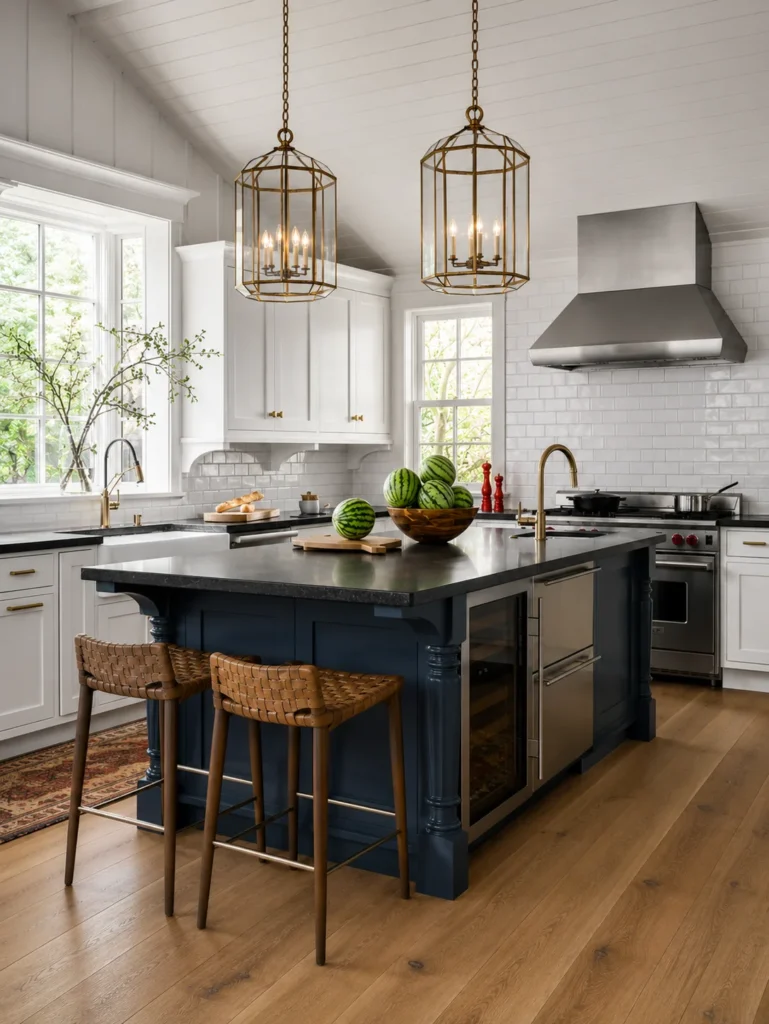
Wide-plank wood flooring, whether solid hardwood or a waterproof engineered alternative, has become one of the most requested kitchen flooring trends of the year. Wider boards mean fewer seams, a calmer visual rhythm, and a floor that feels more substantial underfoot.
Textured, Wire-Brushed Finishes
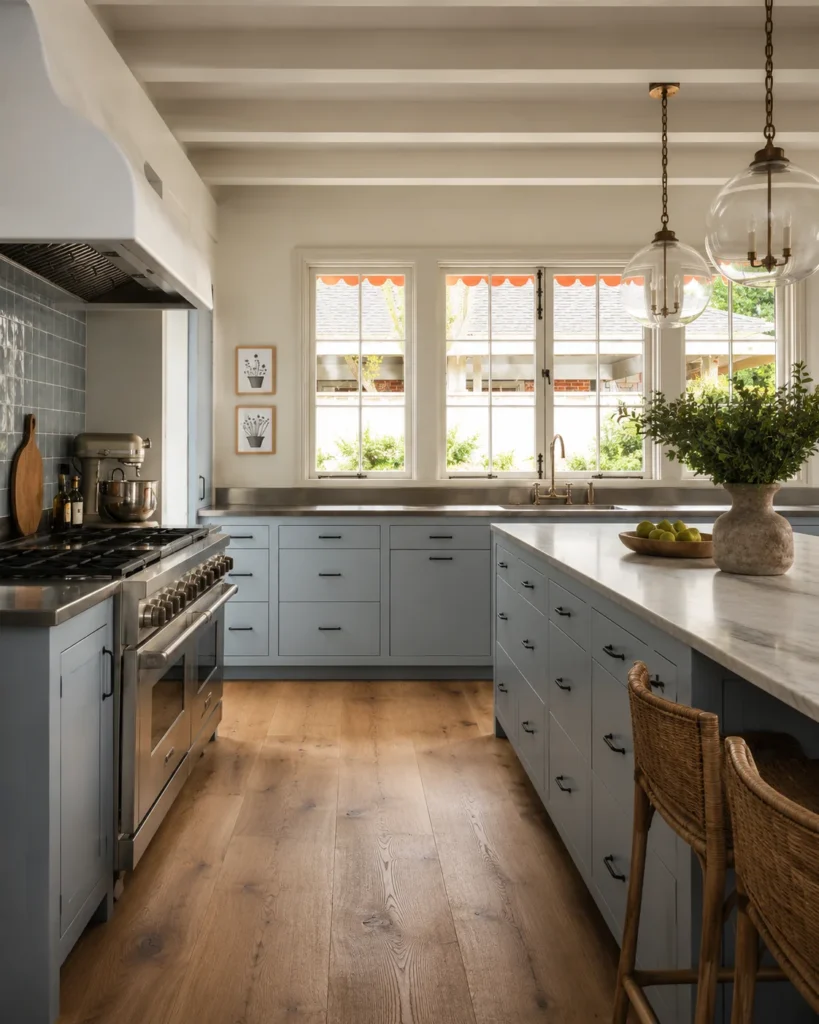
Instead of high-gloss sheens, textured finishes like wire-brushed or hand-scraped wood are gaining ground. They hide scuffs and scratches far better than a glossy surface, while adding a subtle, artisanal texture that photographs beautifully.
Large-Format Tile Continues to Dominate
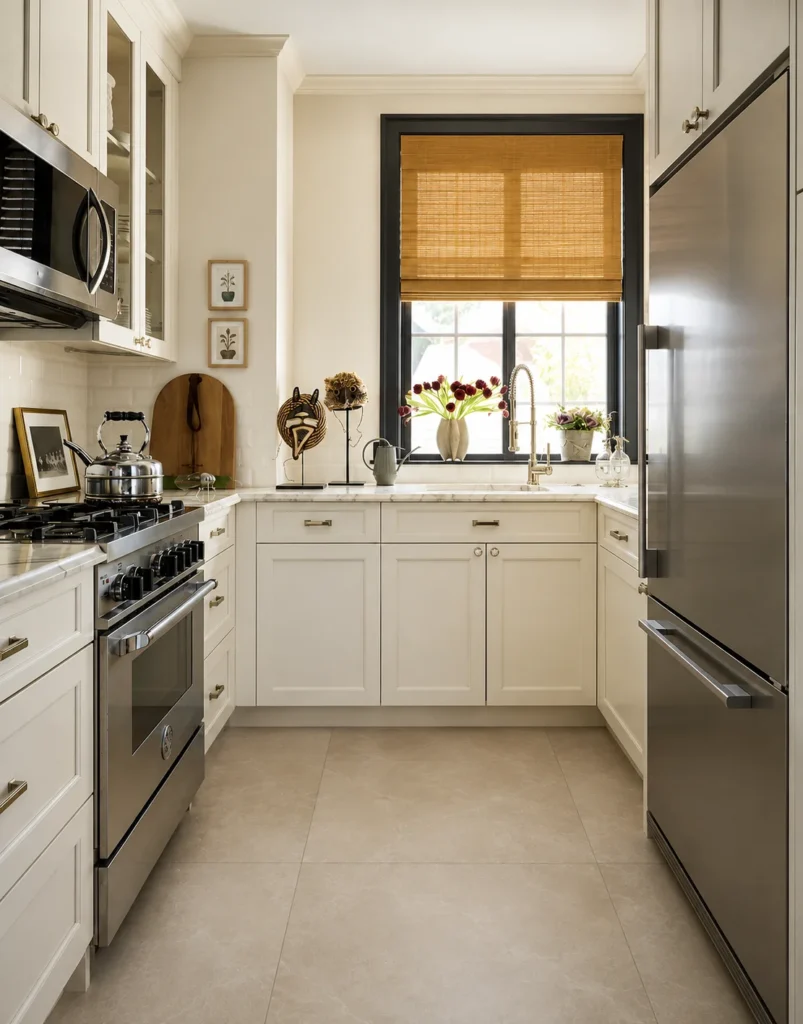
Big tiles mean fewer grout lines, which means less cleaning and a more seamless look. Large-format porcelain, often designed to mimic natural stone or concrete, remains one of the most practical kitchen flooring trends for anyone who wants a modern, low-maintenance surface, and it has quickly become the default choice for homeowners exploring kitchen tile flooring for the first time to enhance their home decor.
Checkerboard and Bold Pattern Are Back
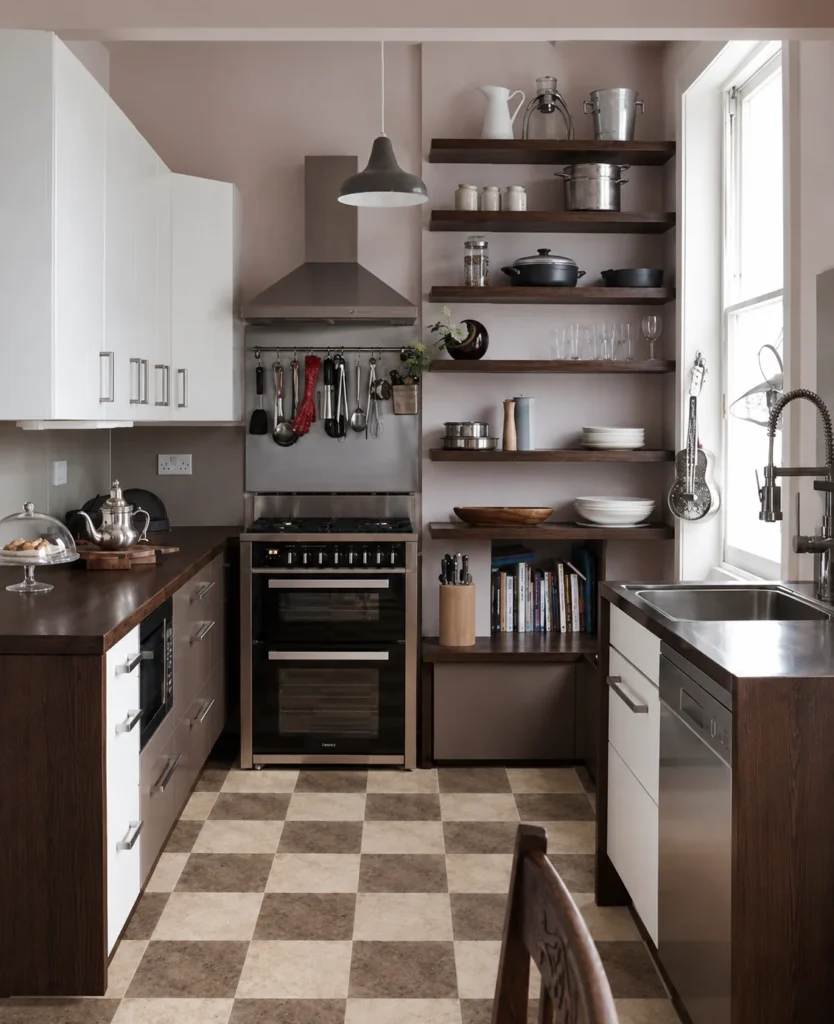
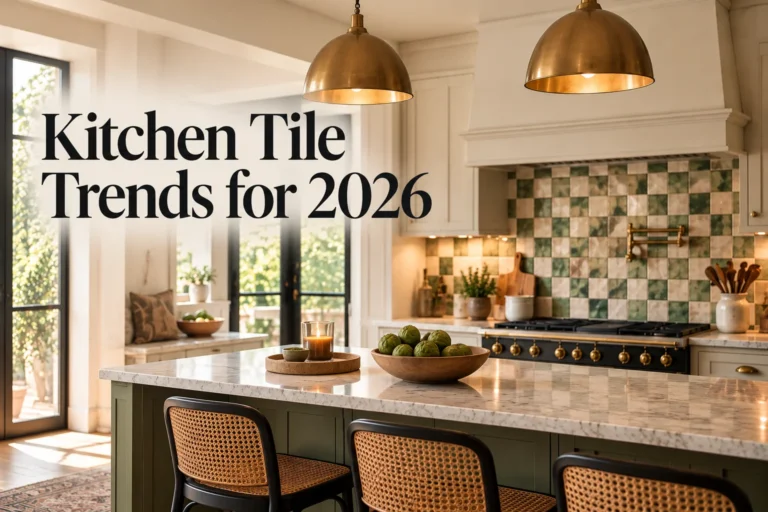
After years of quiet, neutral floors, pattern is making a confident return for home decor, particularly checkerboard tile in honed marble or travertine tones. It’s a playful, retro-leaning trend that instantly gives a kitchen personality without overwhelming the rest of the room.
For homeowners who want durability without sacrificing style, kitchen tile flooring remains one of the most reliable choices out there. A few standout options worth considering:
Terracotta Tile: Warm, earthy, and genuinely timeless, terracotta brings depth and old-world charm to a kitchen. It’s especially popular in farmhouse and Mediterranean-inspired spaces.
Large-Format Porcelain: Designed to mimic natural stone or polished concrete, large-format tile delivers a clean, contemporary look with minimal grout to maintain.
Patterned Cement Tile: Bold geometric or floral patterns placed strategically — say, in front of the sink or under an island — add a focal point without requiring you to pattern the entire floor.
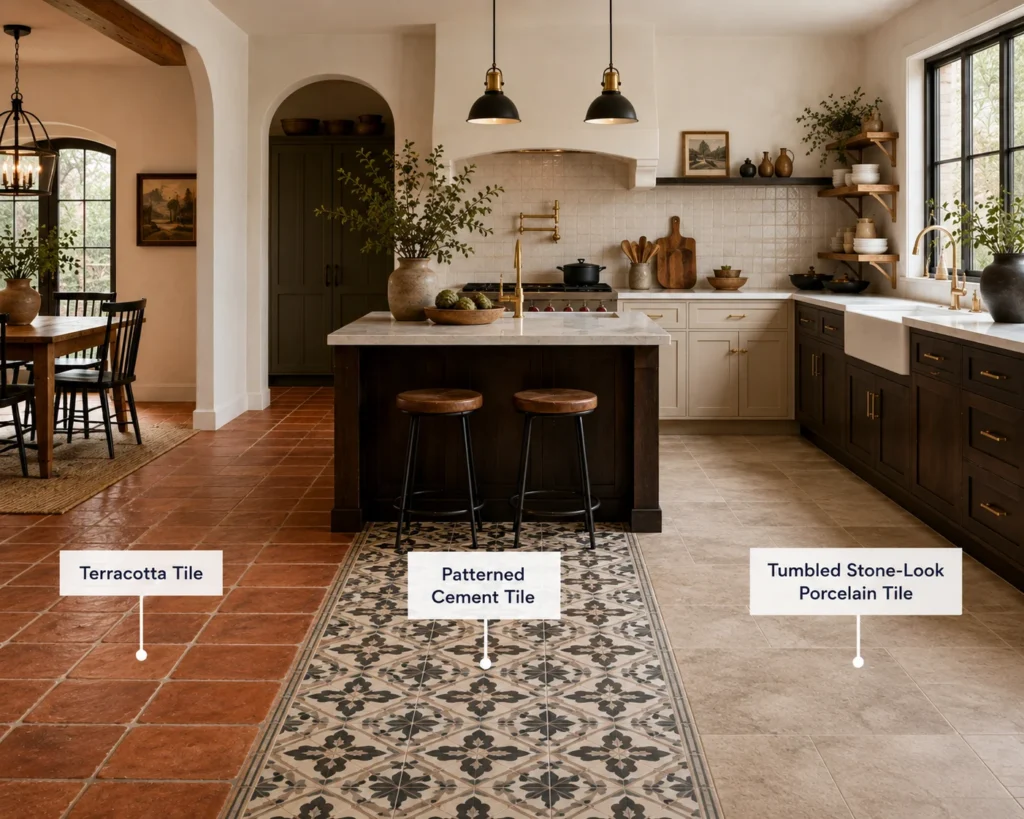
Tumbled Stone-Look Porcelain: This softly textured, slightly imperfect finish mimics natural limestone while offering the durability and low maintenance of porcelain.
If you’re drawn to kitchen floor tiles but worried about a space feeling too “busy,” concentrate pattern in one zone and keep the rest of the floor neutral — you get personality without visual overload. Whichever style you choose, kitchen tile flooring remains one of the most versatile categories on this list, since it spans everything from rustic terracotta to sleek, ultra-modern porcelain.
There’s a reason wood kitchen floors keep coming back, decade after decade — nothing else creates the same sense of warmth and continuity between the kitchen and the rest of the home. Among all the kitchen floor ideas covered here, wood kitchen floors consistently rank as the most requested by homeowners who want their kitchen to feel like part of the house rather than a separate, purely functional zone. In 2026, honey-toned white oak, sandy amber tones, and soft caramel finishes are leading the way, replacing the cooler, gray-washed wood that was popular a few years ago.
For kitchens specifically, engineered wood or high-quality waterproof wood-look flooring is often the smarter choice over solid hardwood, since it holds up better against spills and humidity while still delivering that natural wood look. Matte finishes are outperforming glossy ones in popularity too, since they hide daily wear far more gracefully.
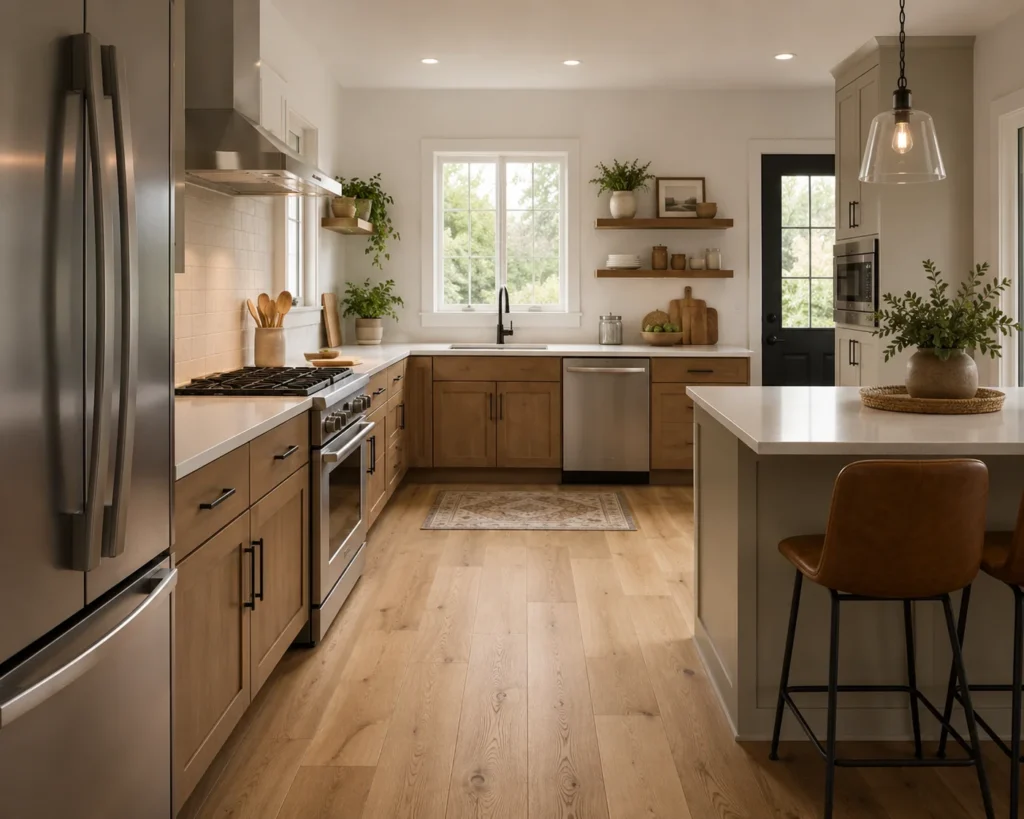
If you love the idea of wood kitchen floors but worry about durability, a wire-brushed or hand-scraped texture is worth exploring — the texture itself does a lot of the work in disguising scratches from pets, chairs, and daily foot traffic.
If your style leans clean and contemporary, these modern kitchen floor ideas are worth prioritizing:
Monochrome Large-Format Tile: A single neutral tone across a large-format tile creates a seamless, gallery-like base that lets cabinetry and lighting take center stage.
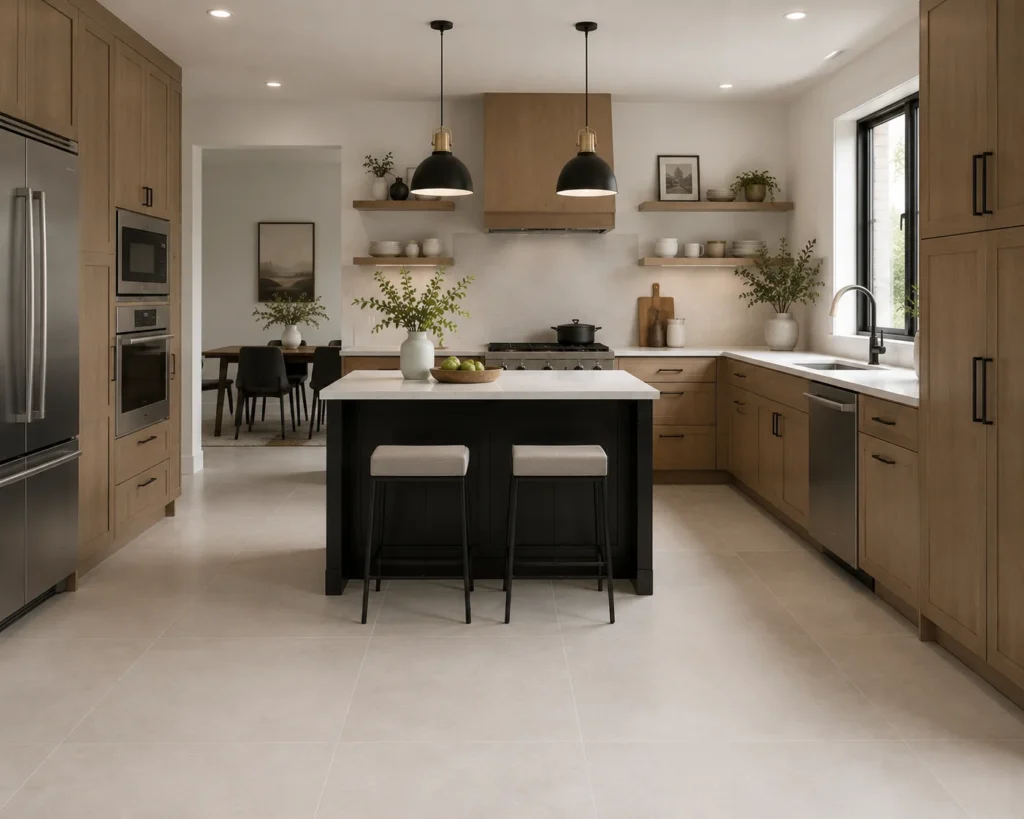
Poured or Polished Concrete-Look Surfaces: Whether it’s genuine polished concrete or a porcelain tile designed to mimic it, this look pairs beautifully with sleek, handle-less cabinetry and stainless steel appliances.
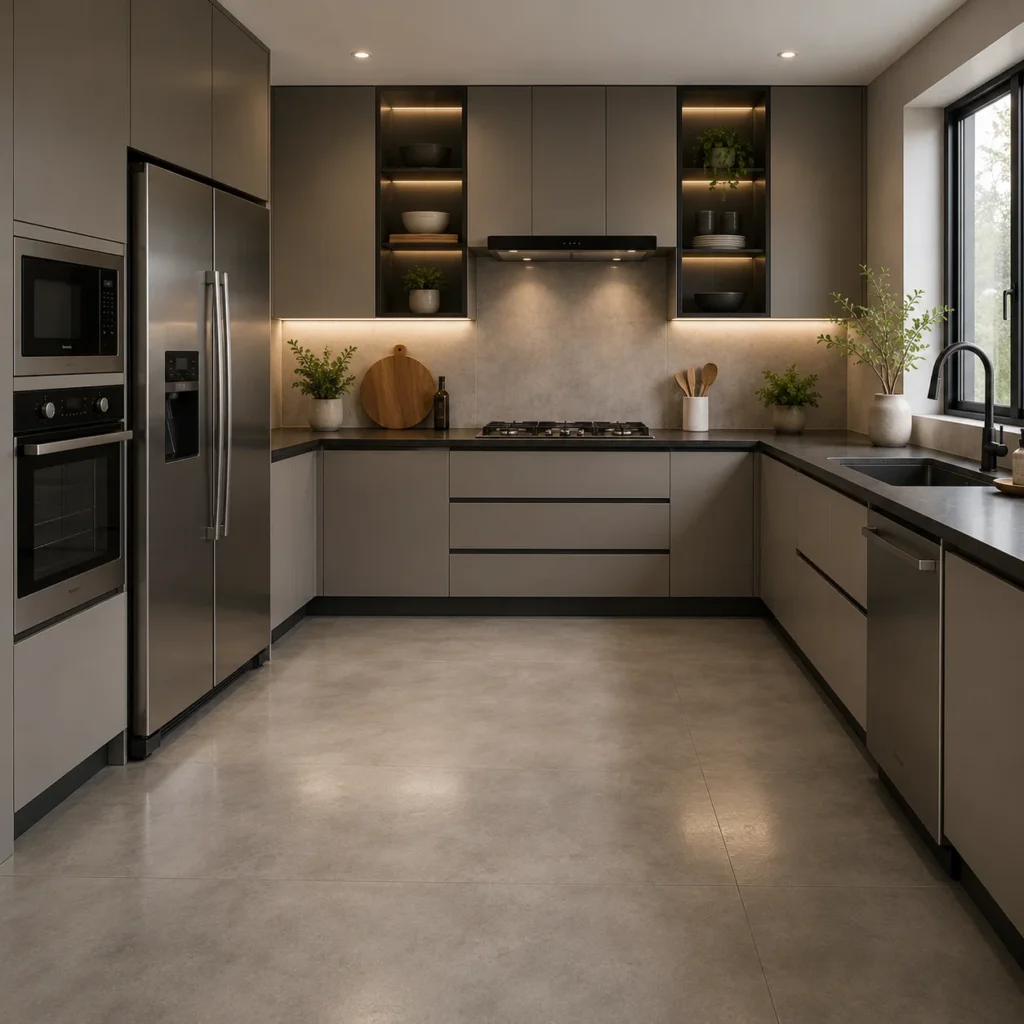
Diagonal Tile Layouts: Laying large tiles on the diagonal instead of a standard grid adds subtle visual interest and can make a modern kitchen feel more spacious.
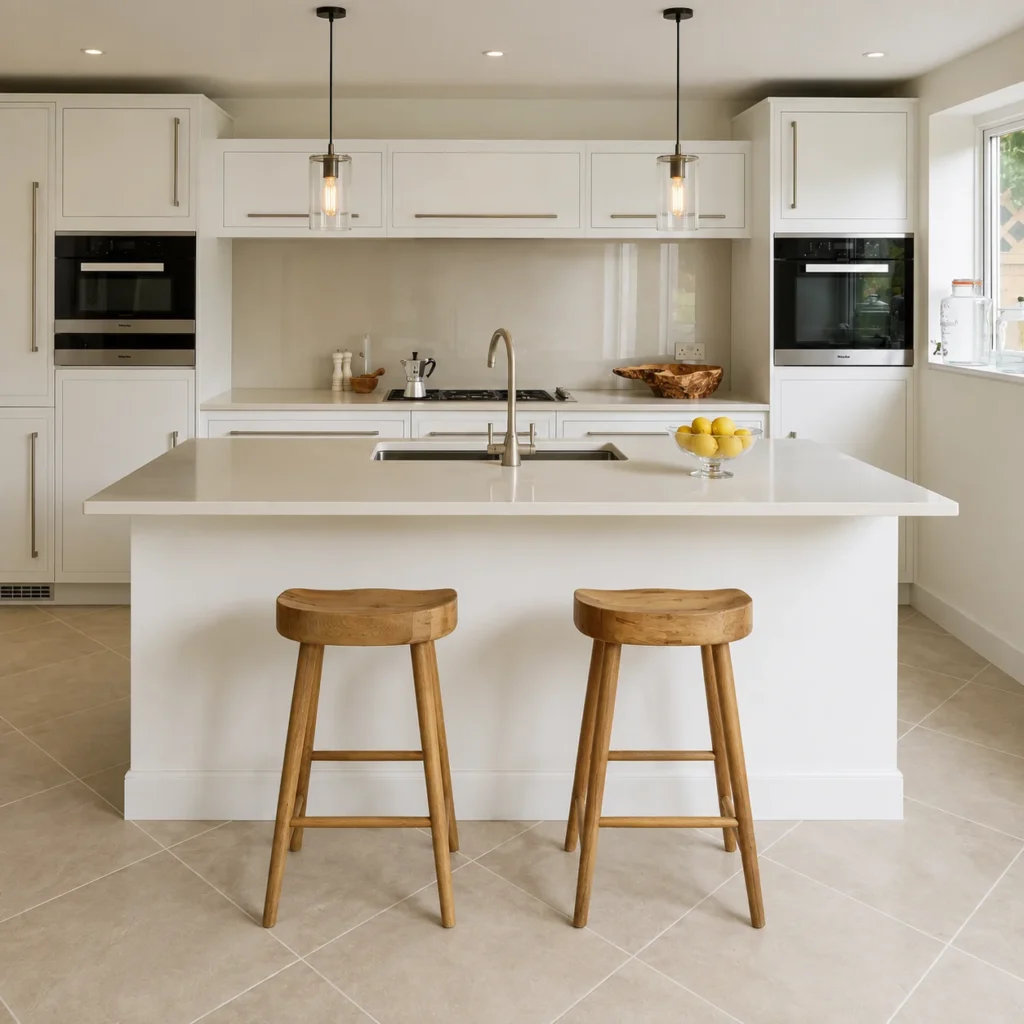
Matte European Oak Vinyl: For a modern look without a premium price tag, matte-finish luxury vinyl in a light European oak tone delivers a convincingly high-end result.
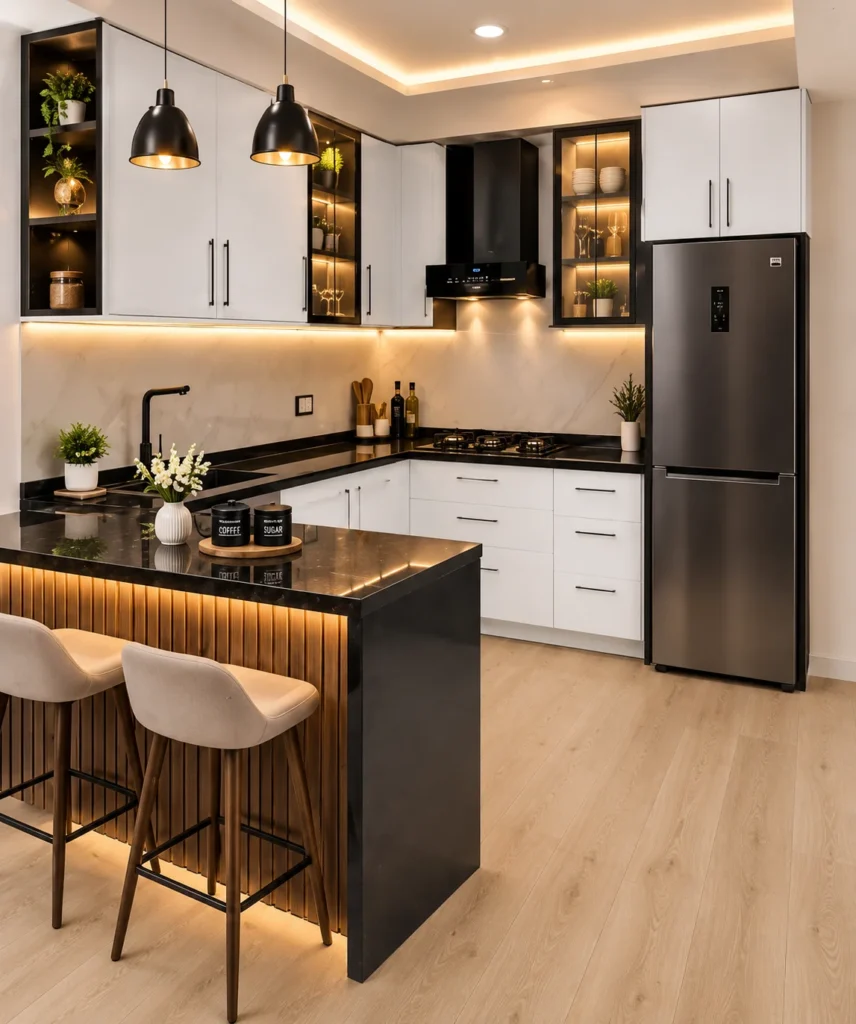
These modern kitchen floor ideas all share one thing in common: restraint. The floor stays quiet and cohesive, letting the architecture and cabinetry do the talking. If your goal is a calm, considered space, leaning into modern kitchen floor ideas like these is usually more effective than adding another statement piece elsewhere in the room.
Working with a compact kitchen changes the calculus a bit. If you’ve been searching for small kitchen floor ideas that actually work in real homes, these are specifically designed to make a tight footprint feel more open:
Large-Format Tile, Fewer Grout Lines: Bigger tiles with minimal grout create a more continuous surface, which reads as more spacious than a busy pattern of small tiles.
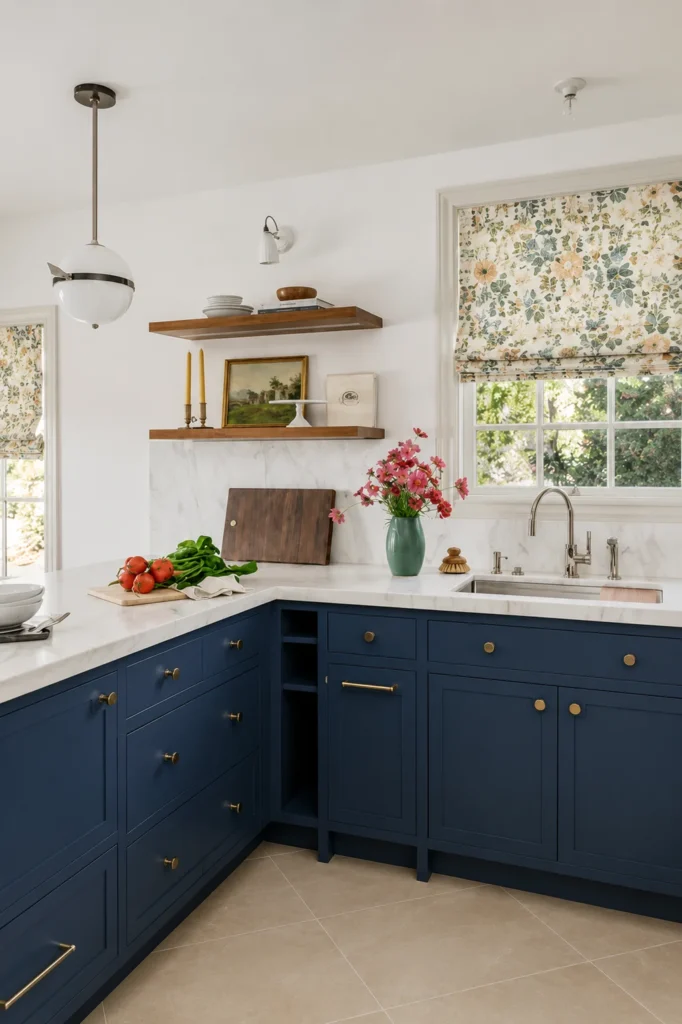
Light, Warm Neutrals: Pale honey woods, soft creams, and warm light grays reflect more light and visually expand a small footprint far better than dark tones.
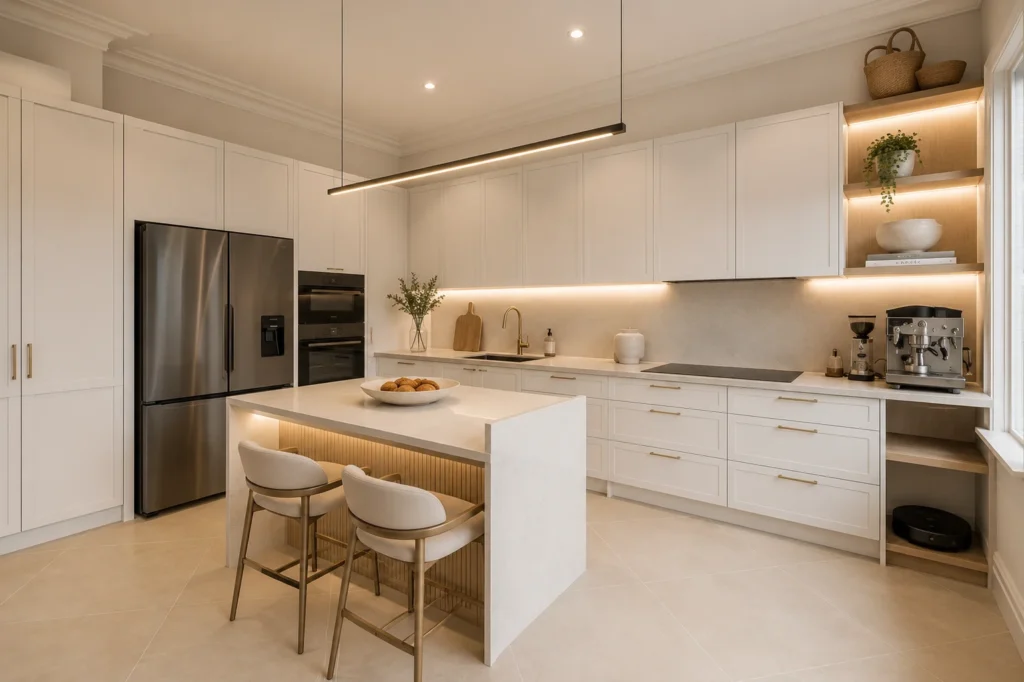
Diagonal Layouts: As with modern kitchens, laying tile on the diagonal in a small kitchen can trick the eye into perceiving more square footage.
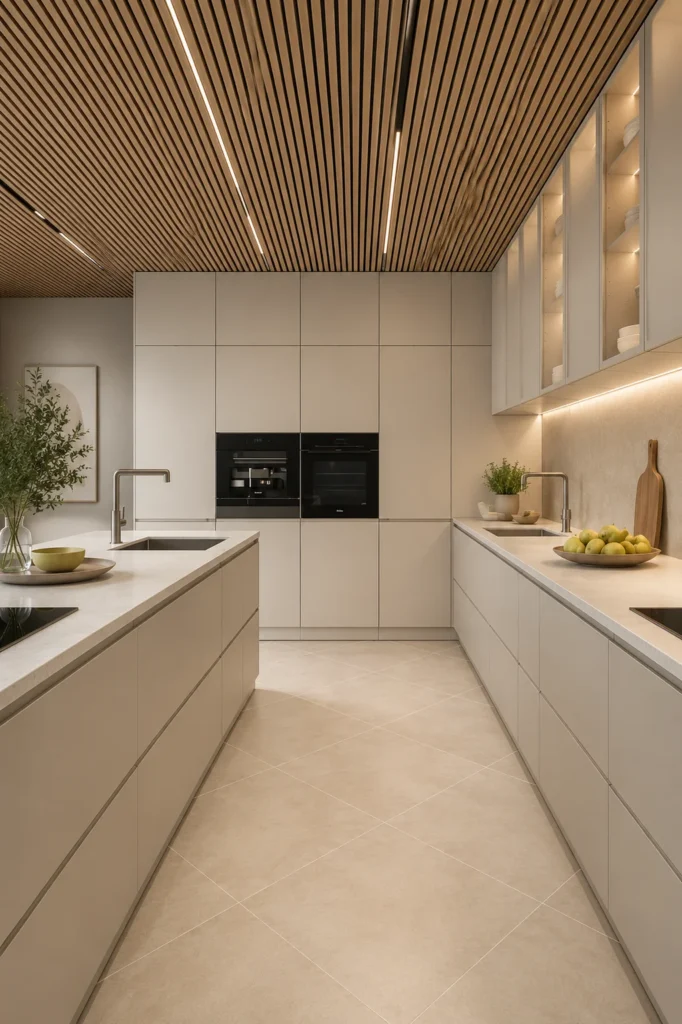
Continuous Flooring Between Rooms: If your kitchen opens into a living or dining area, running the same floor material through both spaces removes a visual “stopping point,” making the whole area feel larger and more connected.
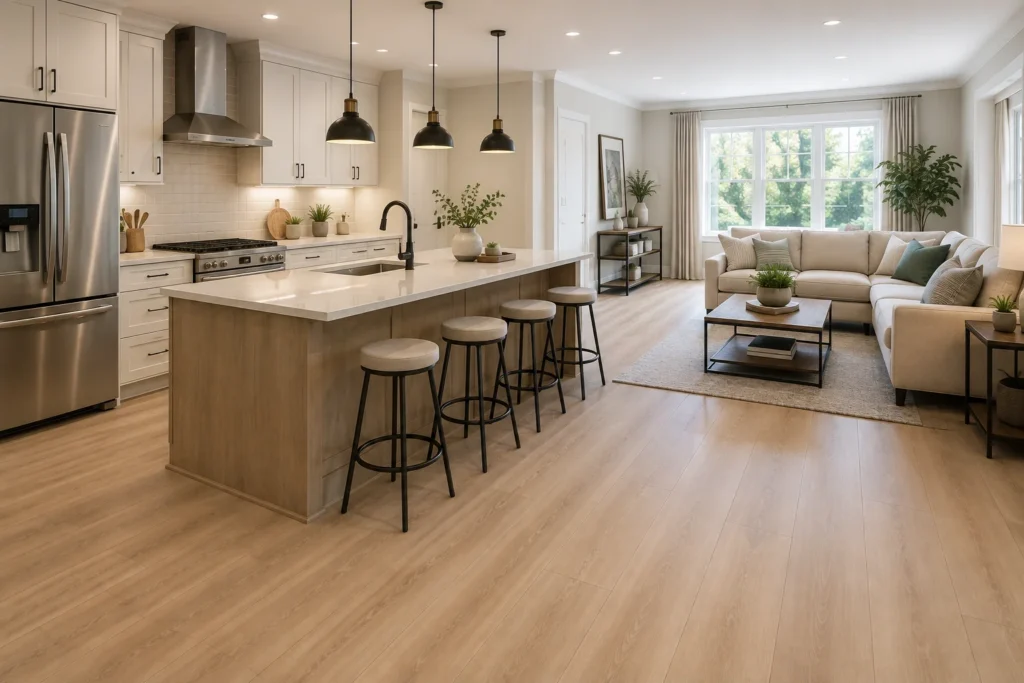
Small kitchens benefit enormously from restraint — busy patterns and dark, heavy materials tend to shrink a room rather than elevate it. When in doubt, the simplest small kitchen floor ideas are usually the most effective ones, since a calm, uninterrupted floor almost always reads as more spacious than a busy, heavily patterned one.
Not every renovation needs a premium natural stone budget. Here’s a rough breakdown of where kitchen floor tiles and other materials tend to land, cost-wise — useful whether you’re comparing kitchen floor tiles against wood or vinyl for the first time:
Luxury Vinyl Plank (LVP/WPC/SPC): Roughly $3–$7 per square foot installed — waterproof, durable, and now available in remarkably realistic wood and stone finishes.
Porcelain Tile: Roughly $5–$12 per square foot installed, depending on size and pattern complexity.
Engineered Wood: Roughly $8–$14 per square foot installed, offering real wood aesthetics with better moisture resistance than solid hardwood.
Natural Stone (Travertine, Terrazzo, Marble): Roughly $15–$30+ per square foot installed — the most premium option, but also the longest-lasting when properly sealed and maintained.
If budget is a concern, luxury vinyl has genuinely closed the visual gap with real wood and stone in recent years, making it one of the smartest kitchen floor ideas for anyone renovating on a tighter budget.
A few common missteps can undercut even a well-chosen material:
Ignoring the Grout Color: Grout that’s too stark or too dark relative to the tile can visually chop up an otherwise seamless floor. Match grout tone closely to the tile for a cleaner look.
Overlooking Slip Resistance: Glossy, polished finishes look beautiful in photos but can become genuinely dangerous near sinks and stovetops. Look for a slip-rated finish in high-traffic, high-moisture zones.
Choosing Style Over Substrate: Not every flooring type suits every subfloor or moisture level. Always confirm a material is rated for kitchen use — particularly in older homes — before committing.
Skipping the Sample Stage: Kitchen lighting changes dramatically throughout the day. Always test a physical sample in your actual kitchen before finalizing, since online photos rarely capture true tone and texture.
The best kitchen floor ideas aren’t about chasing the newest trend for its own sake — they’re about choosing a material that fits how you actually live, cook, and spend time in the space. Whether you gravitate toward warm wide-plank wood, a bold checkerboard tile moment, or a clean large-format modern surface, 2026’s flooring trends all point in the same direction: warmth, texture, and floors that feel like they belong in a home, not a showroom.
Start by narrowing down your style direction, get a few real samples into your kitchen’s actual lighting, and build the rest of your renovation around a floor that will still look great years from now. When selecting your backsplash or floor patterns, make sure your tile choice doesn’t clash with your layout’s main backdrop—take a look at our guide on kitchen cabinet color so your entire space feels current and cohesive.
Check The Decor Dash for more room decor ideas
Porcelain tile and rigid-core luxury vinyl (WPC/SPC) are generally the most durable choices for a kitchen, since both stand up well to water, heavy foot traffic, and dropped cookware without warping or cracking.
Yes, especially engineered wood or high-quality waterproof wood-look flooring, which offers the warmth of real wood while resisting the spills and humidity that solid hardwood can struggle with over time.
Light, warm neutrals like honey oak, soft cream, or pale warm gray reflect more natural light and visually expand a small kitchen far more effectively than dark or cool-toned floors — one of the simplest small kitchen floor ideas to apply immediately.
Tile tends to offer more long-term durability and a premium look, while luxury vinyl is more budget-friendly, warmer underfoot, and easier to install — the right choice really depends on your budget and how long you plan to stay in the home.
Costs vary widely by material, ranging from roughly $3–$7 per square foot for luxury vinyl up to $15–$30+ per square foot for premium natural stone, with porcelain tile and engineered wood typically landing in the middle of that range.