Address
304 North Cardinal
St. Dorchester Center, MA 02124
Work Hours
Monday to Friday: 7AM - 7PM
Weekend: 10AM - 5PM
Address
304 North Cardinal
St. Dorchester Center, MA 02124
Work Hours
Monday to Friday: 7AM - 7PM
Weekend: 10AM - 5PM

Living room curtains do more work than people expect. Here is how to choose them, style them, and layer them, from years of doing exactly that.
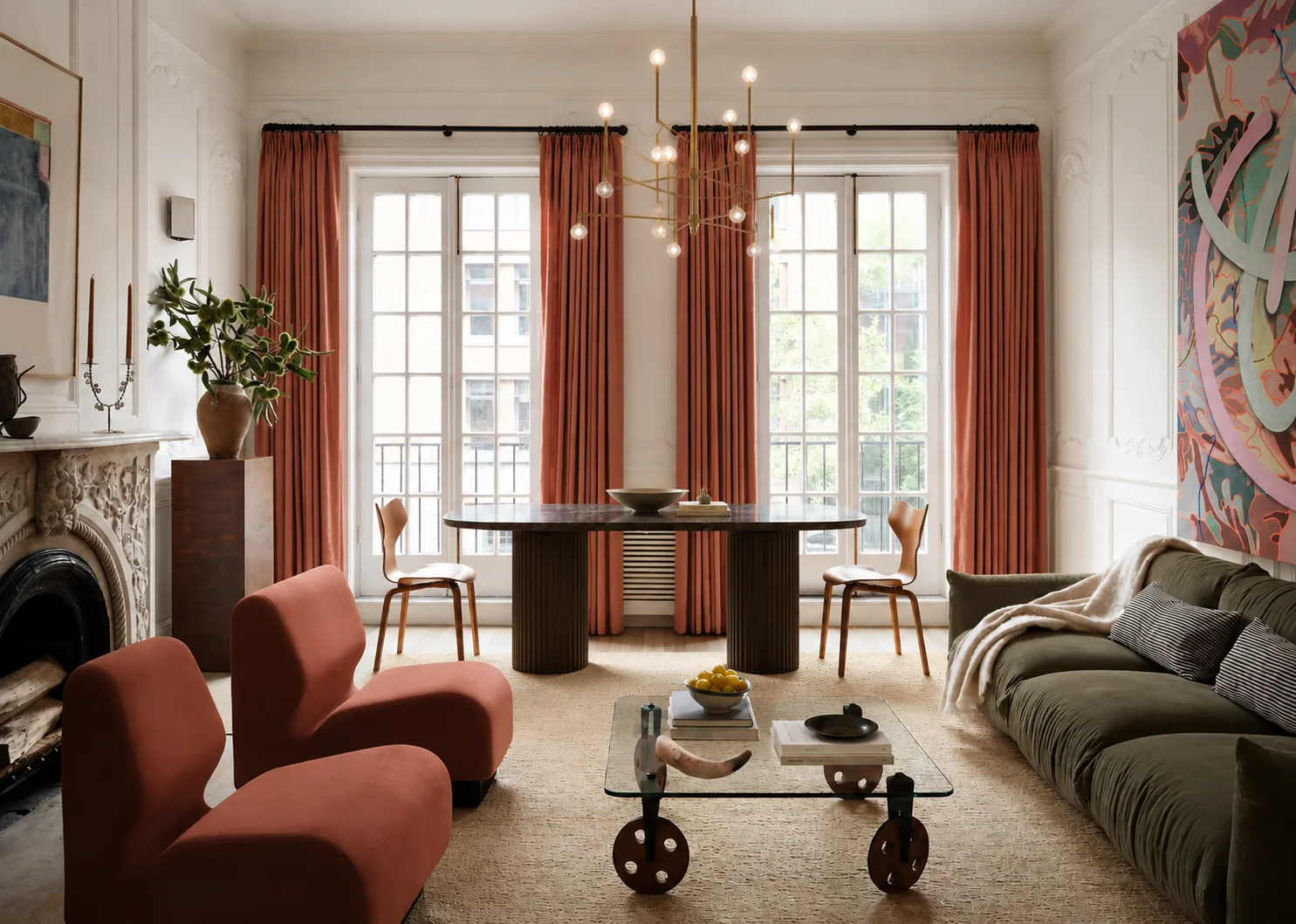
I have spent years helping people figure out their living rooms, and curtains are almost always the last thing anyone thinks about, right up until the room still feels unfinished after everything else is in place. Living room curtains are not an afterthought, they are one of the biggest visual decisions in the whole room, bigger than most people realize until they see it done right in a living room with curtains chosen properly rather than grabbed off a shelf at the last minute.
This guide covers how to actually choose living room curtains, from color and fabric to layering sheers and even making a simple swag style yourself. Whether you are working with big windows, a tricky bay window, or a small one that never seems to fit standard sizes, these living room curtain ideas are built around real decisions, not just a gallery of pretty photos.
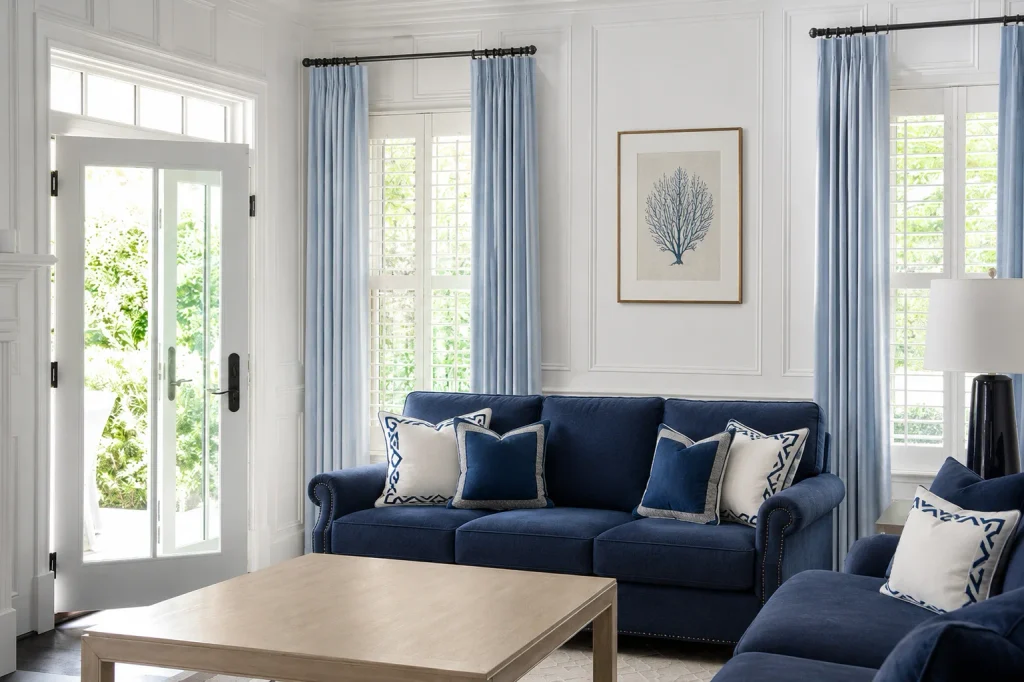
Before picking a color or pattern, think about what the room actually needs. Living room curtains have to do three jobs at once, control light, offer privacy, and finish the look of the room, and the order you prioritize those in should shape everything else. Learning how to choose curtain for living room spaces really just comes down to answering those three questions honestly before you fall in love with a fabric.
If your living room gets strong afternoon sun, a heavier weave or a lined curtain protects your furniture from fading and keeps the room comfortable. If light is already limited, go lighter, sheer or semi sheer living room drapes let the room breathe instead of closing it in.
Fabric weight also affects how the curtain hangs. A heavier linen or velvet pools beautifully on the floor and reads as more formal, while a lightweight cotton or linen blend feels more relaxed and everyday, one of those decor home basics that makes a bigger difference than people expect. Neither is right or wrong, it depends entirely on the mood you want the room to have. Use your furniture wisely; leave the old, outdated furniture trends to give your space room to breathe.
This is the question I get asked more than almost any other. If you want to know how to choose curtain color for living room spaces specifically, the honest answer is that curtain color should come from something already in the room, a rug, a piece of art, the undertone in your walls, rather than being chosen in isolation.
For a calm, cohesive living room, matching your curtains close to your wall color lets the fabric almost disappear into the architecture, which makes a smaller room feel larger and a busy room feel calmer. For a living room that wants more personality, pull a color straight from your rug or your sofa fabric and let the curtains echo it instead of introducing something new.
A neutral sheer paired with a bolder colored outer panel gives you the best of both approaches, a soft, adjustable base with room to bring in color exactly where you want it.
Big windows and bay windows both reward a bit of restraint. For an elegant living room curtain look on a large window, hang the rod as close to the ceiling as you reasonably can and let the panels fall all the way to the floor. That single choice does more to make a room feel grand than almost any fabric choice you make afterward.
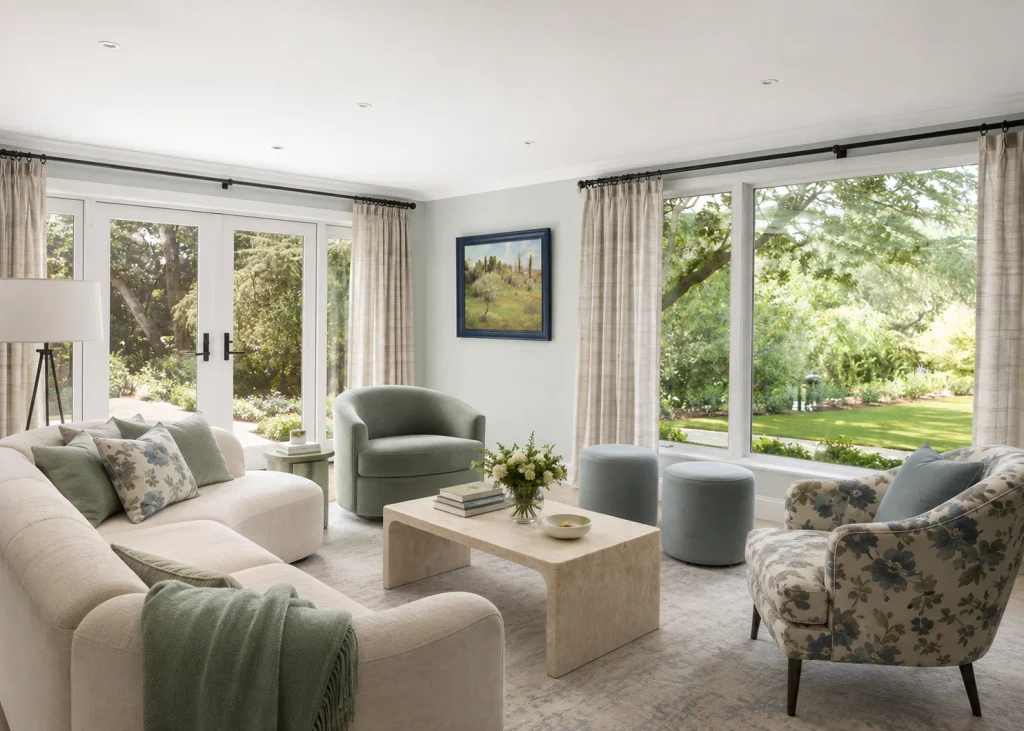
Bay windows are trickier, since you are working with an angle rather than a flat wall. Rather than trying to wrap one continuous curtain around the whole bay, hang shorter panels at each individual window and let them frame the view instead of covering it. This keeps a bay window feeling open while still giving you the option of privacy at each section.
Modern living room curtain ideas right now lean toward simplicity done well rather than heavy ornamentation. Clean lined panels in a natural fiber, linen especially, paired with a slim, unfussy rod is the look showing up again and again in current interior design.
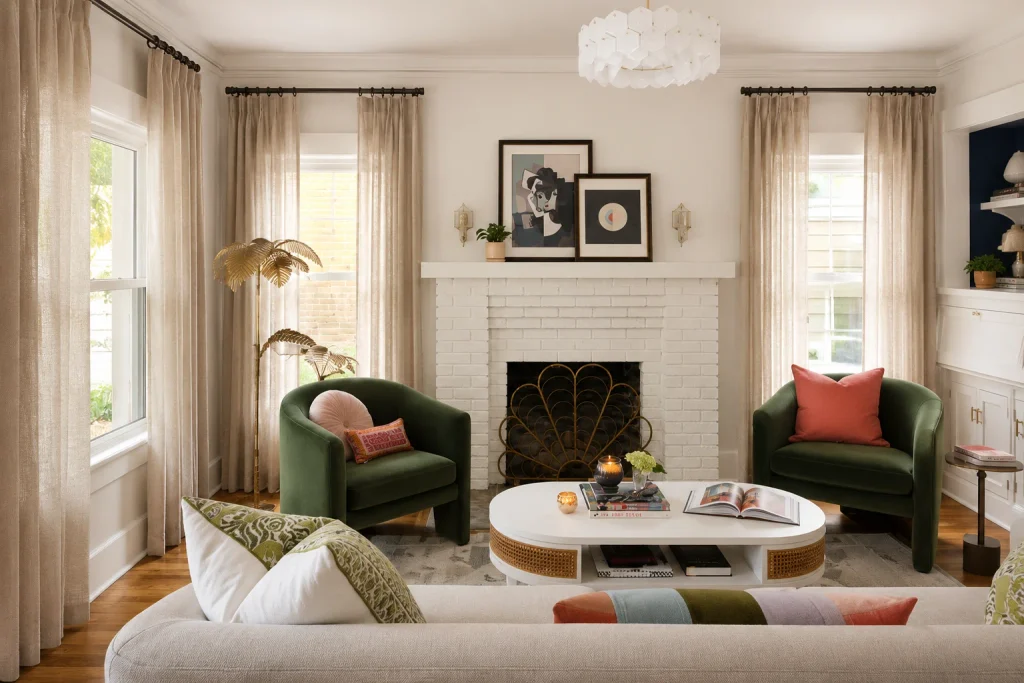
Texture is doing more of the work than pattern this year. A subtly textured weave in a solid neutral gives a living room depth without asking for attention the way a bold print does. If you do want pattern, keep it to one statement element, the curtains or the rug, never both at full volume in the same room.
White walls give living room curtains the most freedom of anywhere on this list. A soft, warm white curtain keeps the whole room feeling bright and airy, almost seamless from wall to window. If you want more definition, a deep, saturated color like forest green or navy creates real contrast against white walls without fighting the rest of the room’s palette.
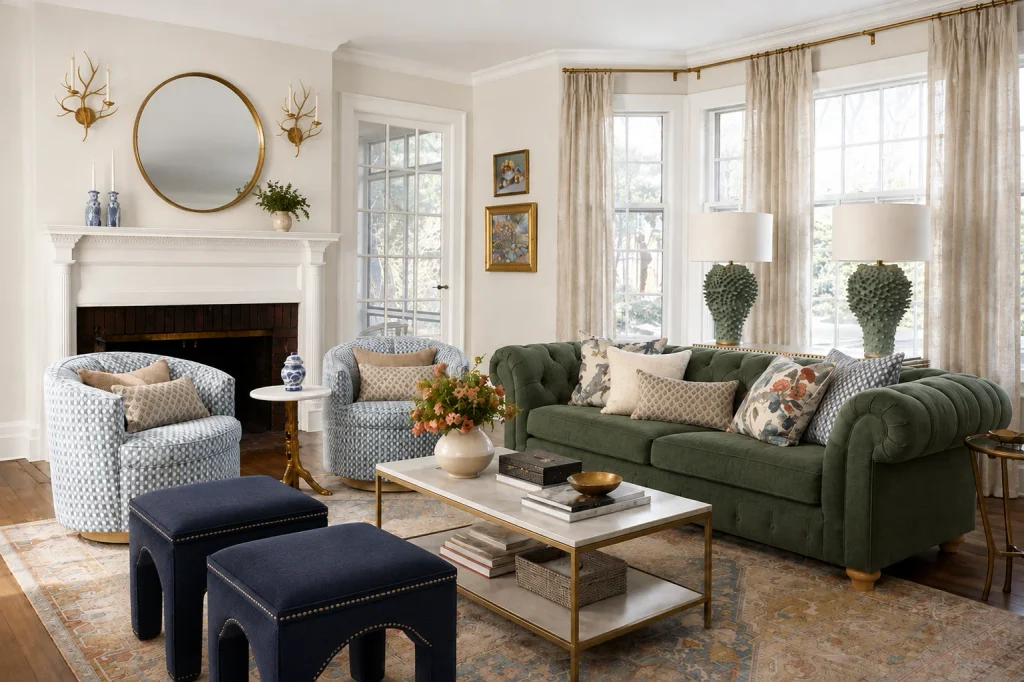
Natural linen in its undyed, slightly oatmeal state is another strong option for white walls, since it adds warmth and texture without introducing a new color into the mix at all.
Grey walls need curtains with a bit of warmth to keep the room from feeling flat. A warm terracotta or dusty rose curtain against grey walls creates a genuinely beautiful contrast, soft but not matchy. If you prefer to stay in the same tonal family, a warm taupe or a soft caramel curtain keeps things cohesive while still adding richness grey alone cannot provide.
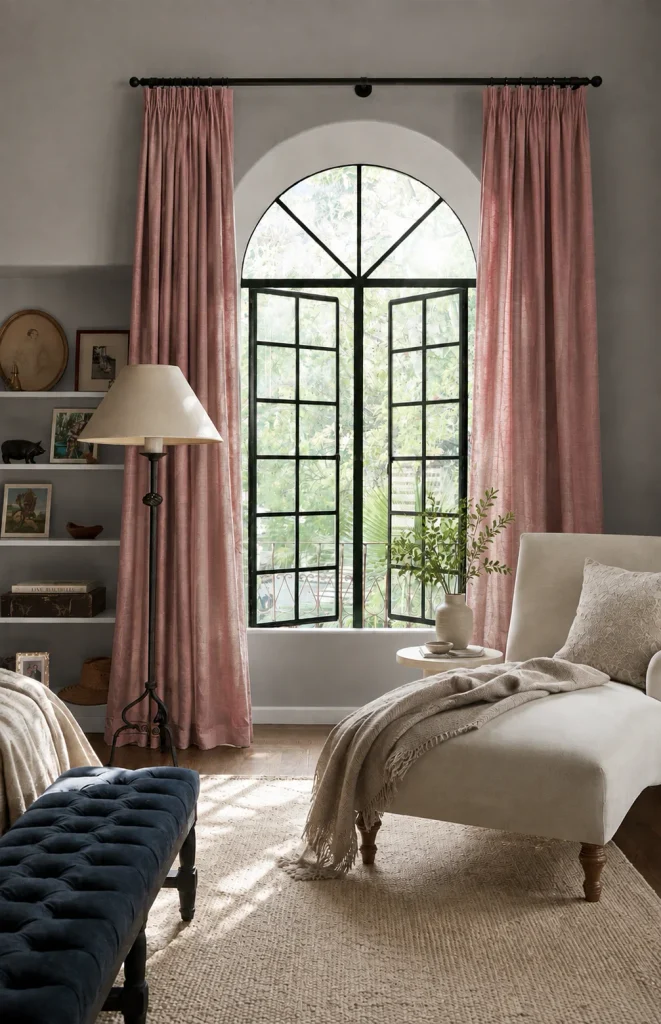
Avoid a cool toned curtain, another shade of grey or a stark blue, against grey walls unless the room already has strong natural light. Without it, the combination can read as flat rather than intentional.
Small windows are where most of the visual tricks in this guide actually matter most. Hanging the rod several inches above the window frame and extending it beyond the frame on both sides makes the window itself read as larger than it is, and lets the curtain frame it rather than sit directly on top of it.
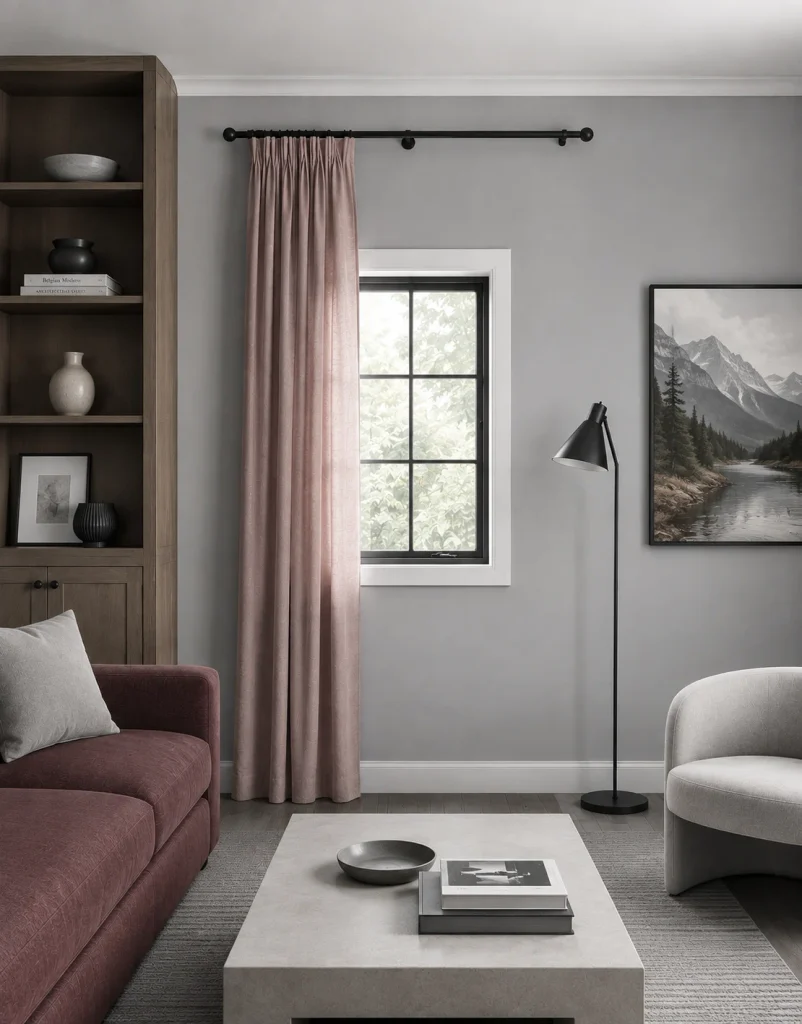
Lightweight fabrics work better than heavy ones here, since a thick curtain on a small window tends to overwhelm it rather than dress it up. A single panel pulled to one side can also work beautifully on a genuinely small window where a full pair would feel like too much fabric for too little glass.
Layering is one of the most useful living room curtain ideas nobody explains clearly enough. The basic setup is two curtain rods, a slimmer inner rod holding a sheer panel close to the window, and a second, sturdier rod set slightly further out holding your main fabric panels.
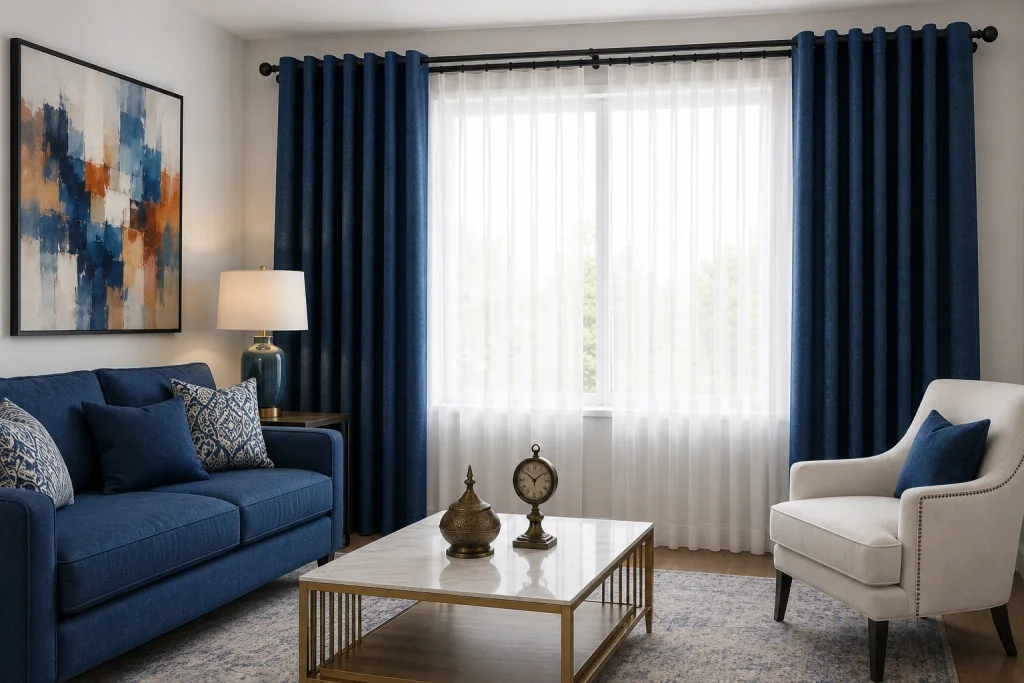
This gives you real flexibility. Close only the sheers during the day for privacy with light still coming through, or close both layers together in the evening for full coverage. It also simply looks more finished, a layered window reads as considered in a way a single curtain rarely does on its own.
Swag curtains bring a softer, more romantic shape into a living room, and you genuinely do not need to sew anything to get the look. Drape a length of lightweight fabric, linen or a soft cotton works best, over a decorative curtain rod, letting it fall in loose, even folds on either side.
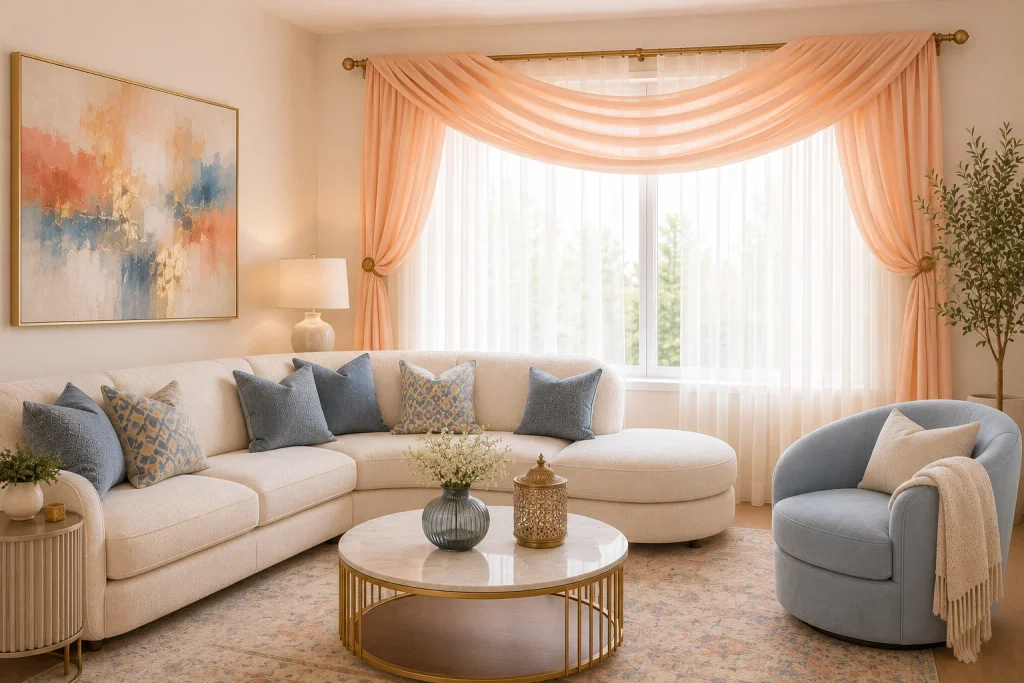
Secure the fabric loosely at each end with a curtain ring or a simple tieback, then adjust the folds by hand until they fall the way you want. This is one of the easier living room curtain ideas to try without any real investment, since a single length of fabric from a home goods store is often all it takes.
Living room curtain ideas Pinterest boards are genuinely useful for gathering inspiration, but save examples with a similar window shape and light level to your own room, not just ones that caught your eye. A gorgeous floor to ceiling curtain photographed in a room with soaring ceilings will not translate the same way into a smaller, standard height living room.
For more room specific curtain ideas, our guides on kitchen curtains and dining room curtains follow the same styling principles adapted to those spaces, worth a look if you are furnishing more than one room at once.
Living room curtains should always feel like part of your home decor as a whole, not a separate decision made in isolation from your furniture and walls. Good living room decor ideas treat the curtain choice as connected to everything else in the space, not a last minute pick to fill an empty window. If you are still working out the rest of the room, our guide to modern home decor is a good place to start before you commit to a final curtain color, and it covers home interior design principles that apply well beyond just the windows.
For anyone leaning into a more reflective, light filled living room this year, pairing your curtain choice with the ideas in our piece on mirror walls as a home decor trend creates a genuinely layered, considered space rather than two unrelated design decisions sitting side by side.
Living room curtains are one of the few decor choices that touch nearly everything else in the room, light, color, texture, and mood, all at once. Start with what the room actually needs, light control, privacy, warmth, then let color and styling follow from there rather than the other way around. A well chosen curtain does not just finish a room, it changes how the whole space feels every single day.
For more home decor inspiration, explore related posts on The Decor Dash.
Looking for a kitchen update that makes a difference? Discover kitchen tile trends 2026, with ideas for stylish backsplashes, statement…

The best Halloween decoration ideas don’t need plastic skeletons or a big budget. Here’s how to build a spooky, stylish…
Most Halloween decor guides forget the one room you’re actually sitting in every day. Here are Halloween home office decor…
Halloween porch decor sets the mood before anyone knocks. Here are easy, spooky ideas to make your porch the one…
Midcentury modern kitchen style never really went away. Here are simple midcentury modern kitchen ideas for color, wood, tile and…
Backyard wedding decor is quietly outshining venue weddings in 2026 — more intimate, more personal, and a fraction of the…
The safest choice is a color already present in the room, matched closely to your walls for a seamless look, or pulled from your rug or sofa for a bit more personality. Neutral tones like warm white, taupe, and soft linen work in almost any living room regardless of style.
Floor length or even a slight puddle on the floor reads as the most polished choice for most living rooms. Curtains that stop short of the floor, hovering an inch or two above it, tend to look unfinished or accidental rather than intentional.
Both approaches work, and the choice comes down to the effect you want. Matching walls creates a calm, cohesive look that makes a room feel larger, while contrasting curtains add personality and become a genuine design feature in the room.
Use two curtain rods, one closer to the window holding a sheer panel, and a second rod further out holding your main fabric curtains. This lets you adjust privacy and light throughout the day while giving the window a more finished, layered look.
Hang the rod above and beyond the window frame so the curtain frames rather than covers the glass, and choose a lightweight fabric that will not overwhelm a smaller window. A single panel pulled to one side can also work well when a full pair feels like too much fabric.