Address
304 North Cardinal
St. Dorchester Center, MA 02124
Work Hours
Monday to Friday: 7AM - 7PM
Weekend: 10AM - 5PM
Address
304 North Cardinal
St. Dorchester Center, MA 02124
Work Hours
Monday to Friday: 7AM - 7PM
Weekend: 10AM - 5PM

Quietly dramatic kitchens are the design world's answer to quiet luxury, understated on the surface, full of intention underneath. Here is how to bring the look home.
I have walked into kitchens that make you gasp the second you see them, and I have walked into kitchens that take a few minutes to fully land, the kind where you notice one detail, then another, and slowly realize the whole room was doing something clever the entire time. The second kind stays with you longer. That slow burn effect is exactly what people are now calling a quietly dramatic kitchen, and it is quickly becoming one of the most talked about directions in kitchen design for 2026.
If quiet luxury was about looking effortlessly expensive without shouting about it, a quietly dramatic kitchen takes that same restraint and adds a bit more edge. The result is a space that feels calm at first glance but rewards a closer look with texture, contrast, and small design decisions that clearly took real thought. This guide walks through what actually defines a quietly dramatic kitchen, how it differs from the trends that came before it, and how to bring quietly dramatic kitchen ideas into your own home without a full renovation budget.
At its core, a quietly dramatic kitchen is about earning attention rather than demanding it. There are no neon colors, no oversized statement walls, no single loud feature meant to stop you in your tracks. Instead, the drama comes from proportion, material quality, and the relationship between different textures sitting next to each other.
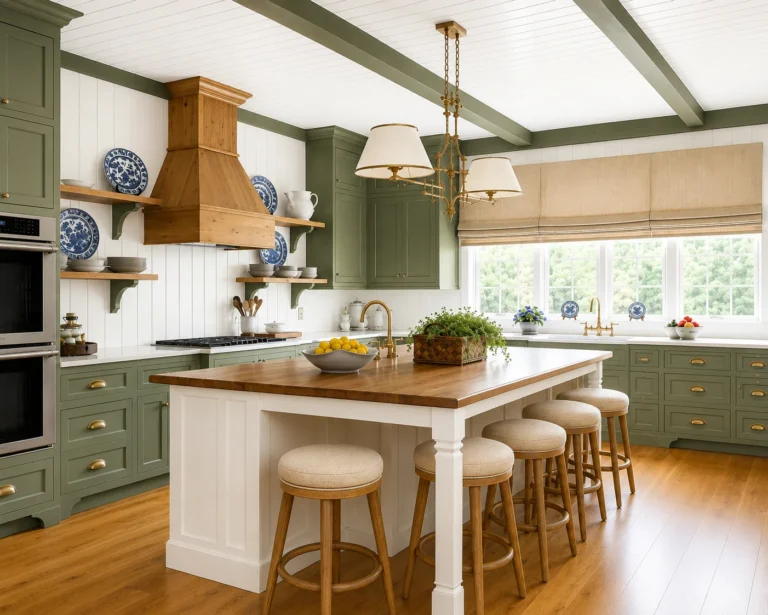
Picture a rough, hand plastered range hood next to a smooth, polished stone countertop. Or warm white oak cabinetry paired with a dark, aged bronze hardware finish. Neither element is loud on its own, but placed together, they create a quiet tension that makes the whole room feel considered rather than default. That contrast, subtle but deliberate, is really the engine behind the entire quietly dramatic kitchen trend, and it is what separates it from a kitchen that is simply plain or unfinished.
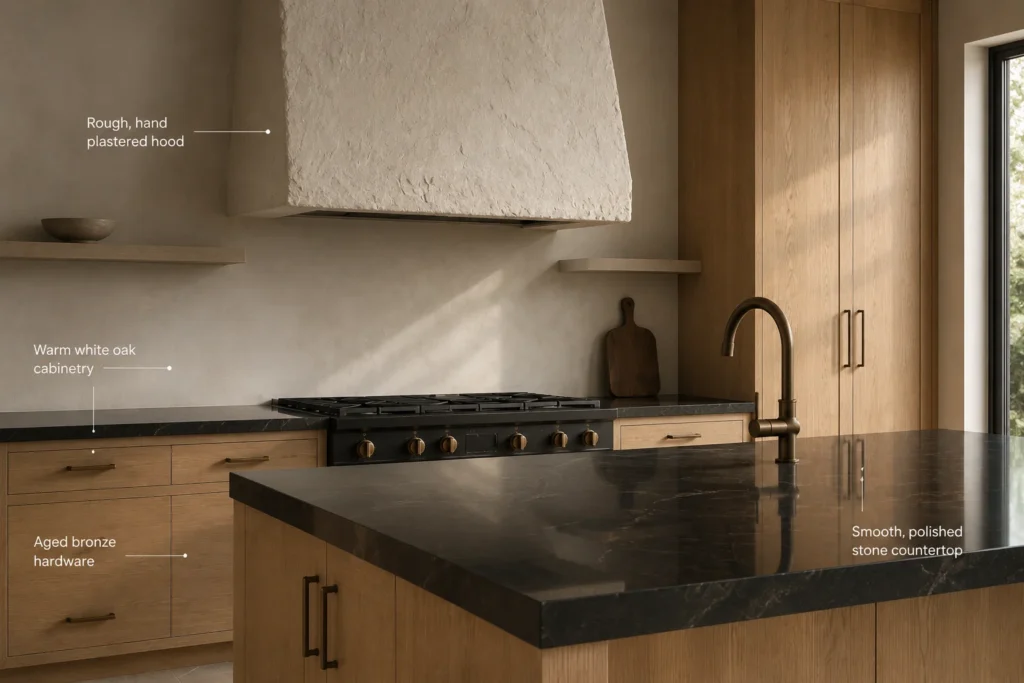
Quiet luxury asked for restraint everywhere, soft neutrals, minimal contrast, nothing that pulled focus. A quietly dramatic kitchen keeps that same restraint but allows for a little more tension and personality underneath it. Think of it as quiet luxury that has grown more confident. You still will not find a kitchen dripping in bold color or covered in decorative flourishes, but you will find one or two intentional moments of contrast that give the space real character instead of blending into the background entirely.
This distinction matters more than it might seem. A lot of neutral kitchen ideas end up feeling flat simply because every surface matches every other surface too closely. A quietly dramatic kitchen avoids that trap by keeping the palette tonal while still letting texture and material do the visual work that color would normally handle.
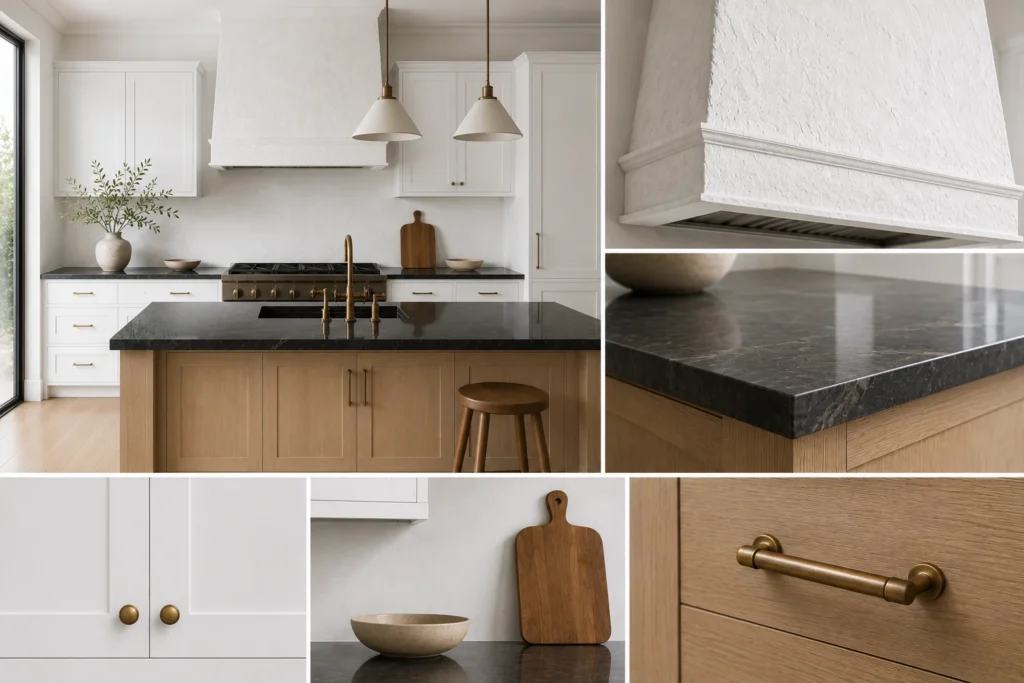
Tonal color palettes. Rather than a stark contrast between light and dark, a quietly dramatic kitchen leans on different shades within the same color family, a few tones of cream, warm beige, or soft greige layered across cabinetry, walls, and trim. This kind of tonal kitchen color scheme feels cohesive rather than segmented, which is part of why the whole room reads as calm even when there is a lot happening texturally.
Natural, tactile materials. Honed marble, limestone, white oak, and unlacquered brass all show up again and again in this style, since these materials age with character instead of looking worn out. A natural stone kitchen backsplash in particular tends to be one of the first things people notice, since the subtle veining and movement in real stone catches light differently throughout the day, adding a kind of quiet movement to the room without anything actually changing.
One deliberate moment of contrast. Rather than layering five different statement features, a well designed quietly dramatic kitchen tends to pick one, a textured hood, a full height stone backsplash, or a sculptural light fixture, and let that single choice carry the drama while everything else stays understated.
Scale played with intention. A slightly oversized light fixture, or a backsplash pulled all the way to the ceiling instead of stopping at standard height, can quietly shift how a room feels without adding any new color or pattern at all. It is a small architectural decision that reads as bold once you notice it.
Cabinetry. Warm wood tones or a single tonal paint color across all the cabinetry keeps this zone from competing with the rest of the room. Avoid mixing more than two cabinet finishes, since a quietly dramatic kitchen relies on a unified base to make the contrast elsewhere feel intentional rather than accidental.
Backsplash and countertops. This is often where the trend’s signature moment of contrast lives. A textured or veined natural stone kitchen backsplash paired with a simpler, quieter countertop, or the reverse, gives the eye somewhere to land without overwhelming the whole kitchen.
Hardware. Aged brass, unlacquered brass, or a soft bronze finish on cabinet pulls and faucets introduces warmth and a sense of age in a way that feels earned rather than trendy. This is one of the easiest and most affordable entry points into the look.
Lighting. A single sculptural or textured pendant over an island does more for a quietly dramatic kitchen than an entire ceiling of matching downlights. Lighting here should feel like a considered object, not just a source of light.
You do not need a full renovation to borrow from this trend, and that is honestly the part I find most useful about it. A few smaller, budget conscious moves can bring real quiet drama into a kitchen you already have, without needing to touch cabinetry, plumbing, or layout at all.
Start with hardware. Swapping cabinet pulls and knobs for an unlacquered brass or aged bronze finish is one of the most affordable ways to introduce that natural, tactile quality without touching cabinetry at all. If your cabinets are already a light wood or neutral tone, this single swap does a surprising amount of work toward achieving a quietly dramatic kitchen on a modest budget.
Consider a textured backsplash tile in place of a plain subway tile, something with a slightly irregular, handmade look. It does not need to run floor to ceiling to make an impact, even a section behind the stove can introduce that one deliberate moment of contrast the whole trend is built around.
Lighting is another accessible entry point. A single sculptural pendant over an island, even just one, can act as your kitchen’s quiet dramatic moment without requiring anything else in the room to change. Choose one with texture or an interesting silhouette rather than a purely decorative shape, since the goal is a fixture that feels intentional, not just pretty.
Finally, do not underestimate what a fresh coat of paint in a tonal, warm neutral can do. Repainting cabinetry or trim in a shade that sits close to your existing wall color, rather than a stark contrast, is one of the cheapest ways to achieve that layered, cohesive feeling a quietly dramatic kitchen depends on.
It helps to see how this style sits next to other directions currently popular in kitchen design. Where a maximalist kitchen leans into bold pattern and saturated color everywhere, a quietly dramatic kitchen keeps the palette restrained and lets texture do the talking instead. Where a stark, all white modern kitchen chases a clean, minimal look, a quietly dramatic kitchen adds warmth and a touch of tension so the space does not feel sterile. It sits in an interesting middle ground, warmer and more textured than pure minimalism, calmer and more restrained than a maximalist space., which is likely part of why it has resonated with so many people heading into 2026.
The easiest way to get a quietly dramatic kitchen wrong is to try too hard. If every surface in the kitchen is fighting for attention, textured backsplash, patterned tile, bold hardware, and a statement light all at once, the effect stops feeling quiet and starts feeling cluttered. Pick one or two moments of contrast and let the rest of the room stay genuinely restrained around them.
It is also worth resisting the urge to go too cool or clinical with your palette. This trend leans warm, even when it is neutral, so stark white and cold gray tones can undercut the calm, layered feeling that makes a quietly dramatic kitchen work in the first place.
What makes this trend worth paying attention to is how livable it actually is. It does not ask you to commit to a bold color you might tire of in two years, and it does not require a full gut renovation to get right. A kitchen built around restraint, warm materials, and one or two intentional contrasts can feel elevated for a long time, which is really the whole appeal, drama that does not go out of style the moment the next trend arrives.
A quietly dramatic kitchen is a design style built around restraint and subtle contrast rather than bold color or heavy decoration. The drama comes from material quality, tonal color palettes, and one or two intentional design moments, rather than a single loud statement feature.
Quiet luxury focuses almost entirely on restraint and minimal contrast throughout a space. A quietly dramatic kitchen keeps that same calm, elevated feeling but adds in a bit more tension, usually through one deliberate contrast like a textured hood against a polished countertop, giving the room more personality without losing its understated quality.
Yes. Swapping cabinet hardware for an aged brass or bronze finish, adding a textured backsplash tile in a small section, or introducing one sculptural light fixture are all affordable ways to bring the look into an existing kitchen without a full renovation.
Warm, tonal neutrals work best, different shades of cream, beige, or soft greige layered together rather than one flat color. Cooler or stark white palettes tend to undercut the warm, calm feeling that defines this trend.
Overloading the kitchen with too many contrasting elements at once. The trend relies on restraint, so it works best when only one or two features carry the drama while everything else in the room stays understated.